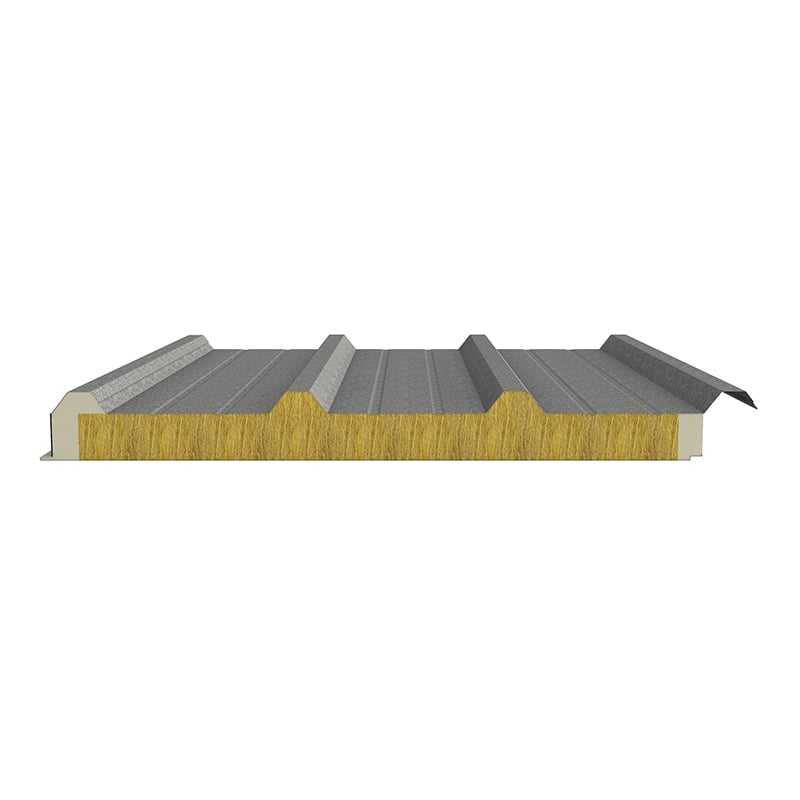
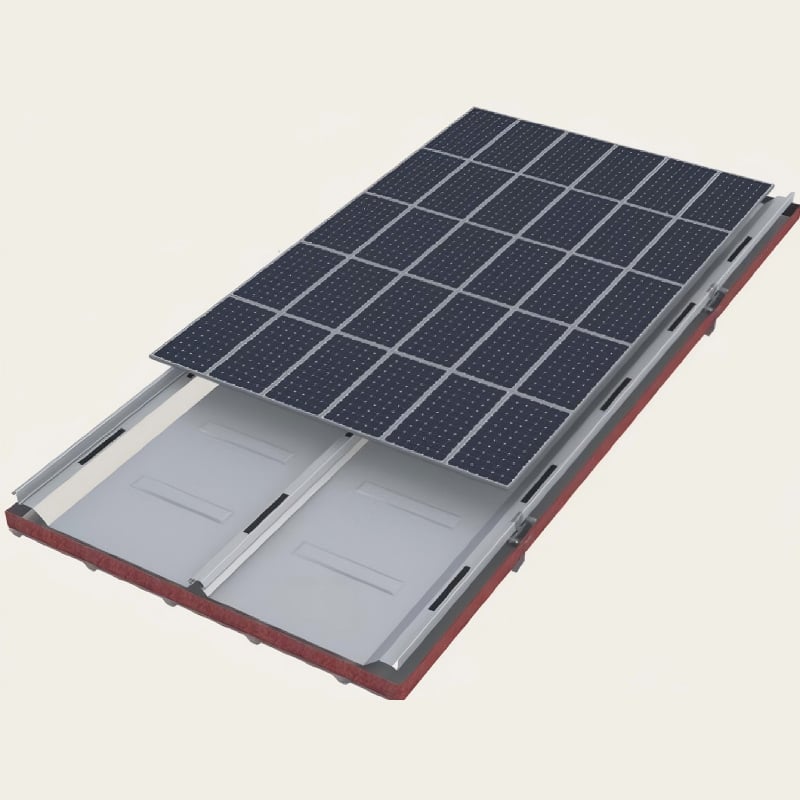
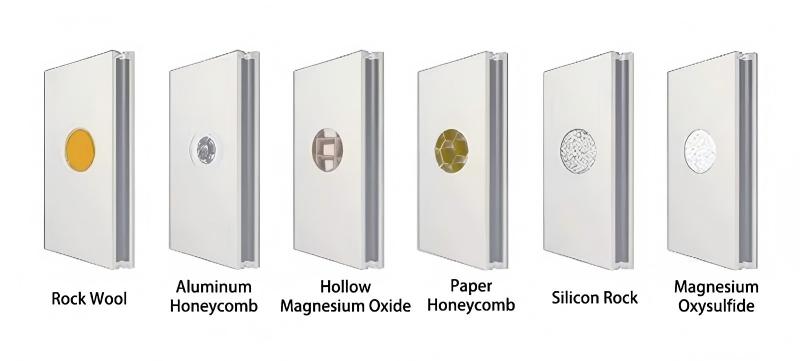
In industries such as biopharmaceuticals, semiconductor manufacturing, and food processing, cleanroom panels are the foundation for building controlled environments. The performance of cleanroom panels, such as fire resistance, strength, insulation, and corrosion resistance, depends entirely on their internal core material. Faced with a dazzling array of core material options on the market, which one is the optimal solution for your project? In this article, Glostar Manufacturer will introduce the basic knowledge of six mainstream cleanroom panel core materials.
| Core Material Names | Fire resistance rating | Strength/Load Capacity | Moisture resistance | Core Recommended Applications |
| Rock Wool | A1 (Non-combustible) | Medium | Average | Pharmaceutical factories, general cleanrooms |
| Glass Wool | A (Non-combustible) | Low | Average | Large-span steel structure factory buildings |
| Magnesium Oxide Board | A1 (Non-combustible) | Very High | Good | Electronics factory walk-through ceilings |
| Aluminum Honeycomb | A1 (Non-combustible) | High | Excellent | Chip/semiconductor workshops |
| Silica Rock Board | B1 (Flame retardant) | Medium-High | Excellent | High humidity environments |
| Paper Honeycomb | B1 (Flame retardant) | Medium | Poor | General clean areas with limited budgets |
Cleanroom panels (also known as cleanroom boards) are building materials composed of a panel made of materials such as color-coated steel or stainless steel, and an inner core material. The core material not only supports the structure but also determines the cleanroom's insulation, sound insulation, fire resistance, and pressure resistance. In-depth Comparison of Six Mainstream Cleanroom Panel Core Materials
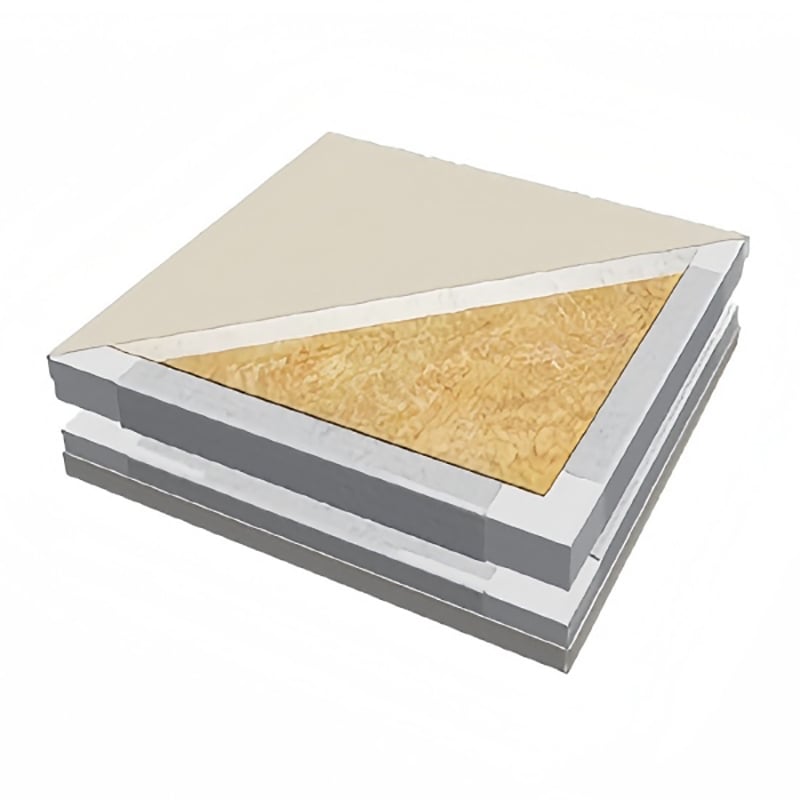
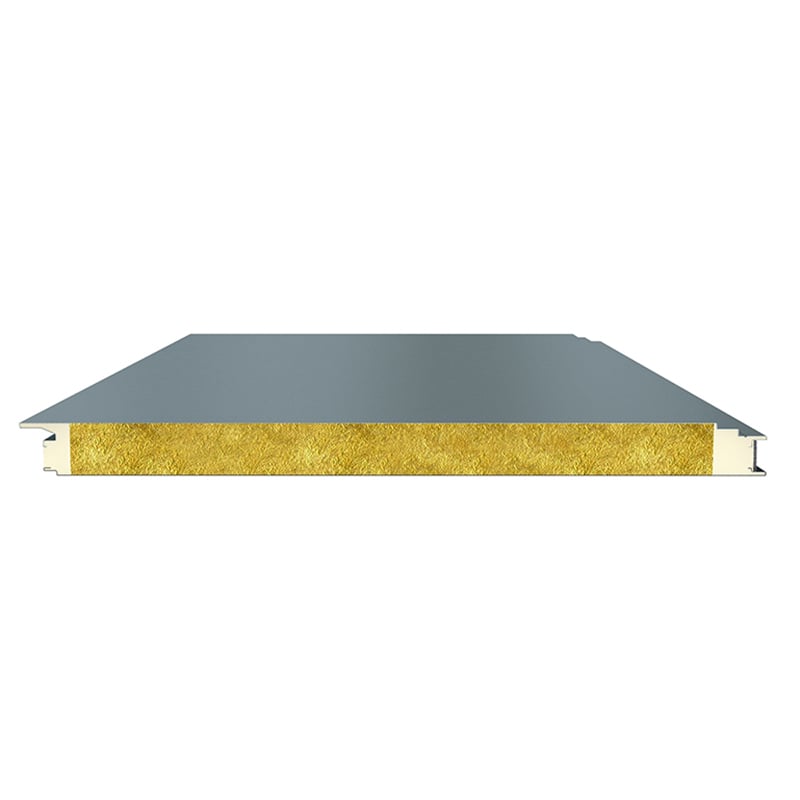
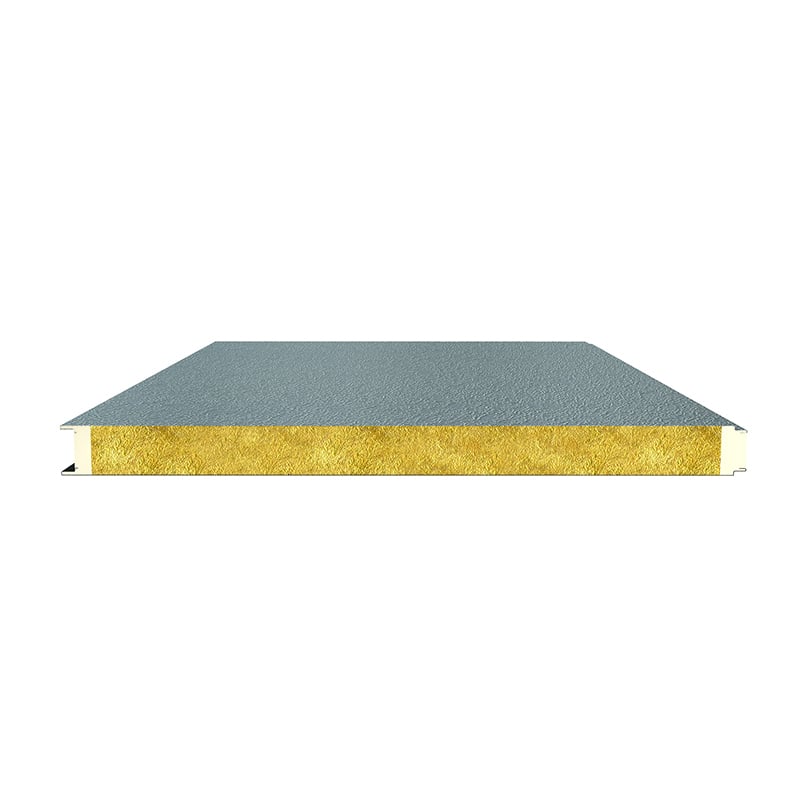
– A classic fire-resistant pioneer, rock wool is currently the most widely used material in cleanroom engineering.
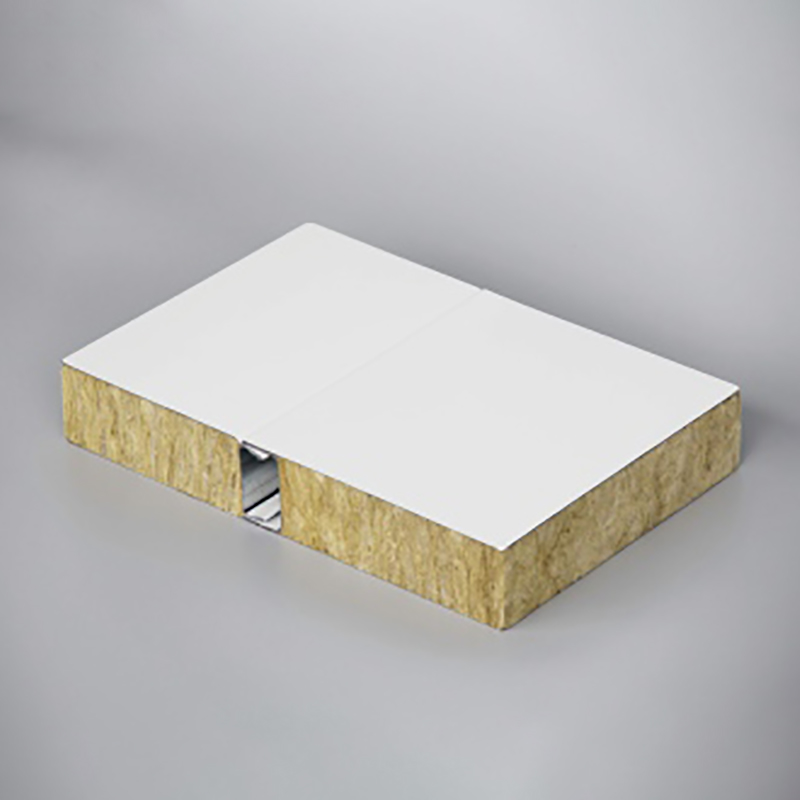
Feature and Advantages:
High Strength: Structural wool itself has excellent structural performance. Combined with special joints that only require fixing at both ends, single-span panels can reach 12m, significantly reducing structural material usage and lowering overall costs.
High Fire Resistance: Non-combustible structural wool, combined with a dense joint design, can create panels with a fire resistance limit of up to 4 hours and can block the spread of heat and flames.
High Ignition Point: Structural rock wool is a non-combustible material with a melting point of 1000℃ and has excellent fire resistance.
Applications: Ceilings and partitions in pharmaceutical factories, laboratories, and other places with extremely strict fire resistance requirements.
– Lightweight Insulation Expert: Made of glass fiber, it is lighter than rock wool.
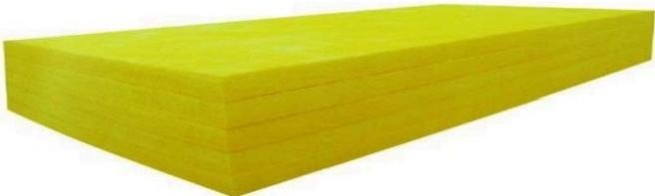
Glass wool features:Sound absorption and noise reduction effectively block sound propagation.
Glass wool has tiny pores and voids. When sound waves strike the glass wool, they can enter through these pores, causing air molecules to vibrate. The viscous resistance of the air and the collision between the air molecules and the pore walls convert sound energy into heat energy, which is then dissipated. When there is an air layer behind the glass wool, the sound absorption effect is similar to that without the same thickness. Especially for glass wool boards with an air layer, the sound absorption performance at mid-to-low frequencies is significantly improved compared to a hard surface. The sound absorption coefficient increases with the increase of the air layer thickness. Glass wool boards are used in various sound-absorbing materials, including spatial sound absorbers and composite perforated sound-absorbing panels. The slag-free process does not damage the fiber structure and continuity. It has excellent sound absorption and noise reduction properties.
As can be seen from the table, its products have low density, low thermal conductivity, high sound absorption coefficient, wide operating temperature range, and also have the advantages of being non-flammable, frost-resistant, insect-resistant, and chemically stable.
Application: Large-span cleanrooms with high load-bearing requirements.
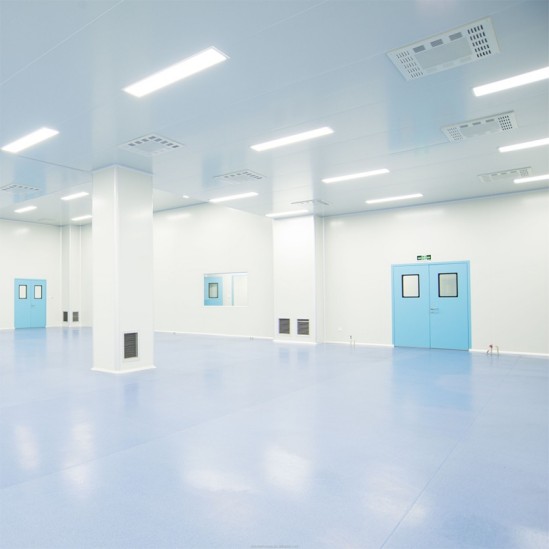
– A representative of extremely high strength, magnesium oxide cleanroom panel is often seen as "magnesium oxide mesh" or "double-layer magnesium oxide handmade board."
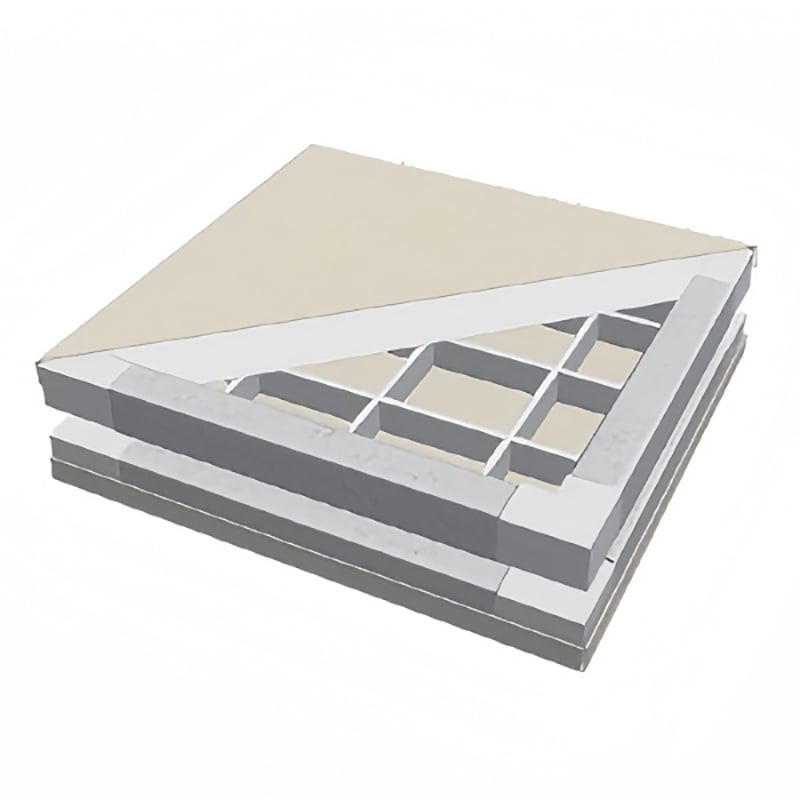
Features: High Mohs hardness, excellent flatness.
Advantages: Extremely strong load-bearing capacity, does not deform under foot pressure, completely non-combustible.
Applications: Walkway ceilings in electronic cleanrooms.
– A Balance of Fire Resistance and Water Repellency: Silica rock cleanroom panel is a new type of environmentally friendly material that has emerged in recent years.
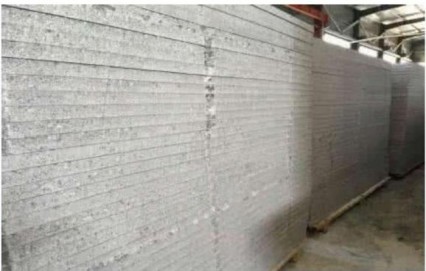
Features: Primarily made of inorganic minerals, closed-cell structure.
Advantages: Class A fire resistance and non-absorbent, solving the problem of performance degradation after moisture absorption in rock wool.
Applications: Purification projects in high-humidity environments.
– Honeycomb paper is made by processing kraft paper into a regular hexagonal structure, based on the principle of the honeycomb structure in nature. It is a new type of sandwich structure environmentally friendly and energy-saving material made by bonding corrugated base paper into countless hollow three-dimensional regular hexagons to form a whole load-bearing component—the paper core, and then bonding face paper to both sides of it. It is inexpensive and has good flatness, but its fire resistance rating is usually only B1.
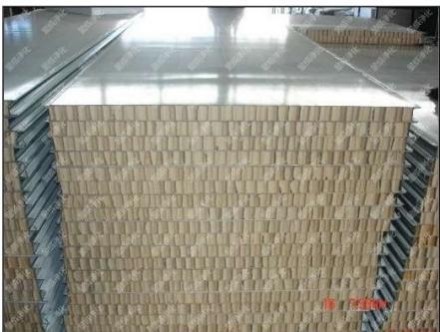
Features
Lightweight and High-Strength: The core material features a biomimetic honeycomb structure, making it extremely lightweight.
Clean and Eco-Friendly: Thanks to the paper-based core material, the panels are non-toxic, odorless, and do not shed dust, meeting strict environmental and hygiene standards.
Thermal and Sound Insulation: The hexagonal honeycomb structure creates a sealed air layer inside, providing excellent thermal insulation and sound absorption.
Applications:
Thanks to its exceptional cleanliness and mechanical properties, this material is primarily used in the biopharmaceutical, electronics and semiconductor, and food processing industries.
– Made entirely of aluminum, Class A fire retardant.
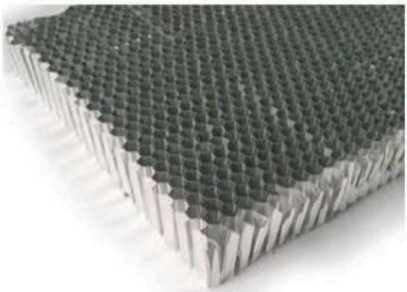
Features: Lightweight, high strength, moisture-proof, fireproof, sound-insulating, high flatness, high shock resistance, corrosion resistant;
Applications: High-precision electronics, aerospace cleanrooms, construction industry, furniture industry, transportation industry, etc.
Common Specifications: Aluminum foil thickness 0.04mm, aperture 20mm, side length 12mm, height 18.5/43.5/38.5/48.5mm
Manufacturing Process: The raw material for aluminum honeycomb is aluminum foil. Aluminum foil --- coating machine printing --- cutting --- stacking into blocks --- aluminum foil hot pressing --- honeycomb blocks. Honeycomb blocks can be cut into strips, the thickness of each strip depending on customer requirements. If needed, the strips can also be stretched into unfolded blocks.
When selecting cleanroom panels, these three technical parameters should be considered: density, bonding strength, and edge sealing technology. There is no "best" core material for cleanroom panels, only the "most suitable." For pharmaceutical factories, fireproof rock wool is standard; for precision electronics factories, aluminum honeycomb or magnesium oxide boards are more advantageous. According to Glostar's 10+ years of manufacturing experience, over 70% of our pharmaceutical clients choose Rock Wool due to its cost-effectiveness and A1 fire rating. However, for microelectronics projects, Aluminum Honeycomb is the strictly required standard.
 Hot News
2026-09-09
2026-08-14
2026-08-11
2026-08-06
2026-07-30
2026-07-20

We believe that by upholding quality and embracing innovation, we can drive transformative changes in architecture and build a sustainable future for the construction industry.
No. 377, Gaoqi Road, High-tech Zone, Binzhou City, Shandong Province, China
Copyright © Shandong Apex Metal Products Co., Ltd. All Rights Reserved (Under the Glostar New Materials Group) Privacy Policy Blog
 EN
EN