Noise control has become a critical factor in industrial production, commercial buildings, and public facilities. As global manufacturing scales up and fire-safety standards tighten, traditional wall and ceiling materials can no longer meet increasingly complex acoustic and fire-rating requirements at the same time. This is why more and more construction and industrial projects are turning to rock wool acoustic panels as a dedicated noise-reduction solution.
Unlike standard decorative panels or foam-core alternatives, rock wool acoustic panels combine high sound absorption with A-class fire resistance, thermal insulation, and long-term structural performance — all in a single building envelope component.
As a specialized manufacturer of metal-faced building envelope materials, Glostar supplies customized rock wool sound absorbing panels for industrial workshops, cleanrooms, commercial buildings, and prefabricated structures, helping clients around the world build quieter, safer, and more fire-resilient spaces.
Table of Contents
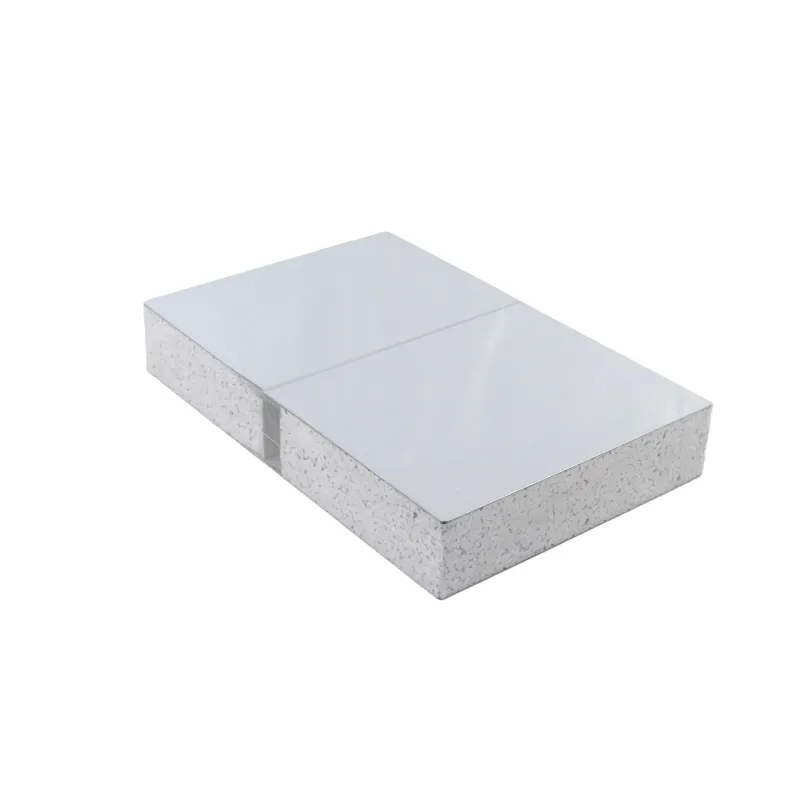
A rock wool acoustic panel is a functional building material that uses a rock wool (mineral wool) core to absorb airborne sound energy, reducing sound reflection, echo, and overall noise levels within a space. Compared with fiberglass, polyester fiber, or acoustic foam cores, rock wool offers a rare combination of high sound absorption and A-class, non-combustible fire performance — making it the preferred core material for industrial and fire-sensitive projects.
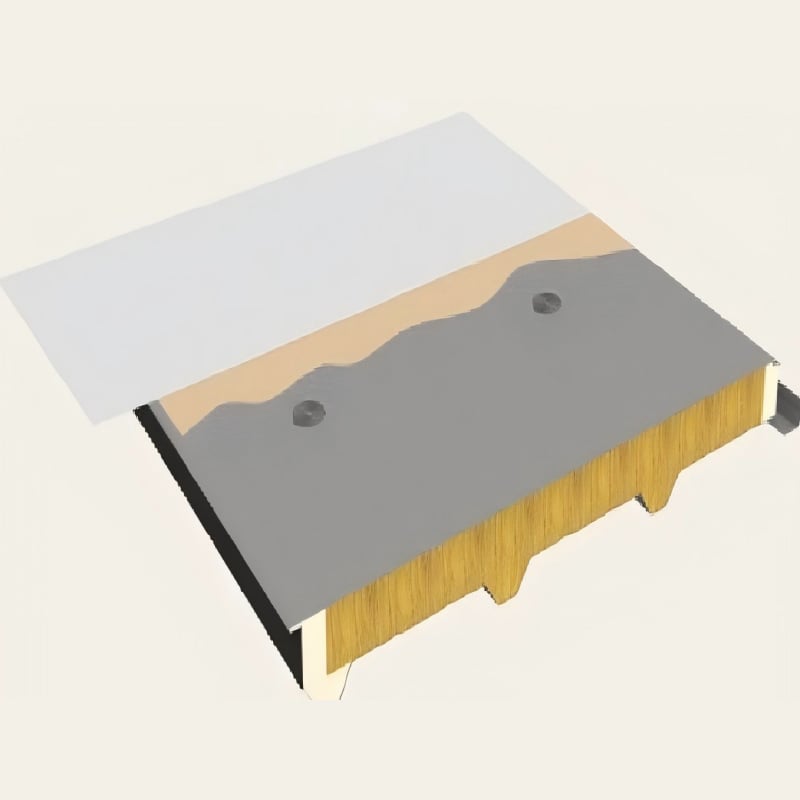
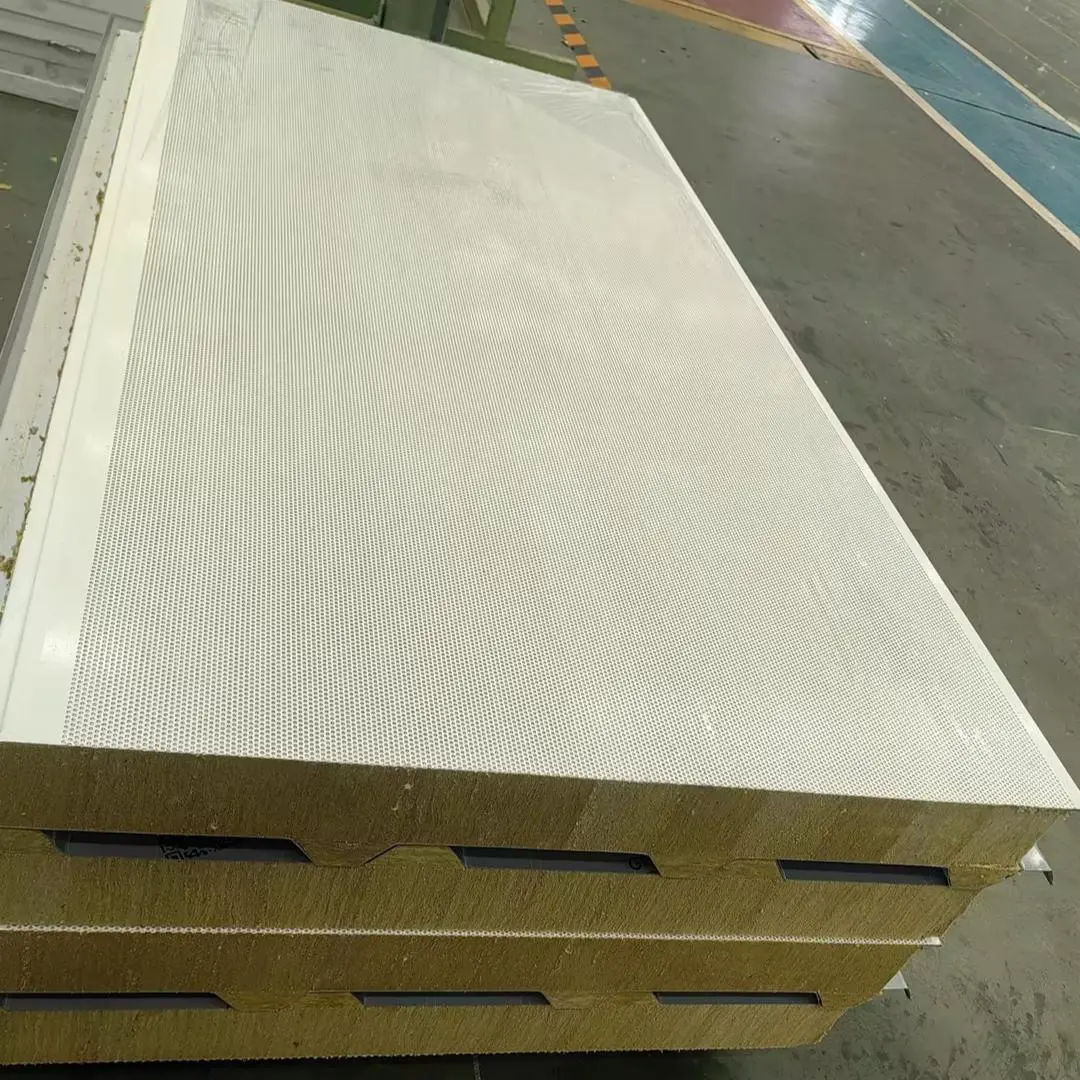
A typical rock wool acoustic panel consists of:
This layered structure forms a complete acoustic control system suitable for industrial workshops, cleanrooms, and commercial buildings where both noise reduction and fire safety are required.
| Application Area | Purpose |
| Industrial workshop | Reduce machinery and equipment noise |
| Factory building | Improve production environment |
| Cleanroom | Control ambient sound in controlled environments |
| Office building | Improve workplace comfort |
| Conference room | Reduce echo, improve speech clarity |
| Equipment room | Reduce operational noise |
Metal acoustic panels installed on industrial workshop walls to reduce equipment noise.
As building structures trend toward lighter, more modular designs, hard surfaces such as metal, glass, and concrete are used more extensively. While structurally efficient, these materials reflect sound easily, leading to excessive noise, echo, poor communication, and reduced working efficiency — especially in industrial settings where machinery, production lines, and air compression equipment generate continuous noise.
Without proper acoustic treatment, this can affect employee wellbeing and may fail to meet local environmental, occupational health, and fire code regulations. This is why industrial rock wool acoustic panels have become a standard specification item in many engineering projects — they solve the noise problem and the fire-rating requirement in a single material.
| Scenario | Noise Source | Recommended Product |
| Manufacturing factory | Production equipment | Industrial Acoustic Panel |
| Metal workshop | Machine vibration | Metal Acoustic Panel |
| Cleanroom | Air handling system | Cleanroom Acoustic Panel |
| Warehouse | Large empty-space echo | Sound Absorbing Panel |
| Office | Conversation / footfall | Decorative Acoustic Panel |
The acoustic core contains a large number of microscopic pores. As sound waves enter the fiber structure, friction converts sound energy into a small amount of heat, reducing reflection back into the room. This method works especially well in workshops, equipment rooms, and large public buildings.
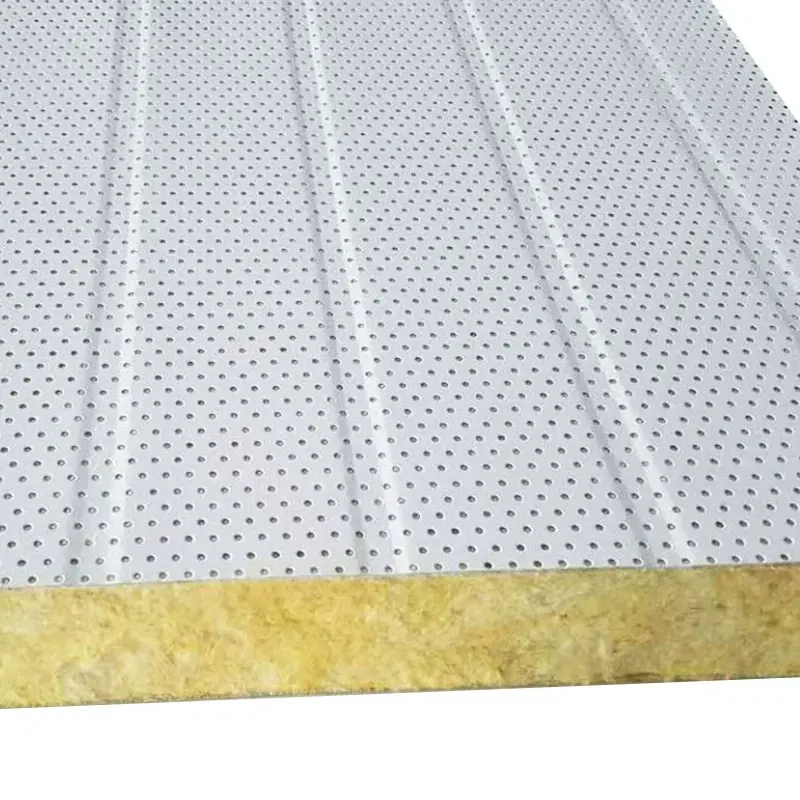
High-performance metal acoustic panels use a perforated facing. Sound passes through the perforations into the absorbing core, improving absorption efficiency while retaining the strength and fire performance of a metal surface.
| Perforated Metal Sheet → Sound Absorbing Core → Protective Back Layer |
Modern acoustic panels typically use a multi-layer composite design:
| Layer | Function |
| Metal surface | Protection and appearance |
| Acoustic core | Sound absorption |
| Reinforcement layer | Structural stability |
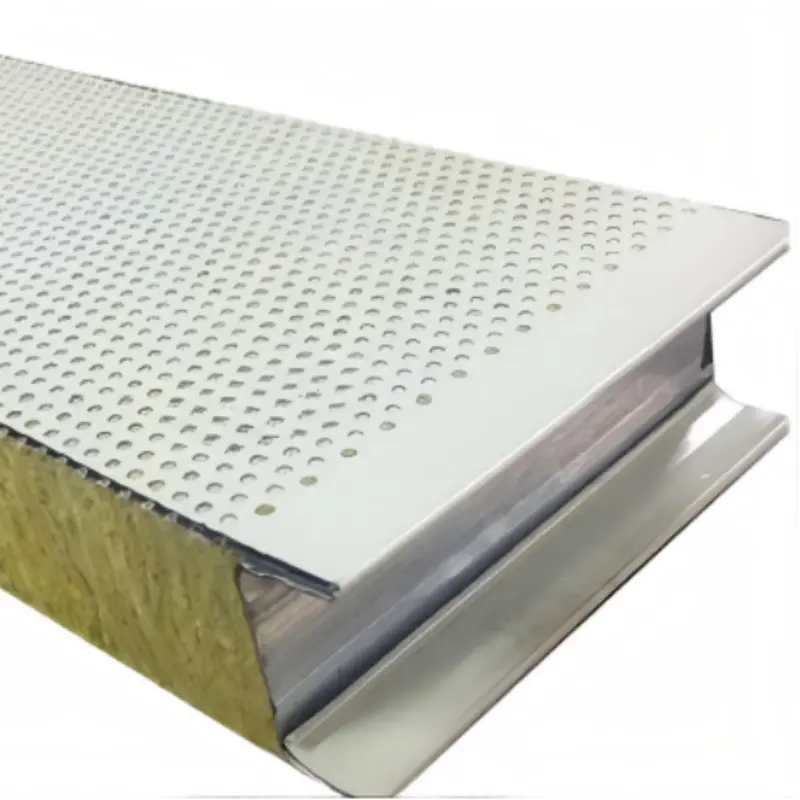
Uses a high-density rock wool core faced with perforated metal for excellent sound absorption, A-class fire resistance, and thermal insulation in a single panel. This combination makes it the preferred choice for industrial buildings, warehouses, cold storage, and equipment rooms where fire code compliance is required alongside noise control.
Uses a metal facing with a lighter acoustic infill (fiberglass or foam) rather than rock wool. Offers strength and long service life but lower fire ratings than a rock wool core — better suited to non-fire-critical areas such as light workshops or transportation facilities.
Combines an outer metal facing, a rock wool acoustic core, and a structural connection system — delivering sound absorption together with thermal insulation, fire protection, and load-bearing building envelope function. Suitable for industrial buildings, prefabricated buildings, and modular construction where the panel also serves as the wall or roof structure.
The fibrous rock wool core, combined with an optimized perforation ratio on the metal facing, effectively absorbs reflected sound from production lines, mechanical vibration, and equipment operation, improving comfort for workers.
Rock wool is a non-combustible mineral material, giving rock wool acoustic panels A-class (non-combustible) fire performance that most fiberglass or foam-core alternatives cannot match — a key requirement for pharmaceutical, electronics, and industrial plant projects with strict fire codes.
Compared with soft fabric-wrapped acoustic materials, metal-faced rock wool acoustic panels are impact-resistant, moisture-resistant, easy to clean, and built for a long service life — ideal for industrial buildings, workshops, and clean manufacturing areas.
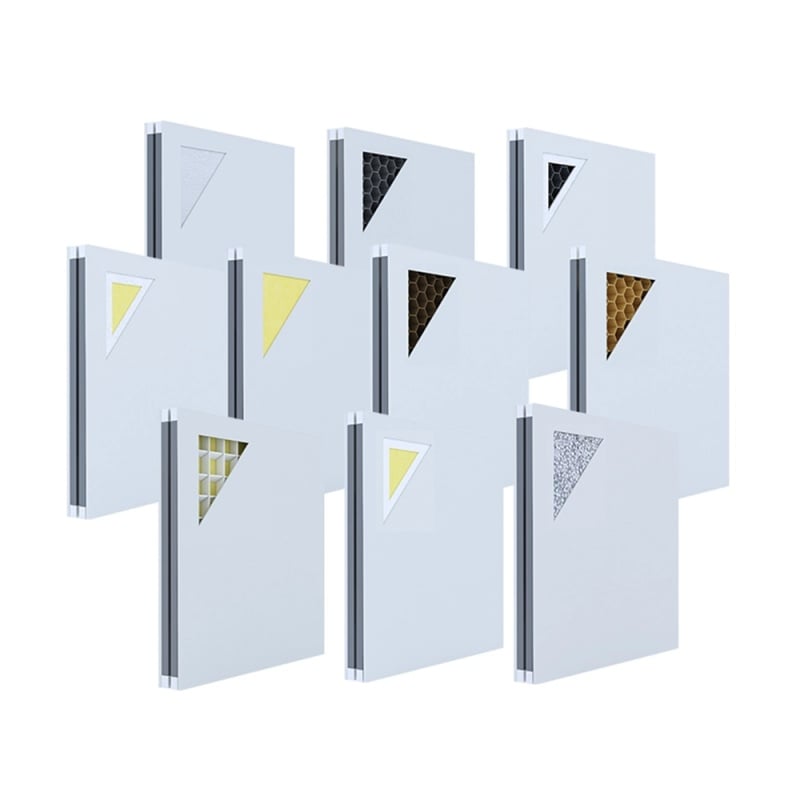
Panels can be customized in size, thickness, surface color, and perforation pattern, with tailored installation systems to match different building designs.
In automobile plants, machinery workshops, and metal processing factories, installing industrial rock wool acoustic panels reduces workplace noise and sound reflection while meeting fire code requirements, improving both safety and employee comfort.
HVAC systems, equipment operation, and personnel activity all generate noise inside cleanrooms. A dedicated Cleanroom Panel System using rock wool acoustic panels helps control environmental noise while maintaining a stable, fire-compliant cleanroom environment.
Offices, meeting rooms, and public spaces often suffer from noticeable echo. Acoustic wall panels improve speech clarity, working efficiency, and indoor comfort.
Buyers often confuse rock wool acoustic panels with soundproof panels, but the two solve different problems.
| Comparison | Rock Wool Acoustic Panel | Soundproof Panel |
| Main function | Absorbs sound | Blocks sound transmission |
| Solves | Echo, indoor noise | External sound intrusion |
| Mechanism | Reduces reflection | Increases sound barrier |
| Common location | Interior walls, ceilings | Walls, structural partitions |
| Typical use | Factories, offices | Recording studios, sound-isolated rooms |
If the issue is excessive in-room noise or echo — and fire rating also matters — choose a rock wool acoustic panel. If the goal is to block sound from entering or leaving a space, choose a soundproof panel. Many industrial projects combine both for optimal acoustic performance.
For overseas engineering projects, selecting the right supplier is critical. A reliable rock wool acoustic panel manufacturer should offer:
Glostar specializes in building envelope systems and functional building materials, offering rock wool acoustic panel solutions, sandwich panel systems, cleanroom panel systems, and steel structure solutions as a complete building package for global clients.
| Advantage | Detail |
| Factory direct supply | No middleman pricing |
| Custom production | Project-based customization |
| Quality control | Full inspection process |
| Engineering support | Technical consultation for project specs |
| Global export experience | Shipping and documentation for overseas projects |
| Step | Description |
| 1. Project requirement analysis | Confirm application environment, target noise level, and product specifications |
| 2. Material selection | Determine surface material, core material, and thickness |
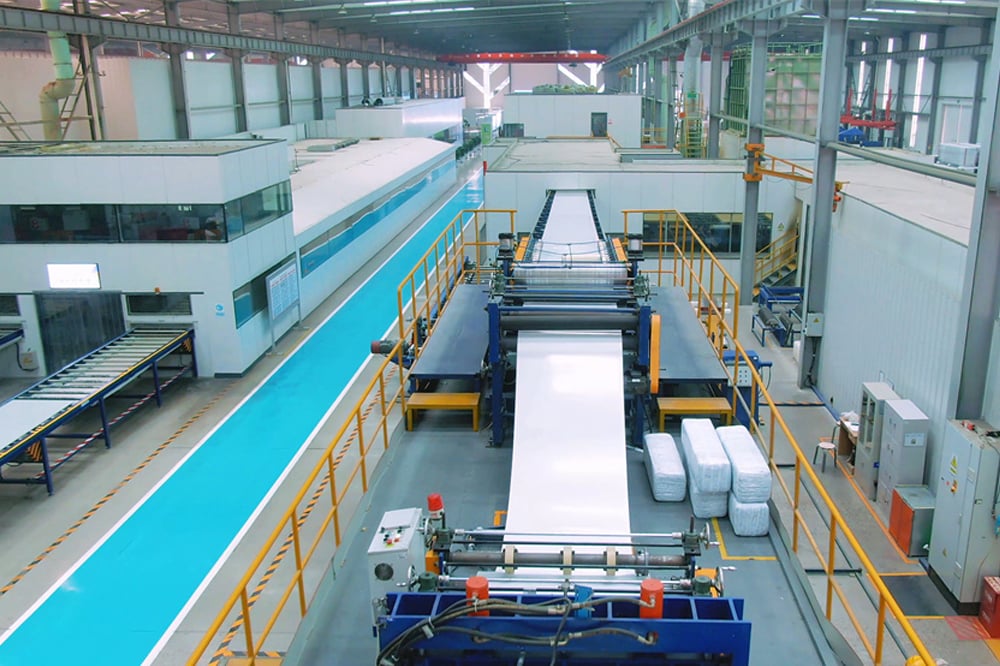
| 3. Production manufacturing | Cutting, forming, assembly, and quality inspection |
| 4. Packaging and delivery | Export-grade packaging to ensure safe delivery to the project site |
Q1: What is a rock wool acoustic panel used for?
Rock wool acoustic panels are mainly used to absorb sound, reduce echo, and improve indoor acoustic environments in factories, offices, cleanrooms, and commercial buildings, while also meeting fire safety requirements.
Q2: Are rock wool acoustic panels suitable for industrial buildings?
Yes. Industrial rock wool acoustic panels are specifically designed for factories, workshops, and equipment rooms where both noise reduction and fire resistance are required.
Q3: Can rock wool acoustic panels be customized?
Yes. Professional manufacturers can customize size, thickness, rock wool density, and surface finishes according to project requirements.
Q4: What is the difference between rock wool acoustic panels and soundproof panels?
Rock wool acoustic panels absorb reflected sound inside a space, while soundproof panels mainly block sound transmission between different areas.
Q5: How long is the service life of a rock wool acoustic panel?
Service life depends on rock wool density, facing material, and installation environment. High-quality metal-faced rock wool acoustic panels can deliver long-term performance with low maintenance.
If you are looking for a reliable rock wool acoustic panel manufacturer, sound absorbing panel supplier, or industrial acoustic panel factory, Glostar can provide a solution tailored to your project — whether it's an industrial workshop, cleanroom, or commercial building.
Get in touch with Glostar today to discuss your rock wool acoustic panel project requirements.
Email: [email protected] | WhatsApp: +86 195 5427 6139
 Hot News
2026-09-09
2026-08-14
2026-08-11
2026-08-06
2026-07-30
2026-07-20

We believe that by upholding quality and embracing innovation, we can drive transformative changes in architecture and build a sustainable future for the construction industry.
No. 377, Gaoqi Road, High-tech Zone, Binzhou City, Shandong Province, China
Copyright © Shandong Apex Metal Products Co., Ltd. All Rights Reserved (Under the Glostar New Materials Group) Privacy Policy Blog
 EN
EN