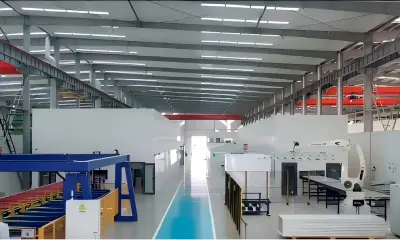
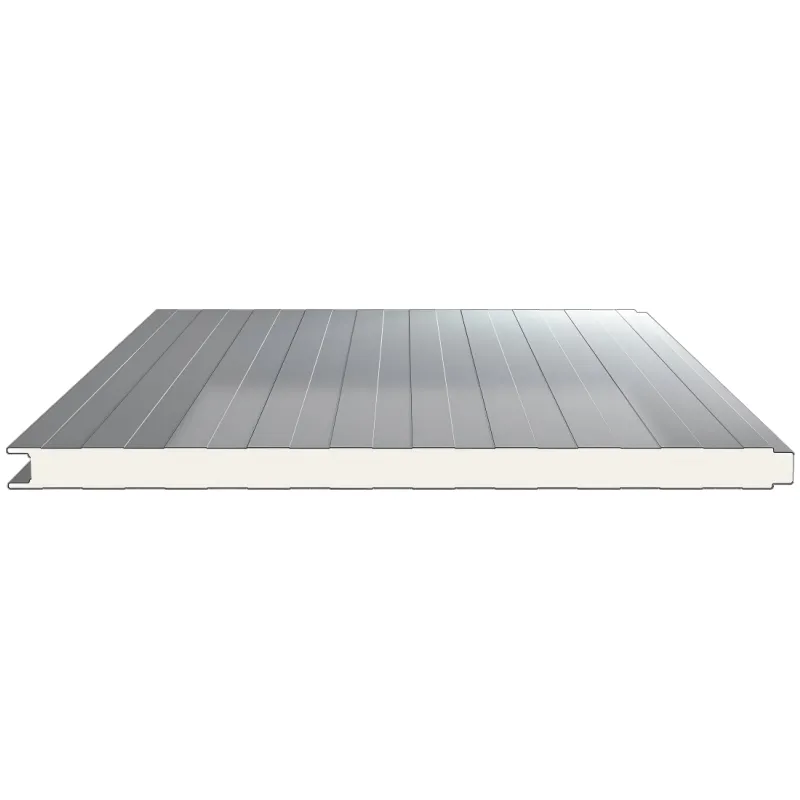
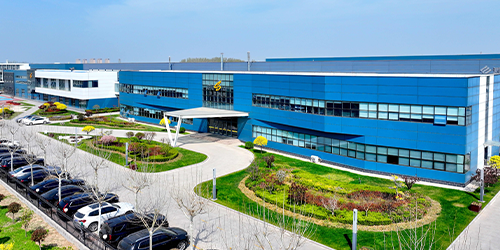
Ten years ago, importing cleanroom panels from China for a GMP pharmaceutical project would have raised eyebrows in most engineering teams. Today, panels manufactured in Shandong or Guangdong are sitting on the walls of pharmaceutical facilities in Saudi Arabia, food processing plants in Vietnam, and hospital operating rooms in Egypt — facilities that have passed regulatory inspections without panel-related findings. The shift hasn't happened because the quality bar got lower. It's happened because a segment of Chinese manufacturers raised their quality to meet the bar that was already there.
But the category of "Chinese cleanroom panels" still covers a very wide range, from manufacturers who genuinely understand what an IQ documentation package needs to contain and what lamella-oriented rock wool means, to trading companies who list "GMP cleanroom panels" on Alibaba without owning a single piece of production equipment. Getting the sourcing decision right means understanding what actually makes the case for Chinese supply on a specific project — and what due diligence prevents the most common mistakes.
The argument for importing cleanroom panels from China doesn't begin with price — though cost is part of it. It begins with capability. China's domestic pharmaceutical, food processing, and semiconductor industries have been consuming GMP-grade cleanroom panel systems at scale since the early 2000s, and the manufacturers who grew up serving those markets developed technical capabilities that transfer directly to international supply.
Three structural factors make China a genuinely competitive source for cleanroom panels, not just a cheap one:
China produces the key inputs for cleanroom panels domestically: pre-painted galvanized steel (PPGI) from major mills in Shandong, Hebei, and Jiangsu; rock wool from established mineral wool producers; and polyurethane/PIR foam chemicals from a well-developed domestic chemical industry. This means Chinese panel manufacturers don't face the input cost fluctuations and supply delays that affect panel producers in smaller markets who source most materials internationally. They can also specify their inputs more tightly — a manufacturer who buys directly from a domestic rock wool mill can confirm density, fiber orientation, and batch traceability in a way that's difficult when sourcing through intermediaries.
A manufacturer who has built five hundred pharmaceutical cleanroom projects in China understands, in a way that's hard to acquire theoretically, what an EU GMP inspector is going to look at when they examine a panel joint, why the edge seal matters more than the panel face, and what an IQ documentation package needs to contain. That experience is embedded in production processes, quality control procedures, and the technical team's practical knowledge. It's also why the best Chinese cleanroom panel manufacturers tend to cluster around specific industrial provinces where that industry knowledge has accumulated over decades.
A decade of international export experience has produced manufacturers who understand SABER registration in Saudi Arabia, ESMA requirements in the UAE, CE marking in Europe, and the documentation format that international IQ auditors need. They have English-language material data sheets, fire certificates from accredited European or international laboratories, and logistics arrangements with freight forwarders who know how to pack and ship panel orders to minimize transit damage. These capabilities took years to build and represent a genuine advantage for buyers in markets where local panel supply is limited or doesn't meet GMP specifications.
The honest answer is: it depends significantly on what you're comparing against, and the saving is rarely as large as buyers initially hope, nor as small as some suppliers in higher-cost markets would suggest. Here's a realistic picture.
For cleanroom panels sourced from established Chinese manufacturers and delivered to Middle Eastern or Southeast Asian projects, typical FOB pricing in 2025 runs approximately:
| Panel Type | Specification | Approx. FOB Price (USD/m²) |
|---|---|---|
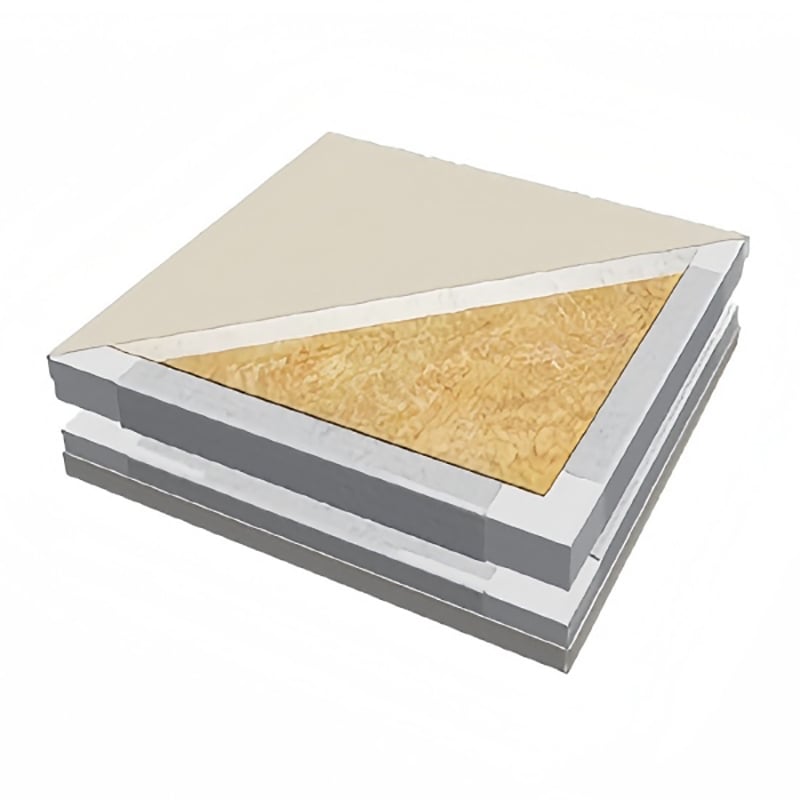
| Rock wool wall panel | 100 mm, 100–120 kg/m³, PVDF, 0.5 mm skin | USD 20–32 |
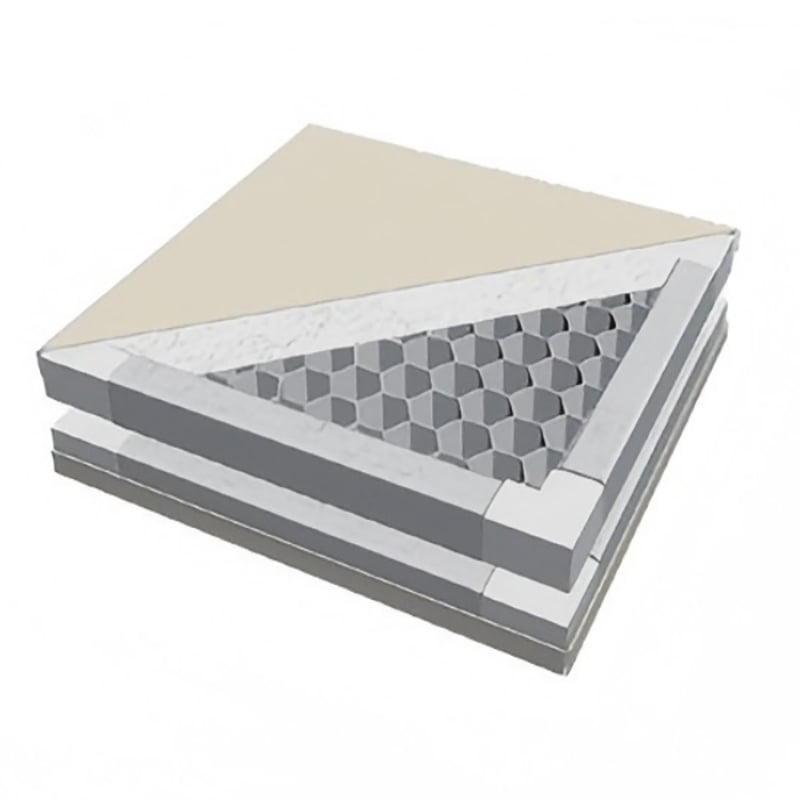
| Aluminum honeycomb ceiling | 50 mm, PVDF, 0.5 mm skin | USD 23–38 |
| PIR/PU sandwich panel | 100 mm, PVDF, 0.5 mm skin | USD 14–22 |
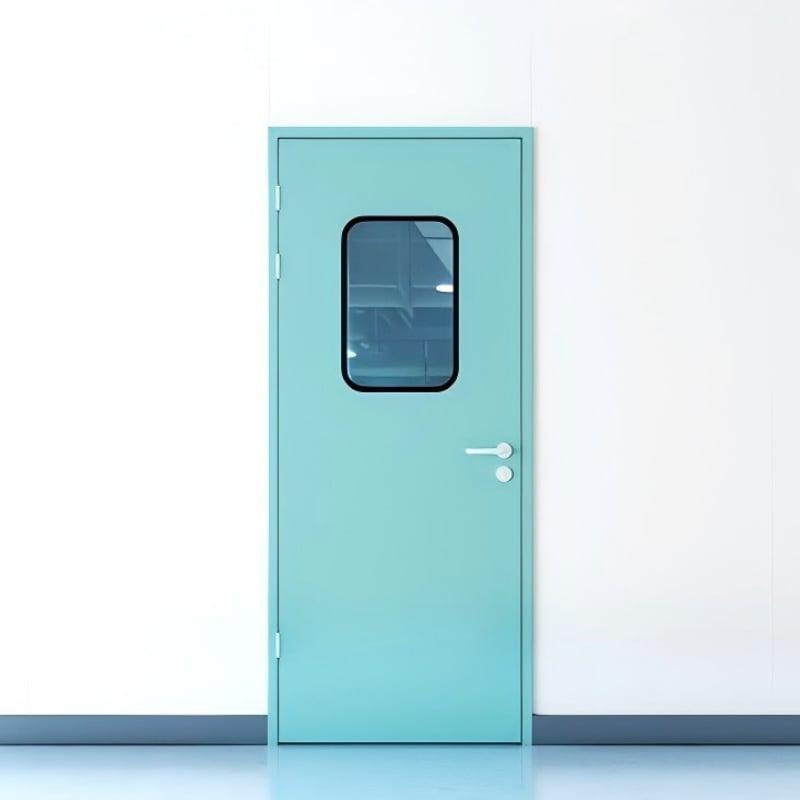
| Cleanroom door (single leaf) | 900×2100 mm, honeycomb core, PVDF | USD 280–420 per unit |
To put those numbers in context: equivalent cleanroom panels from European manufacturers typically run 40–80% higher. From local manufacturers in markets like the UAE or Vietnam — where the domestic cleanroom panel industry is still developing — prices may be competitive on headline cost but quality and documentation compliance are variable. In markets like India, local competition is stronger and the price gap narrows.
The total landed cost calculation matters more than the FOB price. Add to the Chinese panel price: sea freight (typically USD 800–1,800 per 20-foot container depending on destination), insurance, import duties (which vary significantly by country and HS code), and customs clearance agent fees. For a full facility order of 2,000 m² or more, these logistics costs typically add 8–18% to the FOB price. Smaller orders, proportionally more.
The real cost advantage isn't always price: For projects in markets where genuinely GMP-compliant panel systems with full EU-standard documentation aren't available locally at any price — parts of the Middle East, Southeast Asia, and Africa — China's advantage is access, not just cost. The alternative isn't a local supplier at higher cost; it's no viable local supplier at all.
Quality in cleanroom panels isn't easily visible in a product photo or a catalog. A panel made with 60 kg/m³ rock wool and one made with 120 kg/m³ look identical in a photo and nearly identical in hand unless you know what to look for. The difference shows up in long-term dimensional stability, bonding strength under thermal cycling, and the test reports that either exist or don't when the regulatory auditor asks for them.
Here's what distinguishes genuinely high-quality Chinese cleanroom panel production:
▶ Video: Cleanroom panel production at Glostar — core material placement, adhesive bonding, and four-side edge sealing process
The most commonly misrepresented specification in the Chinese cleanroom panel market is rock wool density. Manufacturers serving GMP pharmaceutical and food industry clients specify their rock wool at 100–120 kg/m³ — the density range that provides adequate bonding strength, acoustic performance, and long-term stability. Many factories producing general industrial sandwich panels use 60–80 kg/m³ as their standard. The numbers look similar in a quote, but the performance over a 20-year facility life is substantially different.
A quality Chinese manufacturer will provide a mill certificate from their rock wool supplier — a separate document from their own data sheet — that shows the declared density for the specific production batch used. This is the standard of evidence that pharmaceutical IQ documentation requires, and a manufacturer who produces it routinely is operating at a different level than one who can only cite their own product data sheets.
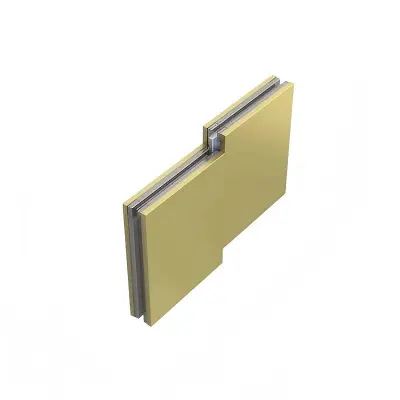
This is the physical detail that most clearly separates a proper cleanroom panel from a general sandwich panel that someone is calling a cleanroom panel. All four edges of a cleanroom panel should be enclosed in formed steel or aluminum channel, completely covering the core material. In a pharmaceutical or food processing environment, any exposed rock wool edge will shed fibers into the controlled space — which is a direct contamination failure. Inspect edge sealing on every sample you receive before committing to a production order.
PVDF (polyvinylidene fluoride) coating is the standard for pharmaceutical and food industry cleanroom panels. It resists UV degradation, maintains its cleanability under repeated oxidizing disinfectants (including VHP — vaporized hydrogen peroxide — used in many Grade B aseptic suites), and retains its color and surface integrity for 20+ years. Standard PE (polyester) coating is adequate for general industrial applications but degrades too quickly under aggressive pharmaceutical disinfection protocols. Leading Chinese cleanroom panel manufacturers have PVDF as a standard option for regulated applications — if a supplier can't quote PVDF or treats it as a special request, that tells you something about the markets they normally serve.
Country of manufacture doesn't appear as a compliance criterion in EU GMP, US FDA, or WHO GMP guidelines — what matters is whether the product meets the required specification and whether the documentation supports it. Chinese-manufactured cleanroom panels can and do pass regulatory inspections globally. The certifications below are what international buyers should request and verify:
| Certificate | What It Confirms | Required For |
|---|---|---|
| EN 13501-1 (A1 fire class) | Rock wool core is non-combustible | GMP pharma, hospitals, fire-rated buildings |
| ISO 9001 | Quality management system audited | All regulated applications |
| SGS / BV / Intertek bonding report | Skin-to-core bond strength verified by 3rd party | GMP IQ documentation |
| Rock wool mill certificate | Core density confirmed by raw material supplier | GMP IQ documentation |
| EN 14509 / CE Declaration of Performance | Structural performance tested to European standard | EU/UK projects; some Middle East projects |
| SABER / ESMA registration | Product registered for Saudi Arabia / UAE import | Saudi Arabia (mandatory); UAE (project-dependent) |
One practical point about certification verification: it's worth cross-checking certificates against the issuing body's records rather than accepting the document at face value. EN 13501-1 certificates issued by Notified Bodies are traceable through public registries. SGS and Bureau Veritas report numbers can be verified directly with the testing organization. This takes 15 minutes and has prevented many costly surprises — particularly for buyers whose previous experience is with domestic procurement where forgery is uncommon.
For more detail on what certifications matter for different applications, see our guide to How to Choose the Right Cleanroom Panel.
International supply chains for cleanroom panels are more manageable than many buyers expect, but they require early planning. The main variable that catches project teams off guard isn't the shipping time — it's the total timeline from placing an order to having panels cleared through customs and delivered to site.
| Stage | Typical Duration | Notes |
|---|---|---|
| Shop drawing production and approval | 2–3 weeks | Cannot start production before approval |
| Panel manufacturing | 3–5 weeks | Depends on volume and current factory loading |
| Sea freight (to Middle East) | 3–4 weeks | Ports of Jeddah, Dubai, Dammam |
| Sea freight (to Southeast Asia) | 1–2 weeks | Ho Chi Minh City, Singapore, Jakarta |
| Customs clearance (destination) | 1–2 weeks | SABER in Saudi can add 4–8 weeks if not pre-registered |
| Total: order to site (Middle East) | 10–14 weeks | Plan from this figure, not the quoted lead time alone |
The most common logistics mistake is beginning the panel procurement process too late — after construction has already started and the schedule is already tight. Panel fabrication starts from approved shop drawings, not from order placement. Get the manufacturer involved during the design phase, not after the architectural drawings are finalized; it compresses the timeline by several weeks and avoids the coordination problems that arise when panel dimensions conflict with the structural grid.
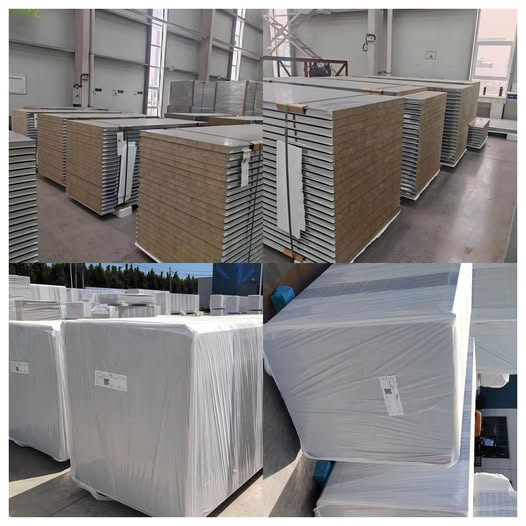
As a rough guide for planning container requirements: a 20-foot container holds approximately 250–350 m² of 100 mm rock wool panels depending on panel width and length; a 40-foot container roughly doubles this. Panels should always be shipped face-to-face with protective interleaving material between panel faces, and strapped to robust timber pallets. Require packing photos before shipment and container loading photos confirming correct stowage — panels that aren't properly secured can shift in transit and arrive with surface damage.
Chinese cleanroom panel supply doesn't make equal sense for every project. Here's an honest breakdown of where the value proposition is strongest and where it's weaker:
✅ Strong fit
⚠️ Weaker fit
For projects in the second column, Chinese supply isn't necessarily wrong — but the decision requires more careful analysis of whether the cost or access advantage justifies the logistics complexity.
Knowing what to look for in a credible supplier is part of the story. Knowing what should make you slow down and ask more questions is equally important:
For a more detailed evaluation framework, see our guide to Leading Cleanroom Panel Manufacturers in China and the Key Factors When Selecting a Panel Manufacturer.
Yes — where the panels meet the required specification and are accompanied by the correct documentation. Country of manufacture is not a criterion in EU GMP guidelines. What inspectors look at is whether the physical construction (surface finish, joint sealing, edge sealing, fire classification) matches what's specified, and whether the IQ documentation package — including material data sheets, fire certificates, and third-party bonding strength reports — supports the specification claim. Chinese-manufactured panels that meet these criteria have been installed in facilities that passed EU GMP inspection.
Request a video call showing the production floor — specifically the panel assembly area, adhesive station, and pressing equipment. Ask for the factory's Chinese business license (营业执照) and check that the registered business scope includes "manufacturing" of relevant products. Offer to arrange a third-party factory audit through SGS or Bureau Veritas; genuine manufacturers accept this without hesitation. Trading companies typically deflect or claim the "factory" isn't available for audit.
As a rough guide, orders below 100 m² tend to be poor candidates for direct import because the per-m² freight and logistics cost is high relative to the material cost advantage. Orders above 300–500 m² start to see the economics work clearly. The breakeven depends on the specific alternative supply available in your market and the logistics cost to your destination port — it's worth running the numbers for your specific project rather than assuming either extreme.
Most established cleanroom panel manufacturers provide detailed written installation guides and shop drawings showing the connection system, joint sealing sequence, and corner details. On-site installation supervision is available from some manufacturers (typically as a separate service at an additional cost), though for international projects it's more common for the manufacturer to train the local contractor through documentation and video consultation rather than sending a representative. The installation guidance quality varies significantly — ask to see a sample installation manual before selecting a supplier, particularly if your local contractor has limited prior experience with cleanroom panel systems.
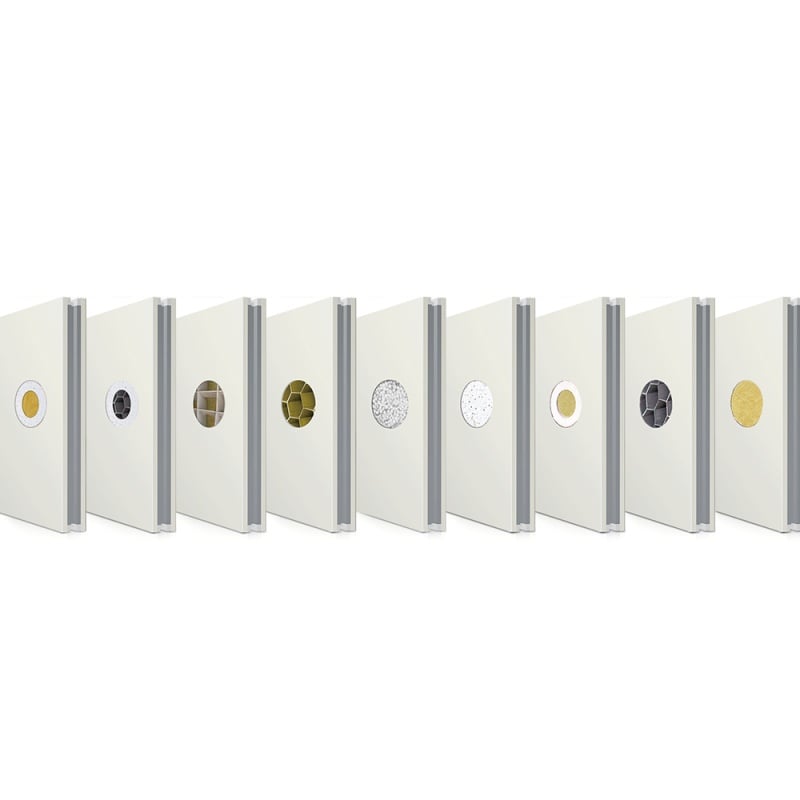
At minimum: panel type (rock wool / aluminum honeycomb / PU), thickness in mm, rock wool density in kg/m³ (not just "high density"), panel dimensions, skin thickness on both faces, surface coating type (PVDF or PE) and color (RAL number), edge sealing specification (all four sides, steel channel), connection system type (concealed internal connector / tongue-and-groove), required certifications (EN 13501-1 A1, ISO 9001), and documentation to be supplied (material data sheet, fire certificate, third-party bonding strength report, rock wool mill certificate, shop drawings). Including these specifics in the purchase order creates a contractual basis for what you're actually buying, rather than leaving the specification open to interpretation.
Glostar (Shandong Apex Metal Products Co., Ltd.) exports rock wool cleanroom panels, aluminum honeycomb ceiling panels, PU/PIR sandwich panels, and cleanroom doors and windows to pharmaceutical, food processing, and electronics projects across the Middle East, Southeast Asia, and South America. English-language IQ documentation as standard.
Contact Our Export Team → Hot News
2026-09-09
2026-08-14
2026-08-11
2026-08-06
2026-07-30
2026-07-20

We believe that by upholding quality and embracing innovation, we can drive transformative changes in architecture and build a sustainable future for the construction industry.
No. 377, Gaoqi Road, High-tech Zone, Binzhou City, Shandong Province, China
Copyright © Shandong Apex Metal Products Co., Ltd. All Rights Reserved (Under the Glostar New Materials Group) Privacy Policy Blog
 EN
EN