There's a question that comes up consistently in sandwich panel procurement — sometimes from experienced buyers who want to confirm their reasoning, sometimes from project teams specifying a new facility type they haven't worked with before: rock wool or PU? Both are widely used, both produce panels that look broadly similar on a spec sheet, and the price difference between them is often close enough to feel like splitting hairs. But put them in the wrong application and the consequences range from a failed regulatory inspection to a fire that spreads when it shouldn't.
The answer isn't complicated, but it does require understanding what each material is actually optimized for. Rock wool and PU foam were developed to solve different problems. Rock wool exists because some environments cannot tolerate combustible construction — its thermal performance is secondary to its fire classification. PU foam exists because some applications demand the highest thermal resistance per millimeter of thickness that current materials can provide — its combustibility is the trade-off you accept for that performance.
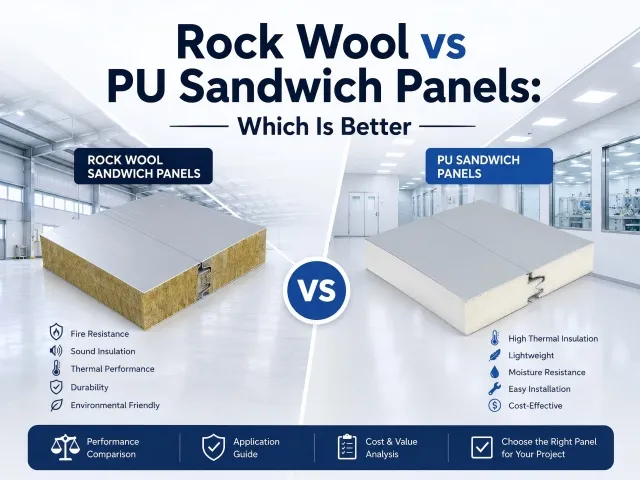
This article works through the comparison systematically: how each material performs across the properties that actually matter for specification decisions, which applications genuinely favor one over the other, and where the received wisdom about "rock wool vs PU" is more nuanced than the question implies.
Understanding the comparison starts with understanding what rock wool and polyurethane foam actually are — not just as panel cores, but as materials with specific physical properties that follow from how they're made.
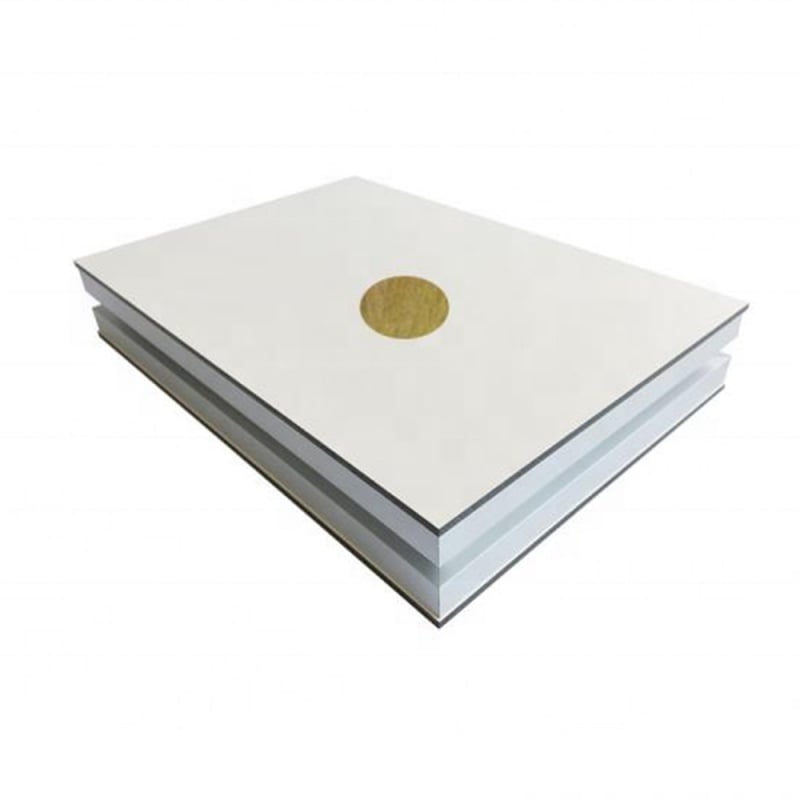
Rock wool is made by melting basalt rock and recycled industrial slag at temperatures above 1,500°C, then spinning the molten material into fine fibers. Those fibers are bound together with a small amount of phenolic resin and compressed into rigid slabs. The result is a material that is fundamentally inorganic — it came from rock, and it behaves like rock when exposed to heat. It doesn't melt at temperatures encountered in building fires. It doesn't produce significant smoke. It doesn't burn.
Rock wool in sandwich panels comes in varying densities. For standard industrial wall panels, 60–80 kg/m³ is typical. For cleanroom panels and GMP applications, 100–120 kg/m³ is specified — higher density means better bonding to the steel skins, better acoustic performance, and better long-term dimensional stability. The fiber orientation also matters: lamella-oriented rock wool (fibers running perpendicular to the panel face) provides substantially higher bonding strength and better fire resistance than standard-orientation board, and is the preferred specification for high-quality cleanroom panels.
Polyurethane foam is created by mixing two liquid chemical components — a polyol and an isocyanate — that react and expand in the cavity between the two steel skins as the panel passes through a continuous lamination press. The expanding foam fills the space completely and bonds to both steel faces simultaneously. The result is a closed-cell foam with a very fine, uniform cell structure that traps gas molecules effectively — which is why it insulates so well.
PIR (polyisocyanurate) is a chemically modified version of PU foam with a higher proportion of isocyanate in the reaction. This raises its heat resistance and improves its fire behavior somewhat — PIR achieves Class B2 under EN 13501-1, slightly better than standard PU in some fire test metrics. In practice, the distinction between PU and PIR is often less important than whether either is an acceptable core material for the application at all. Both are combustible; the difference in their fire behavior is one of degree, not kind.
The core distinction: Rock wool is an inorganic mineral material that doesn't burn. PU and PIR are organic polymer foams that do burn, though they produce a char layer that limits the spread to some degree. This single difference in fundamental material character determines which applications each can serve.
Fire is where rock wool and PU foam diverge most dramatically — and where the wrong choice has the most serious consequences. It's worth spending some time on this section, because the classification system can be confusing and the implications of getting it wrong are significant.
There are two distinct fire tests for building panels, and confusing them is a common source of errors in specification:
When a building code or regulatory guideline specifies "non-combustible construction" or "A1 fire classification," it's referring to the reaction to fire classification — and PU panels, regardless of their REI rating, cannot meet an A1 requirement. This is a hard constraint, not a matter of interpretation.
The list of building types and applications where non-combustible construction is required by code or regulatory guideline is longer than many buyers expect:
In all other applications — general industrial warehouses, logistics centers, cold storage where fire code permits combustible materials, agricultural buildings — PU and PIR panels are fully code-compliant and widely used. The question is simply whether A1 is required for your specific application and jurisdiction.
Important: Do not rely on a sales representative's assurance that PU panels are "acceptable" for a pharmaceutical or hospital application. Check the applicable regulatory guideline directly, or have your compliance team confirm it. The cost of replacing panels after a failed regulatory inspection is many times the cost of specifying correctly at the outset.
| Fire Property | Rock Wool | PU / PIR Foam |
|---|---|---|
| Reaction to Fire (EN 13501-1) | A1 — Non-combustible ✓ | B2 — Normally flammable ✗ |
| Melting / Ignition | Does not melt or ignite | Melts and ignites; char layer forms |
| Smoke Production | Minimal (s1 class) | Moderate to significant (s2–s3) |
| Fire Resistance (50 mm) | REI 60 (typical) | REI 30–60 (depends on skin spec) |
| Fire Resistance (100 mm) | REI 120–240 | REI 30–60 (core degrades in fire) |
| GMP / Hospital Compliant? | Yes ✓ | No — A1 not met ✗ |
If fire performance is rock wool's defining advantage, thermal insulation is PU's. The gap between them is substantial and consistent across all product variants.
PU foam has a thermal conductivity (lambda, λ) of approximately 0.022–0.028 W/m·K. Rock wool's lambda is 0.034–0.040 W/m·K. In practical terms, a 100 mm PU sandwich panel provides roughly the same thermal resistance as a 150–160 mm rock wool panel. For applications where every millimeter of panel thickness has cost and space implications — cold rooms, refrigerated warehouses, temperature-controlled pharmaceutical storage — this difference is commercially significant.
For cleanroom partition walls inside a building, thermal performance often isn't the primary driver — the HVAC system and the building's outer shell manage the thermal load, not the internal partition panels. In that context, the thermal gap between rock wool and PU is largely irrelevant to the partition panel specification, and fire classification rightly takes priority.
The thermal gap matters enormously in three specific scenarios:
| Thickness | Rock Wool U-value (W/m²·K) | PU/PIR U-value (W/m²·K) | PU Advantage |
|---|---|---|---|
| 50 mm | ≈ 0.70 | ≈ 0.43 | 38% better |
| 75 mm | ≈ 0.47 | ≈ 0.29 | 38% better |
| 100 mm | ≈ 0.35 | ≈ 0.22 | 37% better |
| 150 mm | ≈ 0.24 | ≈ 0.15 | 38% better |
Approximate values; actual U-values depend on specific product, steel skin thickness, and installation details.
Rock wool panels are significantly heavier than PU panels of equivalent dimensions. A 100 mm rock wool panel with 0.5 mm steel skins on each face weighs approximately 18–22 kg/m², depending on rock wool density. An equivalent 100 mm PU panel weighs roughly 11–13 kg/m². This weight difference has implications for:
Both panel types achieve good structural rigidity through the sandwich composite action between the steel skins and the core. Rock wool panels are somewhat stiffer than PU panels of equivalent thickness due to the higher shear modulus of the compacted mineral fiber core. For wall panels spanning floor-to-ceiling heights of 3–6 meters, both types are structurally adequate with appropriate skin thickness. For longer spans or panels subject to significant wind load, the structural calculation should be run for the specific panel specification — don't assume equivalence without checking.
Rock wool's dense fibrous structure provides significantly better sound absorption and sound reduction than closed-cell PU foam. A 100 mm rock wool panel at 100–120 kg/m³ density typically achieves a sound reduction index (Rw) of 38–45 dB — adequate to provide meaningful acoustic separation between production areas. A 100 mm PU panel achieves roughly 28–35 dB Rw.
For pharmaceutical manufacturing environments where noise control between production zones is required by occupational health standards or GMP process requirements, this 10+ dB gap is practically significant. It's one reason rock wool continues to be specified for pharmaceutical partition walls even in applications where the fire requirement alone wouldn't differentiate it — the acoustic benefit is a genuine secondary advantage.
The upfront material cost comparison between rock wool and PU panels is closer than many buyers expect, but it depends heavily on specification and market. As a general guideline in the current market:
The more important cost question for most projects isn't the upfront material price — it's lifecycle cost. A PU panel specified in an application that requires A1 fire classification costs nothing upfront relative to a rock wool alternative and costs everything when the facility fails regulatory inspection or insurance review and the panels need to be replaced. Conversely, a rock wool panel specified in a cold room application adds unnecessary weight and reduces thermal performance relative to PU/PIR — which increases operating energy costs over the facility's lifetime.
Cost framework: Ask which properties actually drive value in your application. If fire classification is a compliance requirement, rock wool's fire performance is worth whatever premium it carries — because the alternative isn't saving money, it's deferring a much larger cost. If thermal performance per millimeter is the key driver and fire classification permits combustible materials, PU's lower mass and better insulation make it the more cost-effective choice over the facility lifetime.
The right choice between rock wool and PU isn't a global judgment about which material is "better" — it's a function of what the panel needs to do in your specific project. Here's a practical breakdown by application type.
The "rock wool vs PU" question comes up frequently in cleanroom projects, often from procurement teams who've seen PU-core cleanroom panels available in the market and wonder whether they provide an acceptable alternative to rock wool at lower cost. The answer depends on the type of cleanroom, and understanding the distinction matters.
For cleanrooms subject to EU GMP, US FDA, WHO GMP, or equivalent regulatory inspection, the answer is rock wool — not as a preference, but as a compliance requirement. EU GMP Annex 1 (the guideline governing aseptic pharmaceutical manufacturing, which was significantly revised in 2022) explicitly calls for non-combustible construction materials in manufacturing areas. This has been interpreted consistently by regulatory inspectors as requiring A1 fire-classified wall and partition systems. PU-core cleanroom panels, regardless of surface finish or edge sealing quality, do not satisfy this requirement.
There's a commercial pressure that pushes back against this sometimes: PU-core panels are cheaper, lighter, and easier to install. Some contractors with limited GMP experience will suggest they're "basically equivalent" for cleanroom use. They are not equivalent for the purposes of regulatory compliance, and the project owner bears the consequences of that misspecification — not the contractor.
The picture is more nuanced here. BRCGS, SQF, IFS, and similar food safety standards focus primarily on surface hygiene, cleanability, and contamination control — they don't explicitly mandate A1 fire classification. Whether A1 is required depends on local building regulations, which vary by country. In the EU, many food processing facilities are required by national fire codes to use non-combustible construction, effectively mandating rock wool. In some Asian and Middle Eastern markets, PIR foam panels are acceptable for ambient-temperature food processing areas subject to fire authority approval.
For ISO 6–9 cleanrooms in electronics, automotive, and general industrial applications where no pharmaceutical or medical regulatory standard applies, PU-core cleanroom panels can be a legitimate choice where local fire code permits. The surface hygiene requirements (smooth, sealed, cleanable) are met by the cleanroom panel format regardless of whether the core is rock wool or PU. The decision comes down to fire code compliance and project-specific requirements rather than inherent material quality.
One practical point on edge sealing: Whether the core is rock wool or PU, a cleanroom panel must have all four edges sealed with formed metal channel sections, completely enclosing the core. Open-edge sandwich panels — even with PU foam core — are not suitable for any cleanroom application. Rock wool is particularly unforgiving here: an exposed rock wool edge will continuously shed fibers into the room interior, which is an automatic contamination failure in any regulated environment.
Building in a hot climate changes the thermal calculation in ways that affect the rock wool vs PU decision for the building envelope — though not necessarily for internal cleanroom partitions.
In a hot-climate project where the outer building shell is a key part of the thermal strategy, PU or PIR roof panels (with appropriate PVDF coating in light color to minimize solar reflectance) outperform rock wool roof panels on both thermal resistance and solar heat gain management. The higher insulation value of PU/PIR reduces the cooling load on the air conditioning system, which in high-energy-cost markets represents a meaningful lifecycle saving.
For hot-climate projects with pharmaceutical or food processing cleanrooms inside the building, the common approach is to use PU/PIR for the outer building shell (where fire code and thermal performance permit) while specifying rock wool panels for the internal cleanroom partitions (where GMP or fire code requirements mandate A1 classification). These two specifications serve different purposes and should be evaluated independently rather than forcing one material to do both jobs.
One important hot-climate durability point: PU foam panels in locations subject to significant temperature cycling — hot days, cooler nights, or wide seasonal variation — can experience differential thermal expansion between the steel skins and the foam core over time. Premium manufacturers address this through adhesive formulation and skin-to-core bonding specification. For hot-climate projects, ask specifically about thermal cycling durability and request references from comparable climate installations.
| Property | Rock Wool | PU / PIR Foam |
|---|---|---|
| Fire Classification | A1 — Non-combustible | B2 — Normally flammable |
| Thermal Conductivity | 0.034–0.040 W/m·K | 0.022–0.028 W/m·K ✓ better |
| Acoustic Performance | Rw 38–45 dB ✓ better | Rw 28–35 dB |
| Panel Weight (100 mm) | 18–22 kg/m² | 11–13 kg/m² ✓ lighter |
| Installation Speed | Slower (heavier, handle with care) | Faster ✓ |
| Cold Room Suitability | Not recommended | Standard choice ✓ |
| GMP Pharma Compliant | Yes ✓ | No ✗ |
| Hospital Compliant | Yes ✓ | Generally No ✗ |
| Industrial Warehouse | Yes (if fire code requires) | Yes, cost-effective ✓ |
| Material Cost (typical) | Medium (10–20% above PU) | Lower ✓ |
| Durability / Longevity | 25–35 years (core doesn't degrade) ✓ | 20–30 years (good with sealed edges) |
Yes — and on many projects, this is exactly the right approach. A pharmaceutical facility might use PU/PIR panels for the outer building shell (where they provide better thermal performance for the building envelope) and rock wool panels for all internal cleanroom partitions (where GMP fire compliance requires A1 classification). The two panel types don't interfere with each other structurally or thermally, and specifying each one for the application it's suited to is simply good engineering.
PIR has modestly better fire behavior than standard PU (it achieves B2 rather than B3 in some test configurations, and its char layer is somewhat more stable under heat). But this difference doesn't change the fundamental fire classification — both are combustible, neither achieves A1. For cleanroom applications where A1 is required, neither PU nor PIR is acceptable. For applications where A1 is not required and thermal performance is the priority, PIR's slightly higher heat resistance and marginally better lambda value make it the preferred specification over standard PU.
Rock wool fiber itself has very low inherent moisture absorption, but the air spaces between fibers can accumulate moisture if the panel is exposed to sustained humidity without adequate protection. In a properly made cleanroom panel with all four edges sealed and PVDF-coated steel skins, the core is protected from the ambient environment and moisture ingress is not a concern in normal service. The risk scenario is an edge seal that fails — either through manufacturing defect or physical damage in service — which creates a pathway for moisture to reach the core. Regular inspection of edge seals and prompt repair of any damage is the appropriate maintenance response.
Rock wool has a meaningful environmental advantage in end-of-life recyclability. The mineral fiber core can be recycled — some manufacturers have established take-back programs that process used rock wool into new product. PU foam is an organic polymer that is more difficult to recycle and typically goes to landfill at end of life, though some energy recovery through incineration is possible. Rock wool also uses a significant proportion of recycled content (industrial slag) in its production. On a whole-lifecycle basis, rock wool panels generally have lower environmental impact per square meter than PU alternatives, though the thermal performance difference means thicker panels are needed for equivalent insulation, which partially offsets this advantage.
PU foam burns and produces toxic combustion gases — primarily carbon monoxide, hydrogen cyanide, and isocyanate compounds — that are hazardous to building occupants. It also produces significant smoke that impedes evacuation. The char layer that forms on the burning surface does slow flame spread somewhat, but once the steel face sheet buckles or peels away (which happens relatively quickly in a developed fire), the foam core is fully exposed and the fire accelerates. This is not to say PU panels are categorically dangerous — they're widely used safely in code-compliant applications. The concern is when they're used in applications that require non-combustible materials, where their fire behavior doesn't meet the assumed safety standard.
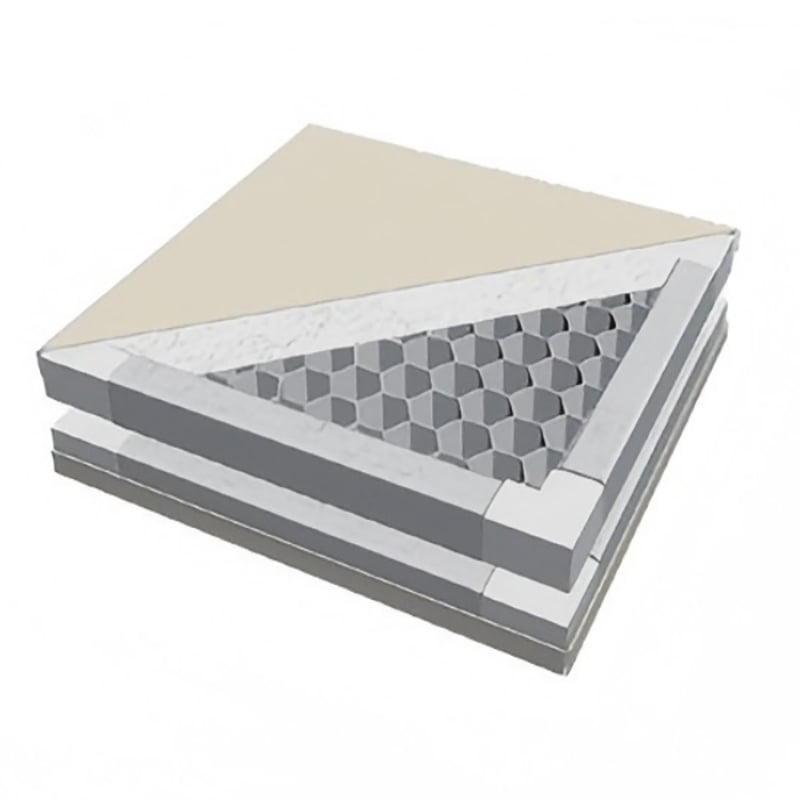
No. In a GMP pharmaceutical cleanroom, the non-combustible requirement applies to the entire room envelope — walls and ceiling. Using rock wool walls and PU ceiling panels would leave the ceiling non-compliant. The standard specification for GMP cleanroom ceilings is aluminum honeycomb panels, which are non-combustible (A1) and significantly lighter than either rock wool or PU at equivalent span. Aluminum honeycomb ceiling panels paired with rock wool wall panels is the most common GMP cleanroom panel combination.
Ask for the EN 13501-1 fire classification certificate from an accredited third-party testing laboratory — not just the manufacturer's data sheet. The certificate should identify the specific product, the test laboratory (which should be a Notified Body or accredited lab recognized in your market), the test date, and the declared classification. For rock wool panels, the A1 classification is straightforward — mineral wool is inherently non-combustible and A1 certification is standard for any reputable product. For PU/PIR panels, the declared classification should be B2 at best; any claim of A1 for a foam-core panel should be verified with extreme caution, as it would be technically extraordinary.
Rock wool is better when fire classification is a compliance requirement — which it is in pharmaceutical manufacturing, hospital construction, and a wide range of other regulated environments. It's also better when acoustic separation between zones matters, and when long-term core durability is the priority.
PU and PIR foam are better when thermal performance per millimeter is the key variable — cold rooms, refrigerated warehouses, and building envelopes in climates with high thermal loads. They're also lighter, faster to install, and typically lower in upfront cost for applications where combustible materials are acceptable.
The question isn't really which material is better in absolute terms. It's which one is right for the specific constraints and priorities of your project — and answering that question correctly at the specification stage is considerably less expensive than discovering the wrong answer after construction is complete.
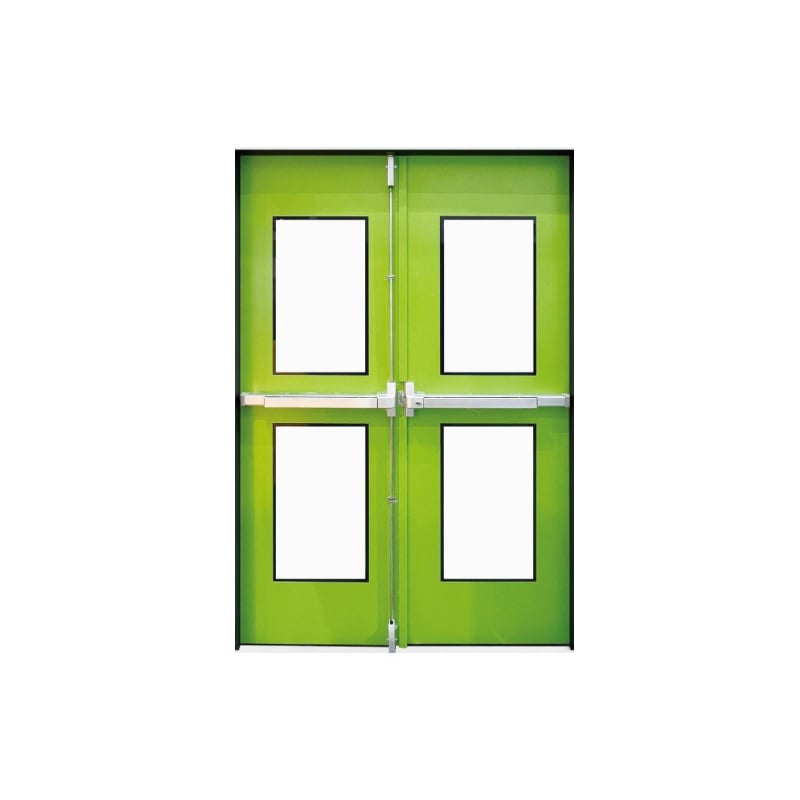
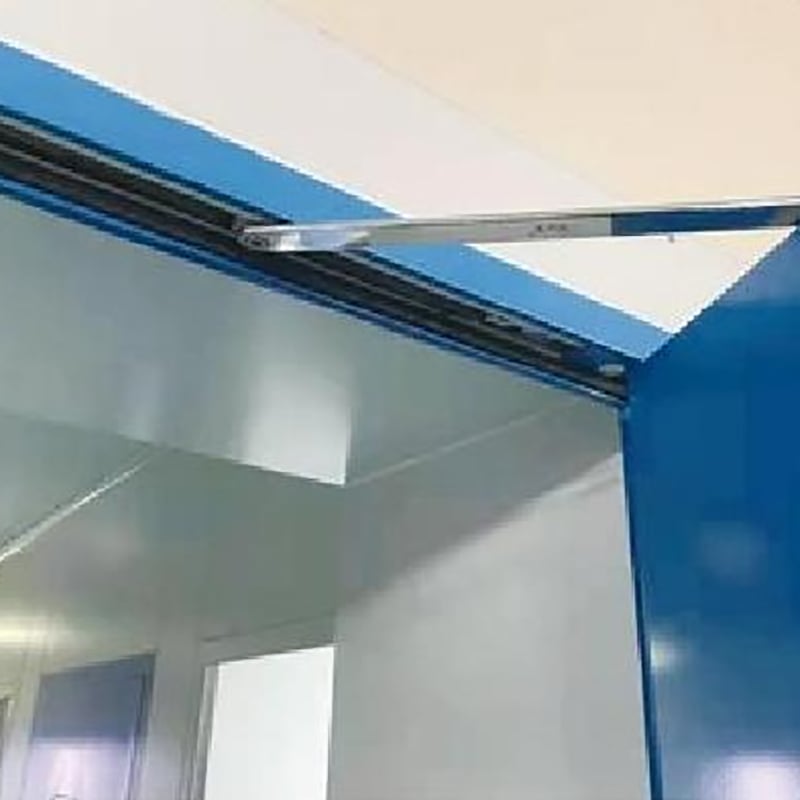
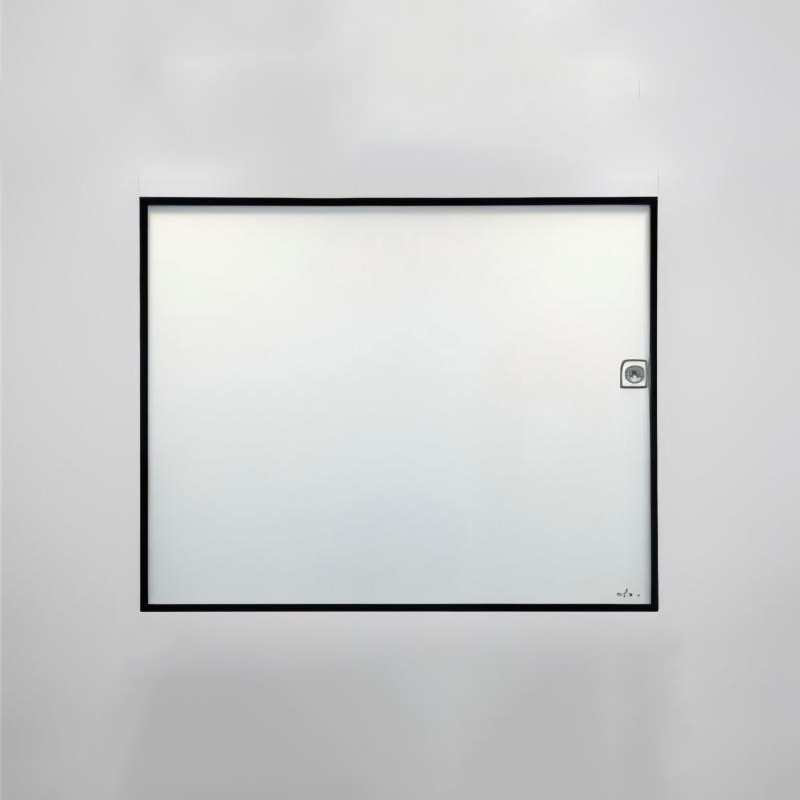
Glostar manufactures both rock wool cleanroom panels and PU sandwich panels, as well as aluminum honeycomb ceiling panels and complete door and window systems. Tell us about your application and we'll recommend the right specification — with technical data sheets and third-party test reports to back it up.
Talk to Our Technical Team → Hot News
2026-09-09
2026-08-14
2026-08-11
2026-08-06
2026-07-30
2026-07-20

We believe that by upholding quality and embracing innovation, we can drive transformative changes in architecture and build a sustainable future for the construction industry.
No. 377, Gaoqi Road, High-tech Zone, Binzhou City, Shandong Province, China
Copyright © Shandong Apex Metal Products Co., Ltd. All Rights Reserved (Under the Glostar New Materials Group) Privacy Policy Blog
 EN
EN