There's a pattern that keeps repeating across pharmaceutical, electronics, and food processing projects in Southeast Asia right now. A company that built its manufacturing base in China over the past two decades makes a decision — sometimes driven by tariff exposure, sometimes by customer pressure, sometimes simply by the board's risk appetite — to open a second production site outside China. The site search lands in Vietnam, or Indonesia, or India, or Malaysia. Permits are secured, construction begins, and within eighteen months, a facility that didn't exist is producing product.
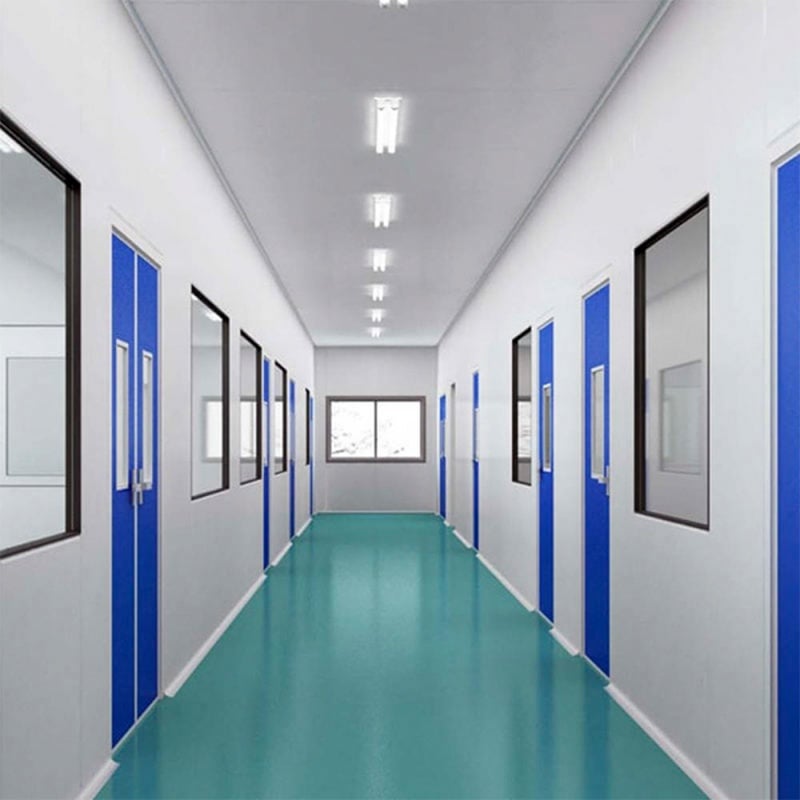
The cleanroom inside that facility — the GMP production suite, the aseptic fill-finish area, the controlled packaging zone — is what makes it work. And sourcing that cleanroom panel system, in a country where this type of specialized construction may be genuinely unfamiliar to local contractors, on a timeline driven by commercial urgency rather than construction convenience, is one of the more interesting sourcing challenges in the panel industry right now.
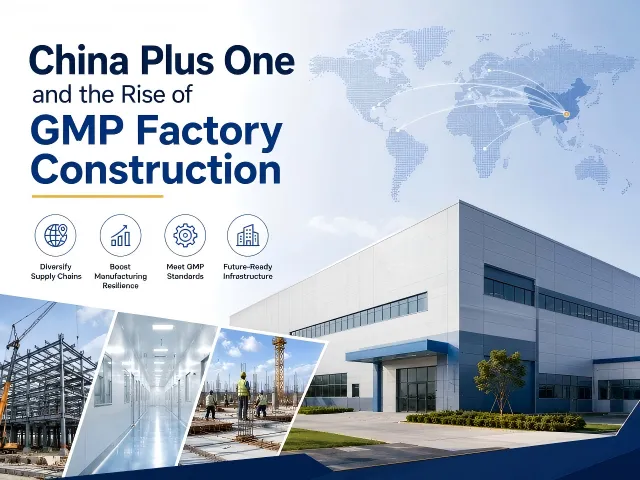
This article looks at what's actually driving the China Plus One construction wave, which markets are seeing the most activity, what GMP facilities built in these markets look like on the inside, and what project teams need to think about when they're specifying and procuring cleanroom panel systems for facilities in countries they may not have built in before.
China Plus One is a shorthand for a sourcing and manufacturing strategy: instead of concentrating production in China, a company establishes at least one additional production base in another country — the "plus one." The idea isn't to leave China; it's to reduce the risk of having all eggs in a single geographic basket.
The strategy gained traction during the US-China trade disputes that began in 2018, accelerated dramatically during COVID-19 when supply chains froze across industries simultaneously, and has since become something closer to a baseline assumption for any multinational thinking seriously about operational risk. The 2022 chip shortage reinforced the lesson for electronics. Russia's invasion of Ukraine reinforced it for energy and materials. The cumulative effect has been a broad shift in how boards and investment committees think about geographic concentration — and a corresponding surge in capital flowing toward facility construction in alternative locations.
In practice, China Plus One plays out differently across industries. For consumer electronics, it often means contract manufacturing in Vietnam or India. For automotive components, Mexico and Eastern Europe are the frequent beneficiaries. For pharmaceutical manufacturing — which is where the most GMP-specific construction implications arise — the decisions are more complex, because pharmaceutical facilities can't simply be relocated to wherever labor is cheapest. They have to be built to regulatory standards that apply in every market where the product will be sold.
The construction implication: Every new pharmaceutical, biotech, medical device, or regulated food processing facility built as part of a China Plus One strategy needs a GMP-compliant interior — which means cleanroom panels, controlled HVAC, validated utilities, and a documentation trail that can survive regulatory inspection. The facility might be in a country where GMP construction is well-established, or it might be in a market where this type of specialized construction is relatively new. Either way, the panel system itself has to meet the same standard.
Of all the industries implementing China Plus One strategies, pharmaceutical manufacturing is producing the most significant construction activity — and the most technically demanding facilities. Several factors explain why.
The pandemic made visible what supply chain analysts had been flagging for years: pharmaceutical supply chains were dangerously concentrated. Active pharmaceutical ingredients (APIs) — the chemical compounds that actually do the work in a drug — were sourced heavily from India, and India sourced much of its precursor chemistry from China. When Chinese manufacturing was disrupted in early 2020, the knock-on effects reached hospitals and pharmacies in Europe and North America within weeks. This wasn't a theoretical risk anymore; it was a patient safety event. The regulatory and political response was predictable: invest in domestic or regionally diversified pharmaceutical manufacturing capacity, urgently.
Multiple governments have introduced significant incentive programs to attract or develop pharmaceutical manufacturing. India's Production Linked Incentive (PLI) scheme for pharmaceuticals, announced in 2020, committed roughly USD 1.7 billion to encouraging domestic production. The EU's pharmaceutical strategy included provisions specifically aimed at reducing API import dependency. The US passed the BIOSECURE Act language aimed at restricting procurement from certain Chinese biotech companies, which indirectly drives investment in alternative supply sources. Vietnam, Indonesia, and Malaysia have all introduced investment incentives specifically targeting pharmaceutical manufacturing.
The effect has been to make GMP factory construction financially attractive in markets where it might otherwise have moved more slowly. A company that was considering a new facility in five years is building it now, because the incentive window has a deadline.
A decade ago, pharmaceutical manufacturing in Southeast Asia largely served local generic drug markets with modest regulatory requirements. That picture has shifted. Companies in Vietnam, Indonesia, Thailand, and Malaysia are now seeking WHO GMP certification — and sometimes EU GMP or US FDA approval — to access export markets in the Middle East, Africa, and developed countries. Each step up the regulatory ladder requires a more sophisticated facility, and that means more demanding cleanroom construction.
While pharmaceutical construction is the most GMP-specific driver, the semiconductor and advanced electronics manufacturing wave creates parallel cleanroom demand. New semiconductor fabs require ISO-class cleanroom environments — often at ISO 3–5, among the most demanding classifications — and the wave of fab construction in the US, Europe, Japan, and Southeast Asia represents a significant volume of cleanroom panel demand. The specifications differ from pharmaceutical (antistatic surfaces, outgassing control, different pressure management approaches) but the underlying panel system technology is closely related.
The China Plus One construction wave is not evenly distributed. It concentrates in markets that offer a combination of lower labor costs, improving infrastructure, relatively stable regulatory environments, and existing industrial base. Different industries favor different locations, and within pharmaceutical, the activity patterns reflect each country's existing regulatory capabilities.
🇻🇳 Vietnam
Vietnam has probably benefited more visibly from China Plus One than any other single country. Electronics assembly — particularly smartphones, laptops, and components — relocated here at scale, but pharmaceutical investment has followed. The country has a growing number of WHO GMP-certified manufacturers, and both South Korean and Japanese pharmaceutical companies have established or expanded Vietnamese facilities. The Ho Chi Minh City and Hanoi industrial zones now have established pharmaceutical clusters with supporting contractor ecosystems. Lead times for GMP construction materials, including cleanroom panels, are improving as more experienced local contractors develop capability.
Primary sectors: Generic pharmaceuticals, OTC drugs, medical devices, electronics
🇮🇳 India
India occupies a unique position — it's simultaneously a China Plus One destination and itself a manufacturing concentration risk. The country supplies roughly 20% of global generic drug volume and is the world's largest producer of vaccines by volume. The PLI scheme has accelerated investment in both API manufacturing and formulation facilities. Hyderabad, Ahmedabad, Bengaluru, and Pune are established pharmaceutical manufacturing hubs with strong local contractor capabilities for GMP construction. The regulatory environment is more mature than in most Southeast Asian markets — many Indian facilities are already USFDA or EU GMP approved — which makes the cleanroom specification process more straightforward.
Primary sectors: API manufacturing, generics, biosimilars, vaccines
🇮🇩 Indonesia
With a population of 280 million and a rapidly expanding middle class, Indonesia is simultaneously a target market and a manufacturing destination. The government has made domestic pharmaceutical production a strategic priority, and the country's BPOM regulatory agency has been progressively aligning its standards with WHO GMP and PIC/S requirements. State-owned pharmaceutical companies like Bio Farma have invested heavily in facility upgrades, and foreign pharmaceutical companies are increasingly establishing local manufacturing partnerships or wholly owned facilities. The challenge in Indonesia is that the domestic cleanroom construction contractor base is still developing, which puts more emphasis on materials suppliers providing engineering support.
Primary sectors: Generics, OTC, vaccines, medical devices
🇲🇾 Malaysia
Malaysia punches above its weight in the pharmaceutical and medical device sectors relative to its population. The Penang and Klang Valley corridors have long-established medical device manufacturing clusters — many producing for global brands — and the regulatory environment is relatively sophisticated. Malaysia is also a beneficiary of semiconductor investment, with several large memory and packaging operations. The local GMP construction contractor market is well-developed by regional standards, and cleanroom panel systems from both local and international suppliers are readily available.
Primary sectors: Medical devices, semiconductor packaging, pharmaceutical generics
🌍 Middle East (UAE, Saudi Arabia, Egypt)
The Middle East pharmaceutical construction wave is driven by a different dynamic than Southeast Asia. The Gulf states have historically imported the vast majority of their pharmaceutical requirements, and reducing import dependency has become a strategic national objective. Saudi Arabia's Vision 2030 includes specific targets for domestic pharmaceutical production. The UAE — particularly Dubai and Abu Dhabi — has positioned itself as a regional hub for pharmaceutical manufacturing and distribution. Egypt, with 105 million people and a long history of pharmaceutical manufacturing, is expanding capacity to serve both its domestic market and regional export markets. The climate challenge in all these markets (extreme heat, potential humidity) adds an extra dimension to cleanroom panel specification.
Primary sectors: Generic pharmaceuticals, IV solutions, medical devices, API
| Market | GMP Construction Maturity | Key Regulatory Standard | Cleanroom Sourcing |
|---|---|---|---|
| India | High — established hubs | USFDA, EU GMP, WHO | Strong local + imports |
| Vietnam | Medium-High — growing fast | WHO GMP, PIC/S developing | Mostly imports (China, Korea) |
| Malaysia | High — long established | MDA, WHO, some EU GMP | Mixed local and imports |
| Indonesia | Medium — improving | BPOM, WHO GMP | Mainly imports |
| Saudi Arabia / UAE | Medium — investment-driven growth | SFDA, MOH, EU GMP for exports | Imports (EU, China, India) |
| Egypt | Medium — long pharma history | EDA, WHO GMP | Mixed |
GMP — Good Manufacturing Practice — is a set of regulatory guidelines that govern how pharmaceutical products are manufactured, tested, and controlled. In terms of physical facilities, GMP translates into a specific set of requirements for the production environment: controlled air quality, defined pressure differentials between zones, hygienic surfaces, validated utilities, and documented construction details.
The relevant guidelines vary by target market: EU GMP Annex 1 (for products sold into Europe), US FDA 21 CFR Part 211 (for US markets), WHO GMP (for products going to WHO-member developing countries), and PIC/S (for markets participating in the Pharmaceutical Inspection Cooperation Scheme). While these guidelines differ in some details, they share the same core physical requirements for the cleanroom environment.
For cleanroom panels specifically, GMP guidelines generate the following physical requirements:
Interior surfaces must be smooth enough to clean effectively and must not shed particles under normal operating conditions. For cleanroom panel systems, this rules out textured coatings, open-joint construction, and any core material with exposed edges. All panel edge transitions — where wall meets floor, wall meets ceiling, two walls meet at a corner — need to be designed without dust-trapping ledges or crevices.
GMP cleanrooms are disinfected repeatedly — often multiple times per shift in aseptic manufacturing areas — with agents ranging from 70% IPA to hydrogen peroxide vapor (VHP) to sporicidal chlorine-based solutions. The panel surface coating must withstand this chemical exposure over a 20–30 year facility lifetime without degrading, staining, or developing surface porosity. PVDF coatings are the standard specification for this application; standard polyester coatings degrade too quickly under aggressive disinfection regimes.
GMP facilities use air pressure cascades to prevent contamination moving from lower-grade to higher-grade areas. A Grade B area (ISO 5 background) is maintained at higher pressure than an adjacent Grade C (ISO 7) area, which is maintained at higher pressure than the surrounding Grade D (ISO 8) or unclassified space. This pressure cascade only works if the walls between zones are airtight. Every panel joint, every penetration, every connection to floors and ceilings must be sealed with appropriate sealant — and that sealing must be maintained over the facility's operational life.
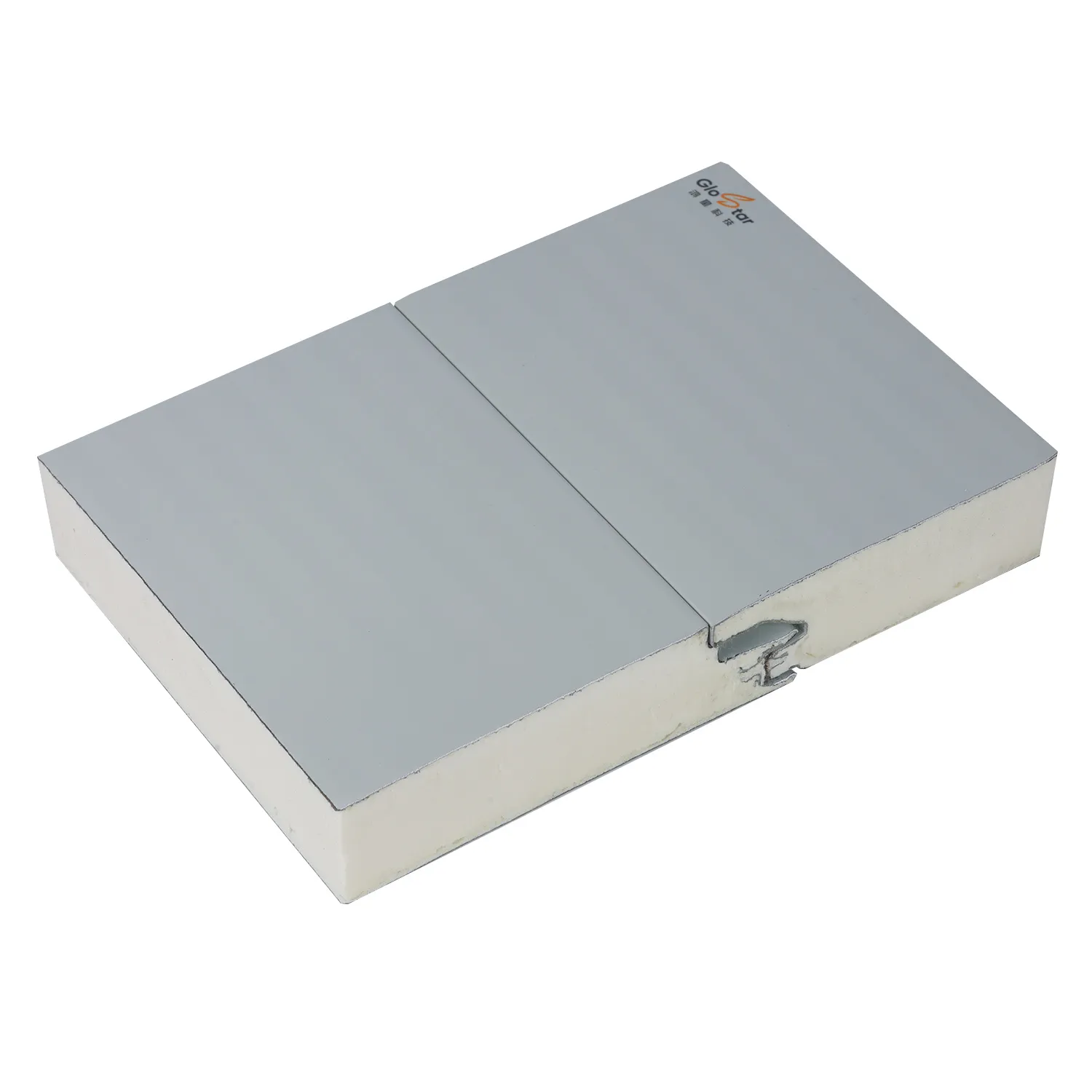
EU GMP Annex 1 and most national fire codes require non-combustible construction materials in pharmaceutical production areas — particularly in aseptic manufacturing zones. Rock wool core panels (Class A1, non-combustible) satisfy this requirement. Polyurethane or PIR foam core panels do not, which is why rock wool is the default specification for pharmaceutical cleanroom walls and partitions regardless of thermal performance considerations.
GMP facility construction requires documentation that the physical facility was built as designed and that materials meet specified requirements. For cleanroom panels, this means material data sheets, mill certificates for the rock wool and steel coatings, bonding strength test reports, installation records, and as-built drawings. This documentation package forms part of the Installation Qualification (IQ) record — and its absence at a regulatory inspection is a finding that can delay facility qualification by months.
The cleanroom panel system — walls, ceiling, doors, windows, and the connection hardware between them — is the physical shell that makes a GMP facility work. Getting it right matters more in a new-market project than it might in an established market, for a simple reason: local contractors who have built GMP facilities many times understand implicitly what the installation requires. In a market where this type of construction is newer, more of that knowledge has to come from the materials supplier.
A complete GMP cleanroom panel system is more than panels. It includes:
| Component | Function | Key Specification |
|---|---|---|
| Wall panels | Vertical room enclosure, zone separation | Rock wool core, PVDF skin, 75–100 mm |
| Ceiling panels | Horizontal enclosure, plenum separation | Aluminum honeycomb (lightweight), PVDF skin |
| Concealed connectors | Panel-to-panel joints, no exposed hardware | Steel or aluminum, flush interior surface |
| Floor and top channels | Panel location and base sealing | Stainless or galvanized steel, silicone sealed |
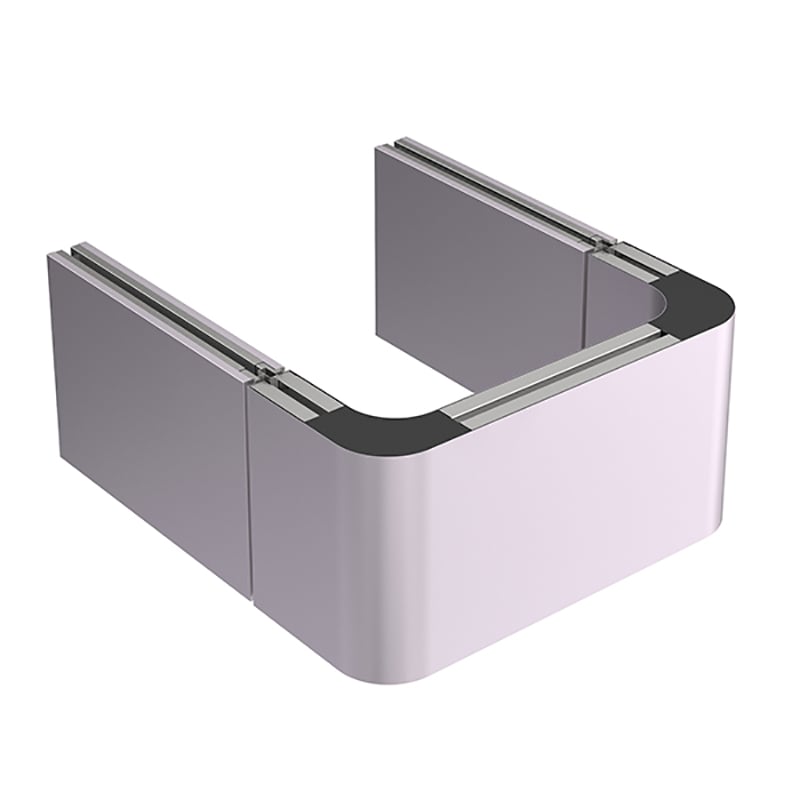
| Corner and junction pieces | Internal and external corners, T-junctions | Matched to panel thickness and skin finish |
| Cleanroom doors | Personnel and material access, zone control | Flush frame, compression gasket, auto-closer |
| Vision panels (windows) | Visual supervision without room entry | Double-glazed, flush interior face, silicone sealed |
| Silicone joint sealant | Final airtight seal at all joints and transitions | Fungicidal, chemical-resistant, food-grade where applicable |
A persistent mistake in new-market GMP projects is to purchase panel systems from one supplier and doors, windows, and corner pieces from wherever they're cheapest. The problem is that cleanroom systems are designed as integrated products — the door frame profile is matched to the panel edge profile, the corner extrusion is matched to the panel thickness, and the connection hardware is designed around the specific panel dimensions. When components come from different suppliers, interface problems inevitably appear on site: gaps at door frames, mismatch at corners, sealant joints that are too wide to maintain properly. These are not just aesthetic issues; they are airtightness failures.
For a new-market GMP project where the contractor may have limited prior experience with this type of system, a single-source supply arrangement — panel manufacturer supplies panels, doors, windows, corners, connection hardware, and installation guidance as a package — reduces the coordination risk considerably.
Anyone who has managed a GMP construction project in an established market — Germany, Switzerland, the US, Singapore — knows how those projects work: a relatively mature contractor ecosystem, materials readily available locally, and a regulatory expectation that's well understood by everyone in the supply chain. New-market projects are different. Here are the challenges that come up consistently.
The cleanroom panel installation process is specialized. Airtight silicone sealing at every joint, correct installation sequence to allow internal connector placement, proper floor and ceiling channel installation — these skills exist in countries with established cleanroom industries, but in markets where pharmaceutical GMP construction is relatively new, finding a contractor with genuine experience can be genuinely difficult. The risk is that a contractor with general construction experience takes on a cleanroom project, makes well-intentioned but consequential errors in the joint sealing or connection system, and the resulting room fails its airtightness test — creating rework cost and schedule delay at exactly the point where the project is under the most time pressure.
In markets where cleanroom panels aren't manufactured domestically, they need to be imported. And the lead time — from order confirmation to cleared customs and available on site — can be longer than project managers accustomed to European or North American sourcing expect. A manufacturer in China or Korea needs 4–6 weeks to produce a custom panel order, then shipping adds 2–4 weeks (sea freight), then customs clearance adds 1–3 weeks depending on the importing country's procedures. A total lead time of 8–13 weeks from order to site delivery is realistic for many Southeast Asian and Middle Eastern markets. If that lead time isn't factored into the project schedule from the start, it creates a materials-driven delay that's very difficult to recover from.
A facility being built to WHO GMP standards for sales in African or Southeast Asian markets requires less documentation than one being built for EU GMP approval or USFDA inspection. This affects which certifications the panel supplier needs to provide. A project team that doesn't clearly define its target regulatory standard early — which sometimes happens when the marketing decisions are still fluid — can find itself needing documentation that the panel supplier didn't know to prepare.
Most new-market GMP construction activity is happening in genuinely hot climates — Vietnam, Indonesia, India, Saudi Arabia, the UAE. This creates specific requirements for the panel system that don't apply to European or North American projects: PVDF surface coatings for UV resistance, Galvalume substrate for coastal salt-air resistance, thicker insulation to manage the higher exterior heat load, and vapor barrier management at cold room interfaces where the temperature differential is extreme. Panel specifications that are appropriate for a project in Germany may be insufficient for an equivalent facility in Ho Chi Minh City or Dubai without modifications for the local climate.
The common thread: In new-market GMP construction, the materials supplier carries more responsibility than in established markets. When the local contractor ecosystem is less experienced, the panel supplier needs to provide not just products but engineering support, installation guidance, and documentation — and needs to understand the regulatory context well enough to anticipate what will be required at inspection time.
If you're managing a GMP construction project in a new market — or advising a client who is — these are the things that consistently separate projects that run smoothly from those that encounter costly problems.
① Define the regulatory target before specifying materials
WHO GMP, EU GMP, USFDA, PIC/S — each has different documentation expectations and some have different physical requirements. Define your target market and corresponding regulatory standard before asking panel suppliers to quote. The specification may differ, and the documentation package almost certainly will.
② Engage the panel supplier during design, not after
Panel openings for doors and windows, grid dimensions, ceiling suspension design, floor channel integration with the structural floor — all of these need to be coordinated between the architect, MEP engineer, and panel supplier before panel shop drawings are issued. Engaging the panel supplier only after construction drawings are finalized creates coordination problems that have to be resolved under time pressure.
③ Build import lead time into the project schedule explicitly
Assume 10–14 weeks from order confirmation to panels cleared customs and available on site for most Southeast Asian and Middle Eastern markets, sourcing from China or Korea. Confirm this with your supplier and logistics provider before committing to a construction program. Panel fabrication cannot start until shop drawings are finalized and approved — that approval process takes time too.
④ Verify the installer's cleanroom experience specifically
A contractor with strong general industrial construction experience is not automatically qualified to install a cleanroom panel system. Ask specifically: have they installed this type of panel system before? Can they provide a reference project where the cleanroom passed commissioning airtightness testing? If the answer is no, factor in additional supervision from the panel supplier or an independent commissioning consultant.
⑤ Adjust the panel specification for the local climate
If the project is in a hot or coastal climate, confirm that the panel specification includes PVDF-coated or stainless steel skins (for chemical resistance and UV durability), appropriate substrate (Galvalume for coastal environments), and sufficient insulation thickness for the local heat load. Ask the supplier specifically whether they have supplied similar projects in comparable climate conditions.
⑥ Source panels and system components from one supplier
In a new-market project where local coordination is more challenging than usual, a single-source panel system supply arrangement — panels, doors, windows, corners, connection hardware, sealant specification, and installation guidance all from one source — reduces the risk of interface problems and simplifies the documentation trail. The cost premium, if any, is modest relative to the risk reduction.
No — that's a common misconception. China Plus One is a risk diversification strategy, not an exit. Most companies implementing it are adding production capacity in a second country while retaining their Chinese operations. China remains the world's largest manufacturing base, and for most industries the combination of infrastructure, supplier ecosystems, and skilled workforce is still very difficult to replicate elsewhere at scale. What's changing is the risk calculus around single-country concentration — and that's driving new facility construction in alternative locations without necessarily reducing the Chinese footprint.
India is probably the most significant in volume terms — it already has a large and relatively sophisticated pharmaceutical manufacturing base, the PLI scheme is adding substantial new capacity, and the regulatory infrastructure for USFDA and EU GMP approval is well-established. Vietnam is the fastest-growing relative to its starting point. The Middle East — particularly Saudi Arabia and the UAE — is seeing the most investment-driven construction activity in markets that previously had minimal domestic pharmaceutical manufacturing capability.
In established markets — India, Malaysia, some parts of the Middle East — local or regional suppliers can provide GMP-quality panel systems. In newer markets — Vietnam, Indonesia, much of Africa — the domestic supply is limited, and most GMP cleanroom panel systems are imported, primarily from China, South Korea, and Europe. The import process adds lead time but doesn't inherently compromise quality — what matters is whether the manufacturer's product meets the required specification, not where they're located.
Regulatory approval adds significant time after construction is complete. After physical construction is finished, the facility goes through a commissioning and qualification process — Installation Qualification (IQ), Operational Qualification (OQ), Performance Qualification (PQ) — before it can produce product. This process typically takes 6–18 months depending on the facility type and target regulatory standard. For facilities seeking USFDA or EU GMP approval, a pre-approval inspection by the relevant authority adds further time. Construction schedules for GMP facilities need to account for this post-construction timeline when calculating when the facility will generate its first revenue.
The manufacturing origin of the panel is not a factor in EU GMP inspections — what matters is whether the panel system meets the specified requirements and whether the documentation supports it. Chinese-manufactured cleanroom panels with appropriate certifications (EN 14509, EN 13501-1 A1 fire classification, third-party bonding strength test reports) are used in EU GMP facilities globally, including in projects that have successfully passed EU GMP inspections. The key is documentation completeness and product quality, not country of origin.
From land acquisition to first product varies considerably depending on facility scale, regulatory target, and country, but a typical timeline for a mid-sized pharmaceutical manufacturing facility (say, 5,000–15,000 m² GFA) runs 24–36 months: 6–9 months for design and permitting, 12–18 months for construction, and 6–12 months for commissioning, qualification, and regulatory approval. Cleanroom panel procurement needs to be initiated no later than the early construction phase — ideally while detailed design is still underway — to avoid creating a materials bottleneck that delays the construction program.
The underlying panel construction is similar — metal-skin sandwich panels, sealed edges, flush connection system — but the specific requirements differ in several ways. Semiconductor cleanrooms typically require antistatic or ESD-dissipative surface coatings (rather than standard PVDF) to prevent electrostatic discharge that can damage sensitive components. They also impose strict limits on material outgassing, since even trace chemical vapors can contaminate semiconductor processes. Pharmaceutical cleanrooms, by contrast, prioritize chemical resistance to disinfectants and non-combustible core materials. The ISO classification targets also differ: leading semiconductor fabs target ISO 3–4, while most pharmaceutical rooms are ISO 5–7.
The China Plus One construction wave is not a short-term phenomenon. The supply chain risk calculus that's driving it has been fundamentally redrawn by a series of events — trade disputes, pandemic disruptions, geopolitical tensions — that aren't going to unhappen. Companies and governments that made investment decisions based on the assumption of seamless global supply chains are revising those assumptions, and the facilities they're building in response are going to need GMP-compliant cleanrooms.
For cleanroom panel manufacturers, contractors, and project teams working in these markets, the opportunity is substantial. So is the responsibility: facilities built with shortcuts in panel specification or installation will fail their regulatory inspections, delay product launches, and ultimately impose costs on patients who need the products those facilities are supposed to produce. Getting the panel system right — and understanding what "right" means in each market's regulatory context — is where the real value is created.
Glostar supplies rock wool cleanroom panel systems, aluminum honeycomb ceiling panels, cleanroom doors and windows to GMP pharmaceutical, food processing, and medical device projects across Southeast Asia, the Middle East, and beyond. We provide full system packages with engineering support, third-party test documentation, and IQ-ready material data sheets.
Request a Project Consultation →Note: This article reflects only my personal views. If there are any inaccuracies, I welcome your feedback and corrections.
 Hot News
2026-09-09
2026-08-14
2026-08-11
2026-08-06
2026-07-30
2026-07-20

We believe that by upholding quality and embracing innovation, we can drive transformative changes in architecture and build a sustainable future for the construction industry.
No. 377, Gaoqi Road, High-tech Zone, Binzhou City, Shandong Province, China
Copyright © Shandong Apex Metal Products Co., Ltd. All Rights Reserved (Under the Glostar New Materials Group) Privacy Policy Blog
 EN
EN