EN
EN


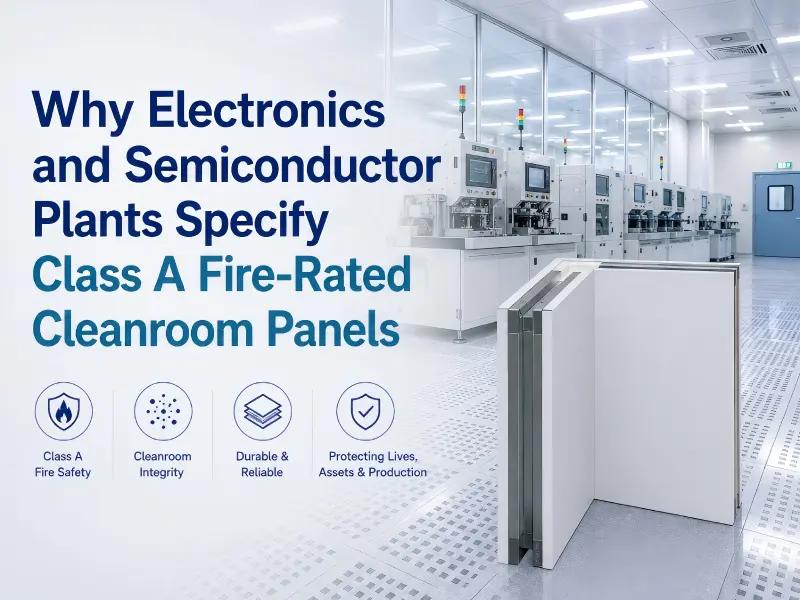
For the semiconductor and electronics manufacturers, the cleanroom is more than just a room; it is the nucleus of the factory.
Cleanroom walls require utmost level of performance when building the envelope around multi million dollar equipment & critical processes involved. Class A fire rated panels are one of the most important required spec; where they derive this requirement & meet the safe operation & reliability of semiconductor manufacturing, we'll review.
Why Cleanroom Enclosures Matter in Semiconductor Manufacturing
The cleanroom envelope is, in effect, a sealed sanctuary from the external world. Microchip manufacturing requires stringent environmental control due to the sensitivity of silicon wafers to microscopic contaminants that can lead to total batch loss and massive financial setbacks. It needs to withstand the demanding specifications like tight environmental controls (temperature, humidity, pressure difference) and offer smooth, easy‑to‑clean surfaces that do not support particulate accumulation.
GLOSTAR (an experienced manufacturer of metal envelope systems) designs all their cleanroom panels to meet the structural and performance requirements of semiconductor manufacturing facilities. Using the advanced manufacturing facilities with automatic production lines at its fingertips, each panel produced ensures a contamination‑free, stable, cleanroom.
Particle Control and Surface Cleanability
Maintaining a clean environment is the single most important function of a cleanroom, and the enclosure plays a major role in this; GLOSTAR uses ultra‑smooth and non‑porous materials like pre‑painted steel and stainless steel to construct their cleanroom panels. This is in part for aesthetic purposes, in part for ease of cleaning, and in part because a smooth and non‑porous surface prevents dust from collecting on and on. Beyond creating a physical barrier, panels must not shed particles themselves – otherwise, accumulated contamination could be released into the manufacturing environment.
It is crucial that these surfaces remain completely stable under prolonged use of harsh cleaning chemicals required by sensitive manufacturing environments; GLOSTAR know that if chemicals have to be used frequently it will take a toll on their products, therefore their panels were constructed using corrosion resistant materials that could stand up to even the most abrasive chemicals. Combined with the airtight joints GLOSTAR design for their modular systems, they are highly conducive to supporting ISO 14644 cleanroom levels.
Fire Safety Requirements for Semiconductor Facilities
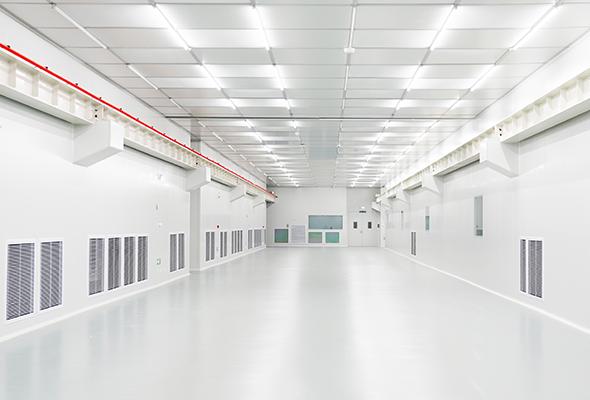
Safety cannot be an afterthought in the semiconductor manufacturing industry due to the presence of Highly Hazardous materials (HPM) within, such as the pyrophoric and flammable gases. NFPA 318‑Standard for the Protection of Semiconductor Fabrication Facilities‑gives strict rules and regulations when considering the safety of the semiconductors from fire hazards. Fire can potentially spread rapidly at these facilities due to such high risks and the value of what is being produced is astronomical.
This is precisely why semiconductor facilities require fire‑rated cleanroom panels. GLOSTAR's rock wool and magnesium oxide (MgO) panels meet GB8624 Class A non‑combustible standards – they do not melt or drip, and produce minimal smoke, allowing critical evacuation time and giving fire crews crucial minutes to gain control. The rock wool and MgO act as fire barrier ensuring a significant portion of the panel can withstand exposure to intense fire.
Low‑Emission Materials and Contamination Risks
While the primary worry in cleanroom environments is particle dust‑as mentioned and overcome the surface‑sometimes particles cannot be seen and these would be AMCs (Airborne Molecular Contamination). Certain panel cores such as Expanded Polystyrene (EPS) would off‑gas trace volatile organic compounds (VOCs) over time‑thus causing chemical contamination to be present in the cleanroom and degrading chip yield.
GLOSTAR's choice in either rock wool or MgO for their fire rated cleanroom panels for electronics has low VOC off‑gassing characteristics‑which are of huge benefit to any sensitive electronics manufacturer that does not want contamination of its environment. Their facings also don't react in any way with what the cleanroom contains.
Temperature and Humidity Control
Maintaining the perfect temperature and humidity in a semiconductor facility is essential; without tight controls this would causes the thermal expansion and contraction in a lithography or other such high‑criticality parts to causes a drift in results, which would again cause losses in overall yield. GLOSTAR panels offer maximum thermal insulation by providing excellent thermal resistant rock wool cores and making a well‑sealed structure that minimizes air leaks and makes it far more efficient for its conditioned air to be retained within its environment, which means it takes a lot less energy consumption.
How to Select Cleanroom Panels for Semiconductor Facilities
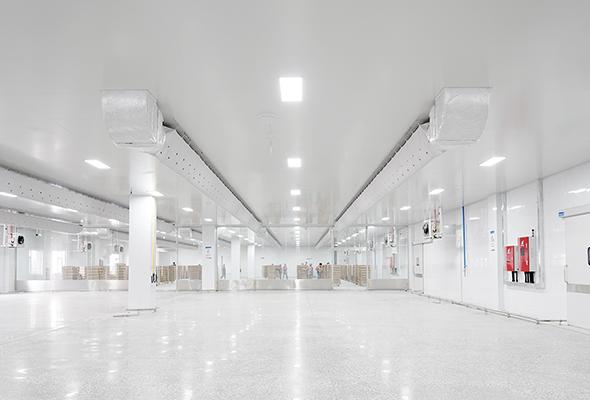
Some factors, to consider when choosing cleanroom panels for a semiconductor manufacturing facility would be:
Fire Rating ‑ All cleanrooms will need fire rated panel, Class A non‑combustible are required for NFPA 318, which is what the rock wool and MgO panel from GLOSTAR provide.
Face material ‑ Highly corrosion resistant pre‑painted steel, and stainless steel are beneficial for resistance to chemical exposure, with GLOSTAR offering both of these in a range of corrosion‑resistant formats.
Core material ‑ the rock wool or MgO core not only offers extreme fire resistance but soundproofing too, however if the user requires maximum cleanroom class of ISO 1‑5 the aluminum honeycomb core offers it through not having any out‑gassing characteristics at all, thus removing one possible source of contamination.
Cleanroom Classification ‑ The system panel imust be designed for the required cleanroom classification. GLOSTAR provides suitable panels for all ISO classes, with custom options available. GLOSTAR is able to provide suitable panels for all cleanroom types and can also be custom fitted to requirements.
Production capacity ‑ When the production volumes required, are vast, the manufacturers production capability must meet client specifications, which is what the GLOSTAR facility in Shandong, combined with its factory in Anhui facilities has, producing 20 million m²/per annum between them; allowing for mass delivery in reasonable time frames for large orders.
With GLOSTAR’s certifications ISO 9001, ISO 14001 and green building certifications the panels themselves meet the very highest standards. Supported by trusted brands throughout industries such as LG, Foxconn, Audi, Volkswagen, Sinopharm, and Tsingtao Beer, GLOSTAR is a top class partner to choose in order for their production to stay at the highest level, through using quality‑tested fire rated cleanroom panels for electronics. For electronics manufacturing, Class A panels are crucial; they may not look like anything special, but they mean more than you could ever imagine to high sensitive industries like semiconductor production facilities‑where the safety of millions of‑dollars’ worth of equipment relies on them.