China produces a substantial share of the world's cleanroom wall panels — not because Chinese manufacturers undercut everyone else on price, but because a handful of established factories have developed genuine technical capability over the past two decades that competing on quality, not just cost. The pharmaceutical facilities going up across the Middle East, the semiconductor packaging lines expanding through Vietnam, the food processing plants being built in Indonesia — a significant proportion of the cleanroom panel systems inside them came from Chinese manufacturers.
But "made in China" covers an enormous range. At one end are manufacturers who have invested in proper adhesive testing equipment, maintain mill certificate files for their rock wool inputs, understand what EU GMP Annex 1 requires from an IQ documentation package, and have supplied dozens of projects that passed regulatory inspection without panel-related findings. At the other end are trading companies with no production capacity, factories that produce foam-core panels primarily for domestic warehouses and offer "cleanroom panels" as a catalog line extension, and manufacturers whose quality control extends to visual inspection of the finished panel and not much further.
This article China's leading cleanroom wall panel manufacturers, explains what characteristics distinguish genuinely capable suppliers from the rest, and provides a framework for evaluating any Chinese cleanroom panel manufacturer before placing an order.
The concentration of cleanroom panel manufacturing in China didn't happen by accident. Several structural factors converged over the past two decades to create a manufacturing ecosystem that international buyers now draw on routinely for projects on every continent.
China is one of the world's largest producers of the key inputs for cleanroom panels: pre-painted galvanized steel (PPGI/PPGL), rock wool, and polyurethane foam chemicals. This integration means Chinese panel manufacturers can source materials domestically at competitive prices, maintain consistent supply, and — for quality-focused manufacturers — control the input specification more tightly than manufacturers who source globally. Shandong Province in particular has a well-developed industrial cluster for construction materials including steel products, mineral wool, and prefabricated building components.
China's domestic pharmaceutical, food processing, and electronics manufacturing industries have driven substantial demand for GMP-standard cleanroom construction since the early 2000s. Manufacturers who grew up serving these domestic regulated industries — where product failures have consequences and repeat business depends on regulatory outcomes — developed quality systems that transfer directly to international export work. The factories that have supplied a hundred pharmaceutical GMP projects in China know what IQ documentation needs to look like, because they've been asked for it hundreds of times.
Unlike cleanroom panel manufacturers in smaller industrial economies, leading Chinese manufacturers have established logistics and documentation infrastructure for international export: experience with L/C and T/T payment terms, familiarity with SABER (Saudi Arabia), ESMA (UAE), and other regional certification requirements, relationships with freight forwarders specializing in industrial panel shipments, and the ability to produce English-language technical documentation that international project teams can use directly. This export capability took years to develop and is a meaningful differentiator between manufacturers who regularly supply international projects and those who primarily serve the domestic market.
The sourcing reality for international buyers: For projects in the Middle East, Southeast Asia, South Asia, and Africa, Chinese cleanroom panel manufacturers typically offer a combination of technical capability, production capacity, and cost efficiency that is difficult to match with local manufacturers in many of these markets. The critical variable is selecting a manufacturer at the right end of the quality spectrum — the gap between the best and worst Chinese suppliers is wider than in more consolidated manufacturing sectors.
Asking "who are the leading cleanroom panel manufacturers in China" is the right question, but the answer is only useful if you understand what "leading" actually means in this context. Price rankings are meaningless. Factory size is correlated with capability but not determinative.
These are the attributes that consistently separate manufacturers who are genuinely capable of supplying international GMP cleanroom projects from those who aren't:
① Dedicated Cleanroom Panel Production Line
A manufacturer who produces cleanroom panels on the same line as standard EPS-core warehouse panels, with only a change in core material, has not optimized their process for the tighter tolerances, four-side edge sealing, and surface quality requirements of a real cleanroom product. Leading manufacturers have production areas or lines specifically configured for cleanroom panel assembly — with appropriate atmospheric control, defined adhesive mixing and application procedures, and quality checkpoints specific to cleanroom panel requirements.
② Verifiable Third-Party Test Certifications
The certifications that matter for international cleanroom panel supply are: EN 13501-1 fire classification (A1 for rock wool), EN 14509 CE Declaration of Performance or equivalent structural test data, and third-party bonding/peel strength test reports from SGS, Bureau Veritas, Intertek, or equivalent. Manufacturers who have invested in this testing have done so because their customers required it — which tells you something about the caliber of projects they've supplied. Those who offer only in-house test data are either not ready for regulated applications or not yet experienced with the documentation requirements of international projects.
③ Rock Wool Input Specification and Traceability
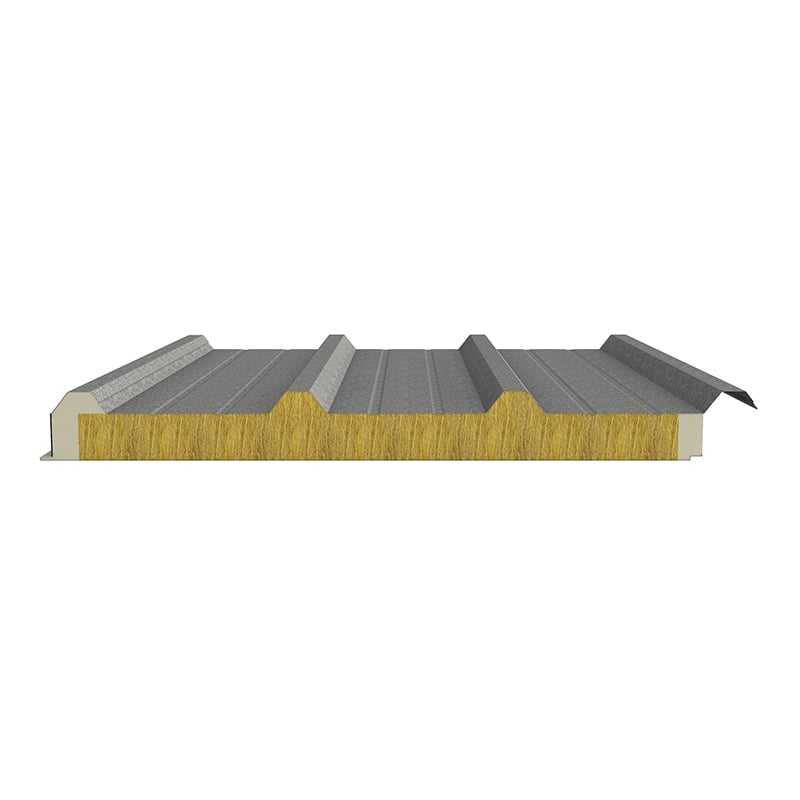
For pharmaceutical GMP projects, the rock wool density (100–120 kg/m³) is a specification item — not a catalog option. Leading manufacturers specify their rock wool input at a defined density from named suppliers, maintain mill certificates for each production batch, and can provide these certificates as part of their IQ documentation package. Manufacturers who cannot specify their rock wool density by number, or cannot produce a mill certificate when asked, are not prepared for regulated projects regardless of what their marketing says.
④ Complete System Supply Capability
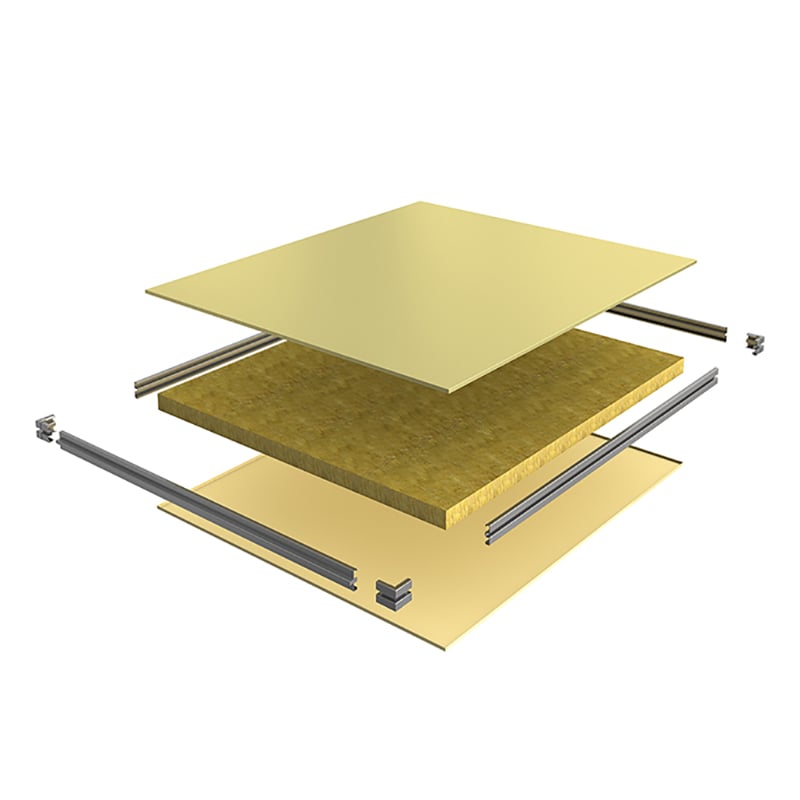
Panels are only part of a cleanroom wall system. The connection hardware (internal connectors, floor and ceiling channels, corner extrusions), cleanroom doors, observation windows, and cove pieces all need to interface precisely with the panel edge and thickness profile. Manufacturers who supply only panels and leave the buyer to source everything else from other suppliers create interface coordination problems that generate on-site assembly issues. Leading manufacturers can supply a complete, co-designed system — everything from panel to door leaf to corner cove — with shop drawings that show how each component connects.
⑤ International Project References
A manufacturer who has supplied GMP pharmaceutical facilities in the UAE, hospital projects in Saudi Arabia, or electronics cleanrooms in Vietnam has demonstrated export capability, logistical reliability, and familiarity with the documentation requirements of regulated international projects. References should be specific — project type, country, approximate area — not generic statements about "global exports to many countries." Ask for references; credible manufacturers will provide them.
⑥ English-Language Technical Documentation Capability
For international projects where the panel documentation becomes part of a regulatory submission or IQ record, material data sheets, fire certificates, and test reports need to be in English (or the relevant project language). This seems obvious but is a genuine differentiator: many capable domestic manufacturers produce technical documentation exclusively in Chinese, which creates translation and verification challenges for international project teams. Manufacturers who regularly export to pharmaceutical and food industry clients have generally solved this problem.
China's cleanroom panel manufacturing sector has consolidated somewhat over the past decade around manufacturers with demonstrable technical capability and international export experience. The following are among the most established names in the sector for international buyers:
Beyond these, China's cleanroom panel manufacturing sector includes a number of regional specialists — manufacturers serving specific geographic or sector niches — as well as a larger tier of general sandwich panel producers who offer cleanroom panels as part of a broader product range. The profiles above represent manufacturers for whom cleanroom panels are a core business rather than a catalog addition.
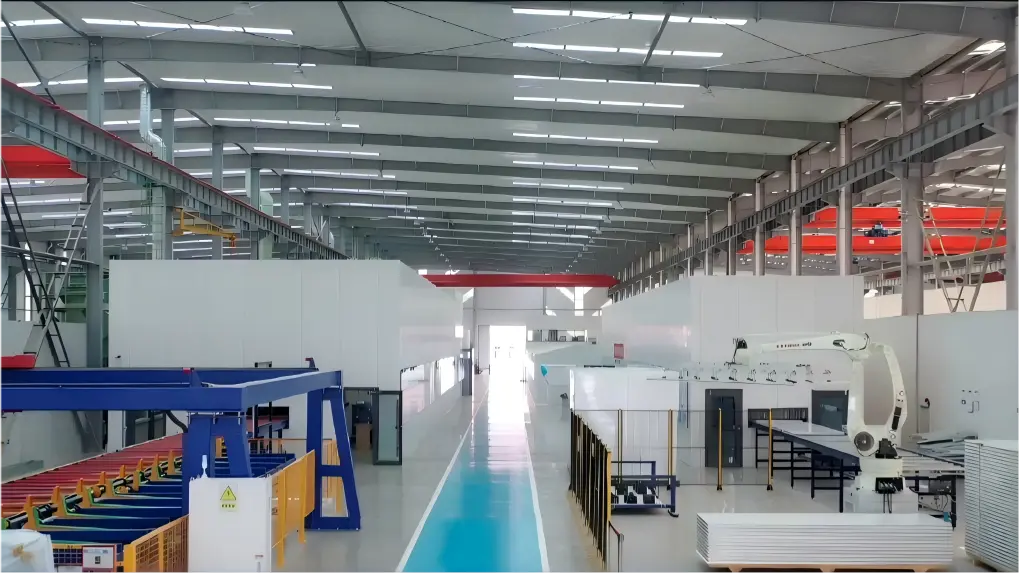
Glostar's Shandong location is worth noting in context. Shandong is one of China's largest provincial economies and home to a well-developed industrial cluster for construction materials and building components. Wiskind — one of the most established cleanroom panel brands in China — is also Shandong-based, and the province has a concentration of steel processing, mineral wool, and panel manufacturing infrastructure that supports high-volume production with reliable local supply chains.
For project inquiries, technical specifications, and sample requests: Contact Us or [email protected]
Selecting a Chinese cleanroom panel manufacturer for an international project is a multi-stage process. Moving too quickly to price comparison before establishing baseline capability leads to problems; spending months on due diligence before any technical alignment leads to wasted time. Here's a practical sequence:
Send each shortlisted manufacturer the following requests and evaluate what comes back, and how quickly:
A manufacturer who returns all of the above promptly and completely has demonstrated a minimum level of professional documentation infrastructure. A manufacturer who hedges, provides only partial documentation, or takes weeks to produce what should be immediately available has told you something about their operational maturity.
Order physical samples before committing to production. When you receive them:
For the first production order, include specific verification steps that may not be necessary for subsequent orders once trust is established:
Beyond manufacturer selection, several practical considerations affect how a Chinese cleanroom panel procurement runs for international projects:
The full timeline from order confirmation to panels available on site in most Middle Eastern and Southeast Asian markets runs 10–14 weeks: 4–6 weeks production (which cannot start until shop drawings are approved and the production slot is scheduled), 3–4 weeks sea freight, and 1–2 weeks customs clearance. Panel fabrication starts from shop drawing approval, not from order placement — the drawing approval process itself typically takes 1–3 weeks. For project schedules built around a specific construction start date, the order timeline needs to be counted backward from that date, not forward from the point when the project becomes active.
Standard payment terms for Chinese cleanroom panel exports from established manufacturers are typically 30–50% deposit on order confirmation and 50–70% before shipment (T/T wire transfer). Letter of Credit (L/C) terms are available from manufacturers with banking relationships set up for export, though they add processing time and cost. For first orders with a new supplier, the deposit percentage may be higher; for established relationships with a track record of successful orders, manufacturers may offer more flexible terms.
Most Chinese cleanroom panel manufacturers don't impose a fixed minimum panel quantity, but they do have practical minimums: custom colors, non-standard widths, or special surface materials typically require minimum quantities of 500 m² per specification to justify the production run setup. Standard configurations in common colors (RAL 9002, 9003, 9016 white variants) can often be produced at small quantities. Confirm minimum quantities for your specific specification before finalizing the scope — particularly if your project involves multiple small cleanrooms with different panel specifications.
| Market | Key Certification / Requirement | Notes |
|---|---|---|
| Saudi Arabia | SABER product registration required for most building products | Allow 4–8 weeks for SABER process; manufacturer needs to support with documentation |
| UAE | ESMA / Dubai Municipality for building materials | CE-marked or equivalent test data generally acceptable; confirm with local authority |
| Vietnam | TCVN / QCVN compliance; MoC type approval for some products | Requirements evolving; confirm with local project consultant |
| India | BIS certification for some panel types; IS standards | Import duties on steel products; verify HS code and duty rate for your specification |
| EU / UK | CE marking (EN 14509) for structural sandwich panels | Manufacturer must have CE certification from a Notified Body; verify authenticity |
| Indonesia / Malaysia | SNI (Indonesia) / SIRIM (Malaysia) for some product categories | Requirements vary; many projects proceed with third-party test reports and manufacturer certifications |
Yes — with the right manufacturer and correct documentation. Country of manufacture is not a criterion in EU GMP, US FDA, or WHO GMP guidelines; compliance is determined by whether the panel meets the specified performance requirements and whether the documentation supports this. Chinese-manufactured cleanroom panels with appropriate EN 13501-1 A1 fire classification, verified bonding strength, PVDF-coated surfaces, and four-side edge sealing have been used successfully in pharmaceutical GMP facilities worldwide that have subsequently passed regulatory inspection. The manufacturer's ability to provide a complete IQ documentation package is the critical variable, not their geographic location.
Price varies significantly with specification. As a general market reference for 2025: rock wool cleanroom wall panels (100 mm, PVDF-coated, 0.5 mm skins, four-side sealed) from established Chinese manufacturers typically run in the range of USD 18–35 per m² FOB Chinese port, depending on order volume, steel coating specification, and rock wool density. Aluminum honeycomb ceiling panels run USD 22–40 per m² in similar configurations. These prices are for genuinely cleanroom-grade panels from credible manufacturers — significantly cheaper quotes should prompt scrutiny of the specification being offered.
Ask for a factory video call showing the production floor and specifically the cleanroom panel assembly area. Request the factory's business license (营业执照) — a Chinese company's business license shows its registered address and business scope; a manufacturing company's scope should include "manufacturing" of relevant products. Request the factory's ISO 9001 certificate and verify that the company name and address on the certificate matches the entity you're dealing with. Offer to conduct a factory audit (either in-person or via a third-party inspection company like SGS or Intertek) — genuine manufacturers welcome this; trading companies typically deflect it.
Yes — custom dimensions are standard practice for cleanroom panel manufacturing in China, not an exception. Panel length can be specified precisely to your room height; panel width is typically fixed to the manufacturer's available profiles (commonly 950 mm, or 1150 mm net width), though some manufacturers offer multiple width options. Openings for doors and windows are cut and framed in the factory using your approved shop drawings. The shop drawing approval process is a prerequisite for production, which is why engaging the manufacturer at the design stage (rather than after construction drawings are finalized) produces better outcomes.
Shandong, Guangdong, and Jiangsu provinces have the highest concentrations of established cleanroom panel manufacturers. Shandong benefits from its raw material base (steel, mineral wool) and proximity to major northern Chinese ports. Guangdong's concentration of electronics and food manufacturing customers has driven a cluster of cleanroom panel suppliers around Guangzhou and Foshan, with good port access through Guangzhou and Yantian. Jiangsu's large pharmaceutical and medical device manufacturing base around Suzhou, Nanjing, and Wuxi has shaped a cluster of panel suppliers oriented toward pharmaceutical GMP requirements. Shanghai also has established suppliers, though higher operating costs there tend to make manufacturers position toward the premium end of the market.
Glostar supplies complete cleanroom wall panel systems — rock wool cleanroom panels, aluminum honeycomb ceiling panels, PU cold room panels, cleanroom doors and windows — to international projects across the Middle East, Southeast Asia, and South America. We provide full IQ documentation packages and English-language technical support for regulated projects.
Get a Technical Quotation → Hot News
2026-09-09
2026-08-14
2026-08-11
2026-08-06
2026-07-30
2026-07-20

We believe that by upholding quality and embracing innovation, we can drive transformative changes in architecture and build a sustainable future for the construction industry.
No. 377, Gaoqi Road, High-tech Zone, Binzhou City, Shandong Province, China
Copyright © Shandong Apex Metal Products Co., Ltd. All Rights Reserved (Under the Glostar New Materials Group) Privacy Policy Blog
 EN
EN