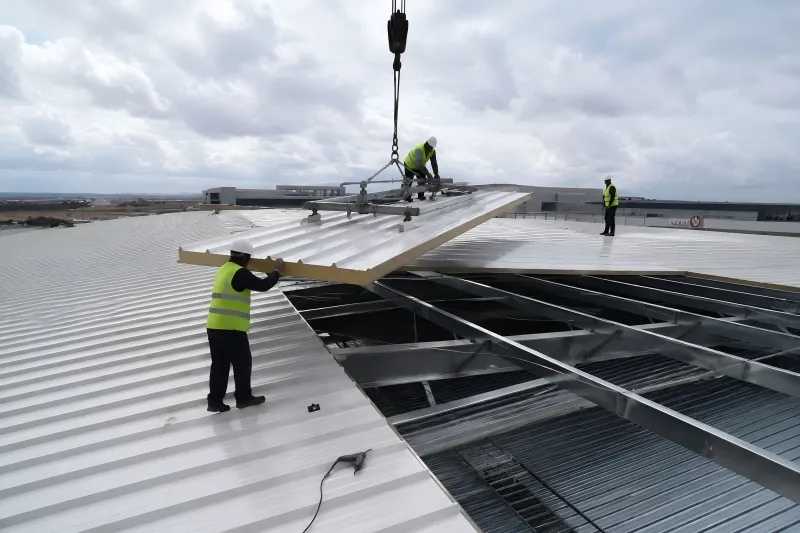
Choosing between a rock wool sandwich panel and an EPS (expanded polystyrene) sandwich panel is one of the most common specification decisions in industrial construction — and one of the most consequential. Get it wrong and you face failed fire audits, spiralling energy costs, or a panel system that simply isn't approved for your building type. This guide compares both materials across every variable that matters: fire rating, thermal performance, price, climate suitability, and installation, so you can make the right call before ordering.
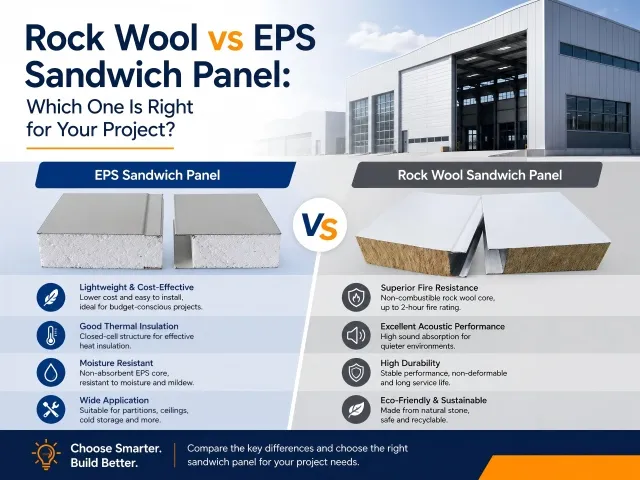
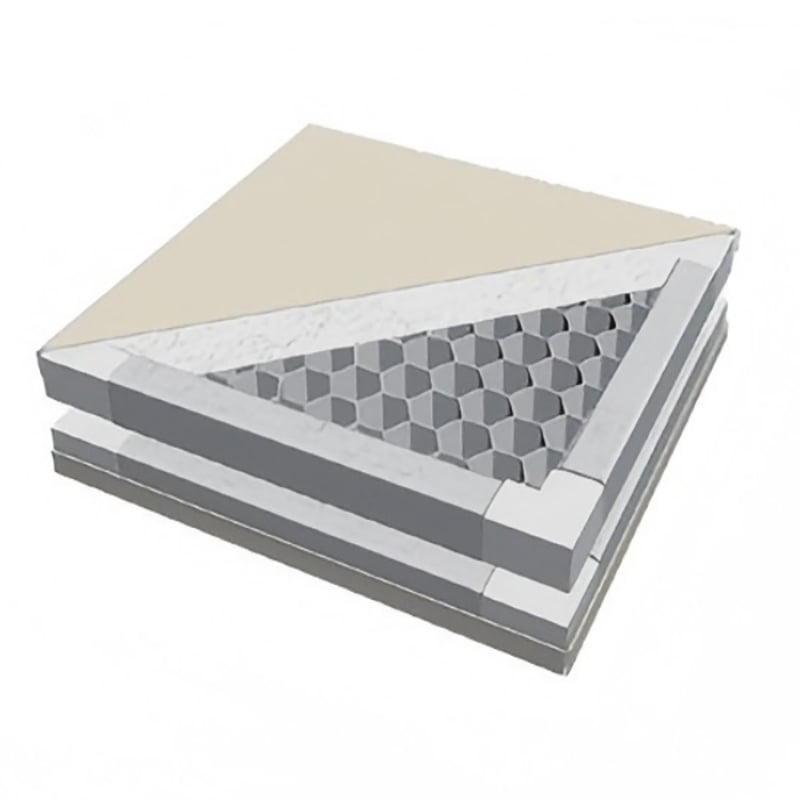
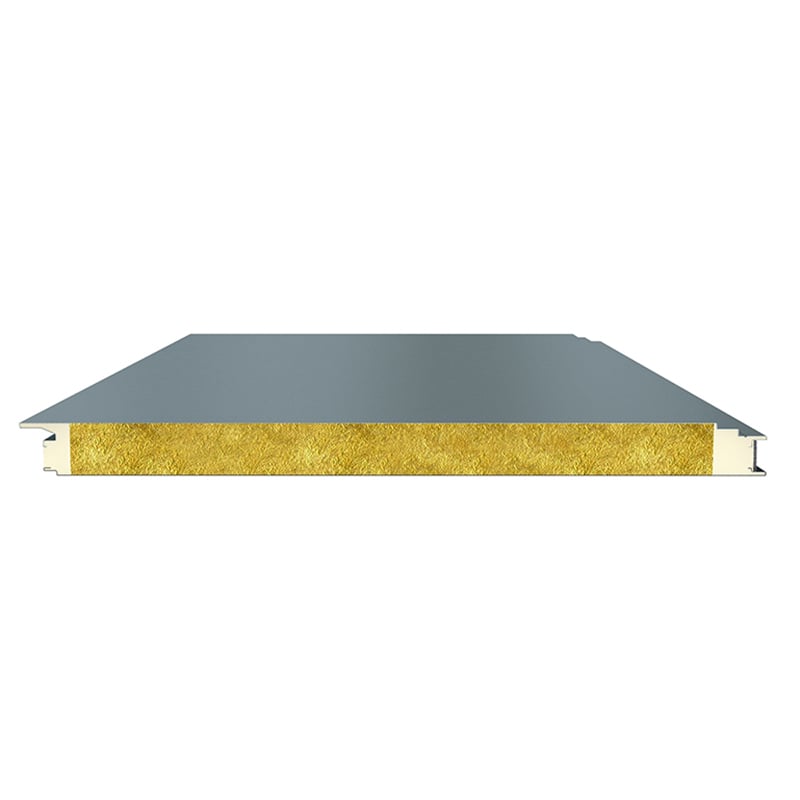
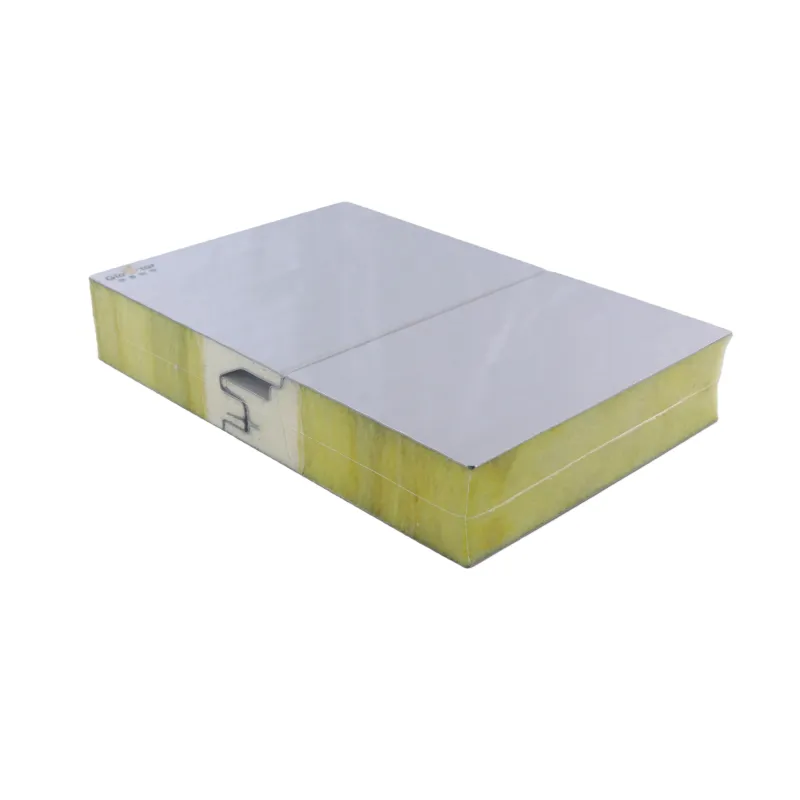
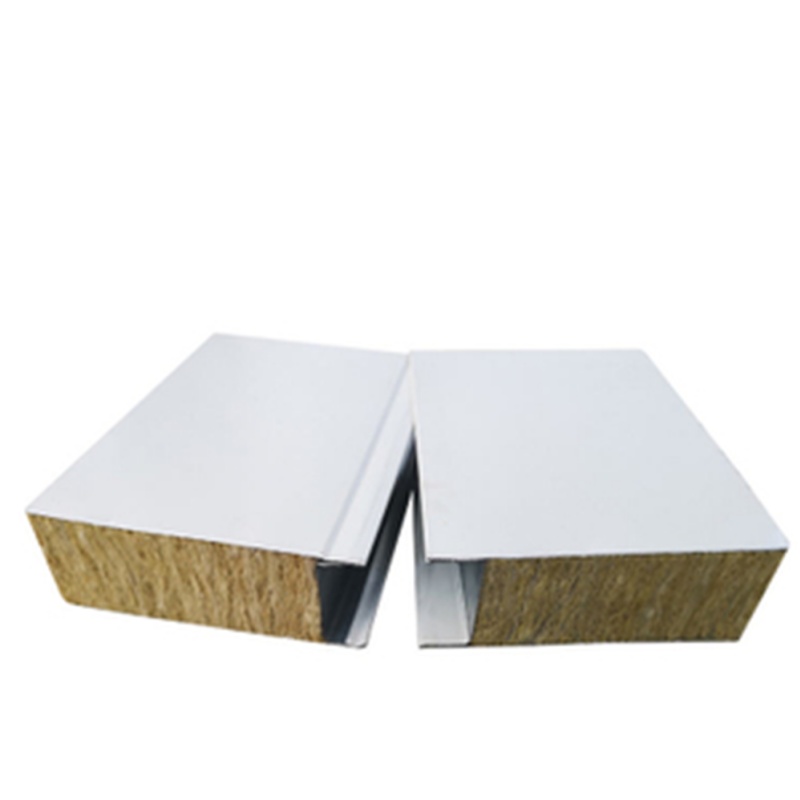
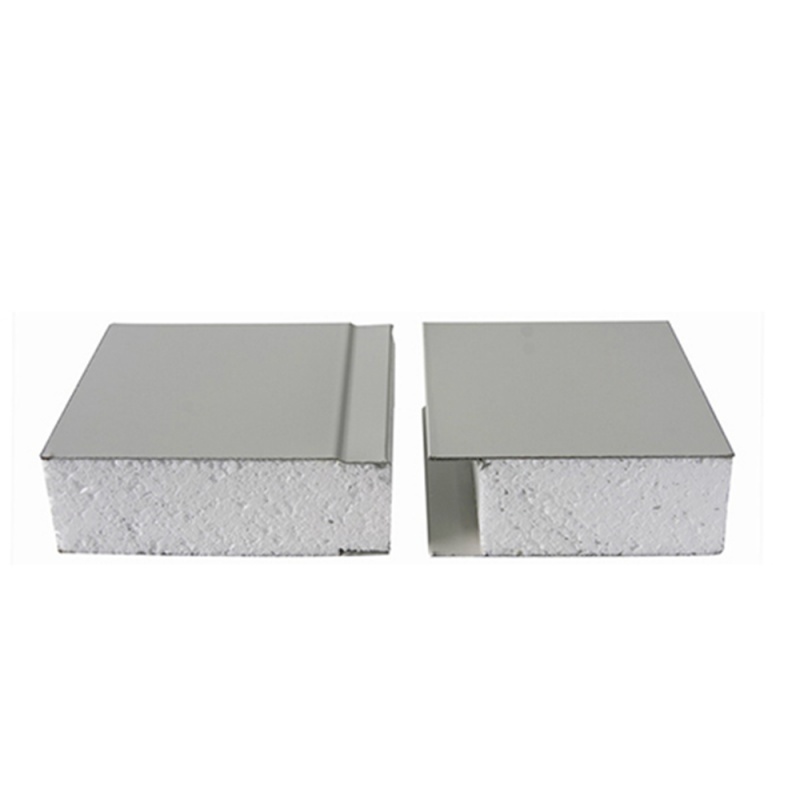
Both rock wool and EPS panels look nearly identical from the outside — two steel face sheets, a flat or micro-ribbed surface, a standard 1 000 mm module. The difference is entirely in the core, and the core determines whether your building passes its fire inspection, what your HVAC running costs will be, and how long the panel system lasts.
The most critical difference is fire. EPS (expanded polystyrene) is an organic polymer — it melts and burns at temperatures above approximately 80 °C, generating flammable droplets and dense black smoke. Rock wool is an inorganic mineral fibre with a melting point above 1 000 °C — it does not burn, does not drip, and does not contribute to fire spread. This difference translates directly into fire classification: rock wool panels achieve Class A (non-combustible); EPS panels are limited to Class B2 at best under standard manufacturing.
In the UAE and Saudi Arabia, Class A fire rating is mandatory for industrial buildings under Civil Defence regulations. EPS-core panels are not permitted for roofs or walls of manufacturing facilities, warehouses, and logistics centres in most Emirates and Saudi municipalities. Specifying EPS in these markets is not a cost saving — it is a compliance failure that will require full panel replacement before occupancy approval.
The table below covers every specification dimension that matters for industrial and commercial building procurement. Use it as your shortlist checklist when evaluating suppliers.
| Specification | Rock Wool Panel | EPS Panel |
|---|---|---|
| Fire Classification | Class A — Non-combustible | Class B2 — Combustible |
| Fire Resistance (REI) | ≥ 30–60 min | Not rated — fails rapidly |
| Thermal Conductivity λ | ≤ 0.043 W/(m·K) | ≤ 0.033–0.038 W/(m·K) |
| U-Value at 100 mm | 0.46 W/(m²·K) | ~0.35 W/(m²·K) |
| Core Density | 100–160 kg/m³ | 10–20 kg/m³ |
| Acoustic Performance | Rw 30–40 dB (excellent) | Rw 20–28 dB (moderate) |
| Water / Humidity Resistance | ≥ 98% hydrophobic · fully recoverable | Low absorption · moisture-stable |
| Max Operating Temp | Up to 750 °C | ~80 °C (softens / melts) |
| Panel Weight | Heavier (~18–28 kg/m²) | Light (~7–10 kg/m²) |
| Installation Difficulty | Moderate — heavier handling | Easy — lightweight, fast |
| Relative Price (same thickness) | Higher (15–30% premium) | Lower — most cost-effective |
| Approved Use — UAE / KSA | ✓ Approved for industrial buildings | ✗ Not permitted for industrial use |
Note on thermal conductivity: EPS has a lower λ value than rock wool on paper, meaning a thinner EPS panel achieves the same U-value as a slightly thicker rock wool panel. However, this advantage disappears if EPS cannot be legally used in your building type. For fire-regulated buildings, rock wool at 100 mm achieves a U-value of 0.46 W/(m²·K) — well within the energy code requirements of most Middle East and Southeast Asian markets.
The right answer depends on your building type, location, and regulatory environment. Here is a direct recommendation for the most common project types.
Ambient temperatures regularly exceed 45 °C in the Gulf. EPS panels soften progressively above 80 °C surface temperature — a condition easily reached on a dark metal roof in full summer sun. Rock wool panels are thermally stable at these temperatures. Combined with the mandatory Class A fire requirements in Saudi Arabia, UAE, Qatar, and Kuwait, rock wool is the only compliant choice for industrial roofs in these markets.
WHO GMP, EU GMP, and food safety regulations in most markets either explicitly require Class A non-combustible panels or prohibit EPS above food production lines and pharmaceutical clean areas. Rock wool also provides the acoustic separation (Rw 30–40 dB) needed between production and utility zones — EPS cannot match this performance at equivalent thickness.
For warehouses, storage buildings, and light industrial facilities in temperate or mild climates (Malaysia inland, Vietnam, parts of India) where local fire codes permit B2 panels and ambient temperatures are moderate, EPS panels offer a genuine cost advantage of 15–30% over rock wool at the same thickness. The lighter weight also reduces installation labour cost. EPS is a legitimate choice here — provided you have confirmed local regulatory compliance before ordering.
For temporary site accommodation, prefab offices, and modular structures with short design life (under 10 years), EPS panels provide the fastest and most economical enclosure solution. The light weight speeds both installation and disassembly. Fire regulations for temporary structures are generally less stringent, but always confirm with the authority having jurisdiction.
Sandwich panel pricing varies significantly depending on thickness, face sheet specification, coating type, and order volume. A quote that looks 20% cheaper may be using a thinner face sheet gauge, a lower-grade coating, or a lower-density core than your project requires. Here is what to specify clearly when requesting a quotation:
📋 For a full specification checklist and product details, see our Rock Wool Sandwich Panel product page →
Tell us your project location, building type, required panel area, and fire code requirements. Our technical team will recommend the correct specification and respond within 24 hours.
 Hot News
2026-09-09
2026-08-14
2026-08-11
2026-08-06
2026-07-30
2026-07-20

We believe that by upholding quality and embracing innovation, we can drive transformative changes in architecture and build a sustainable future for the construction industry.
No. 377, Gaoqi Road, High-tech Zone, Binzhou City, Shandong Province, China
Copyright © Shandong Apex Metal Products Co., Ltd. All Rights Reserved (Under the Glostar New Materials Group) Privacy Policy Blog
 EN
EN