EN
EN



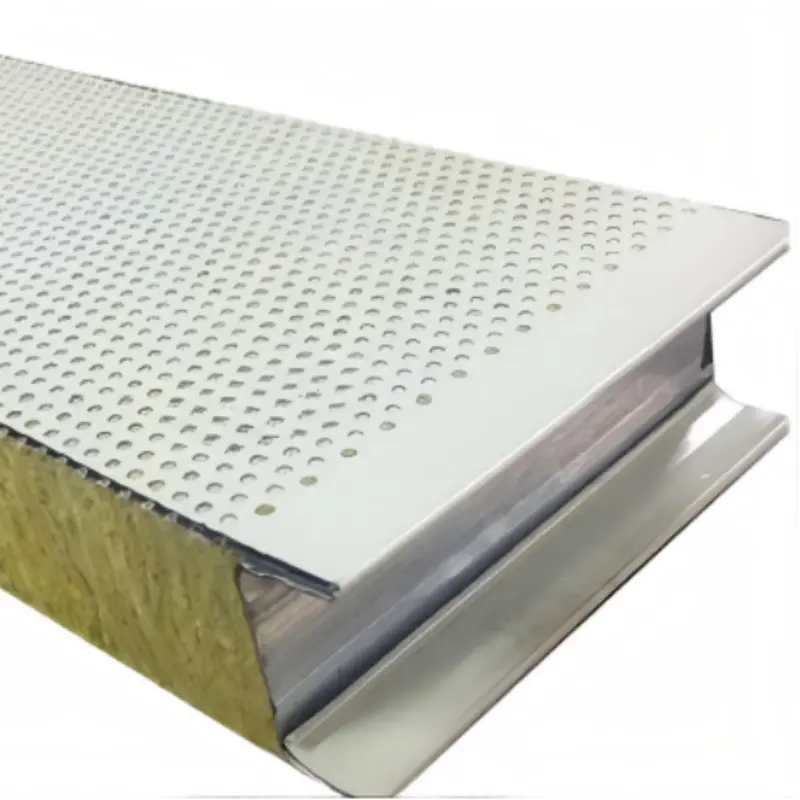
Sound Absorbing Rockwool Sandwich Wall Panels
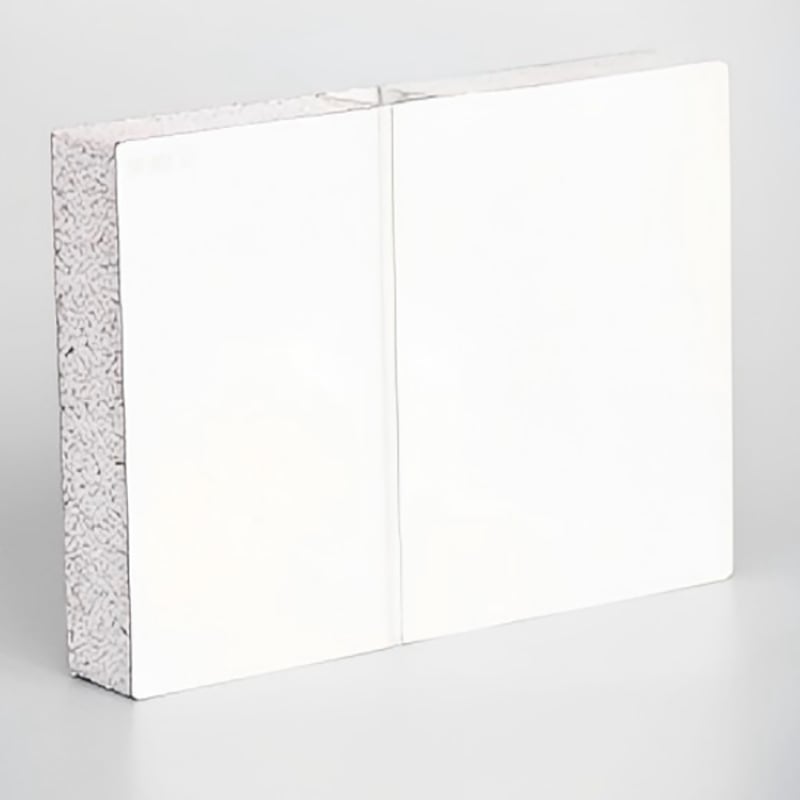
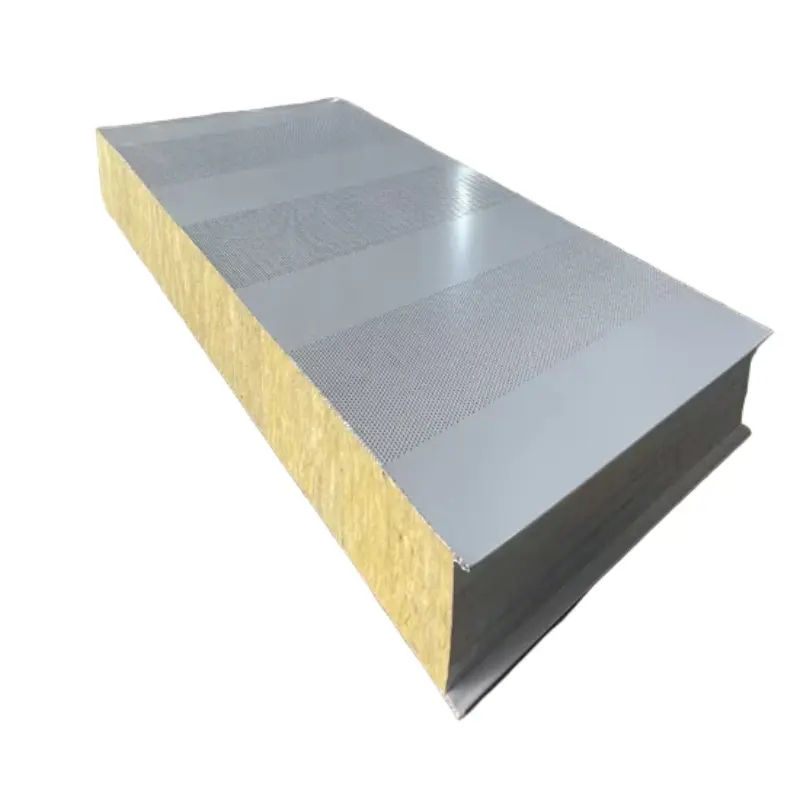
Reducing noise in industrial buildings requires the use of Sound Absorbing Rockwool Sandwich Wall Panels to ensure the health and safety of employees. If you are looking to purchase such panels, please contact Glostar. Our acoustic sandwich wall panels utilize patented semi-perforation technology; this not only enhances noise reduction performance but also maintains the same structural strength as standard composite panels.
- Overview
- Recommended Products
Product details
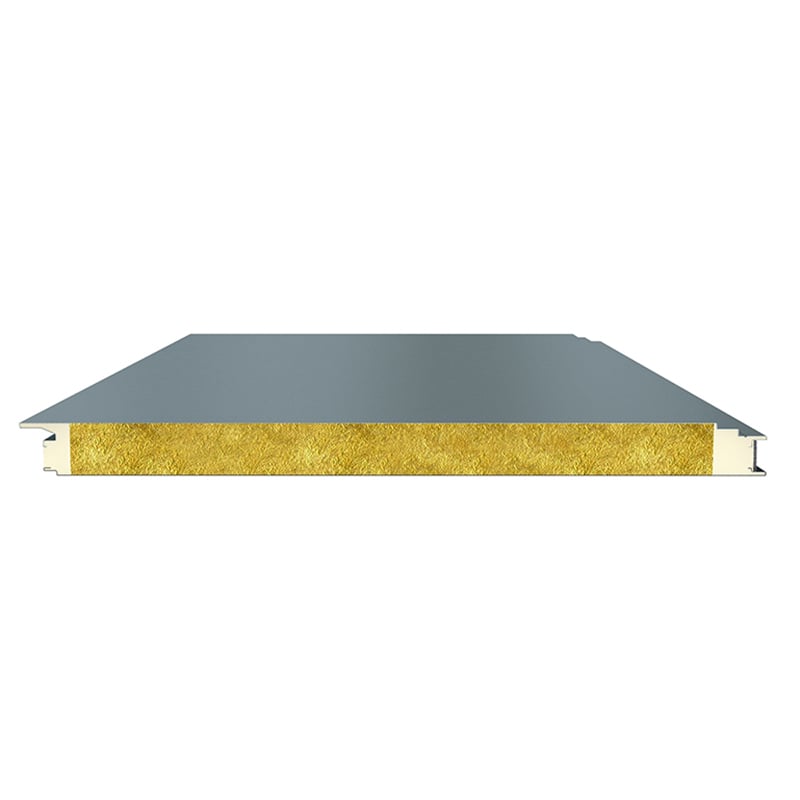
Glostar Sound Absorbing Rockwool Sandwich Wall Panels are engineered for industrial environments where noise control is a health and safety priority. Combining a perforated inner steel face with high-density rock wool core, these panels achieve a Noise Reduction Coefficient (NRC) of 0.75 and weighted sound insulation of Rw = 34 dB — reducing workshop noise pressure levels by approximately one-third. Suitable for manufacturing plants, power generation rooms, compressor stations, data centers, and any facility requiring both thermal insulation and acoustic management.
Product Specifications
| Parameter | Value / Description |
|---|---|
| Effective Width | 1,000 mm |
| Available Thickness | 50 mm / 75 mm / 100 mm / 150 mm (custom on request) |
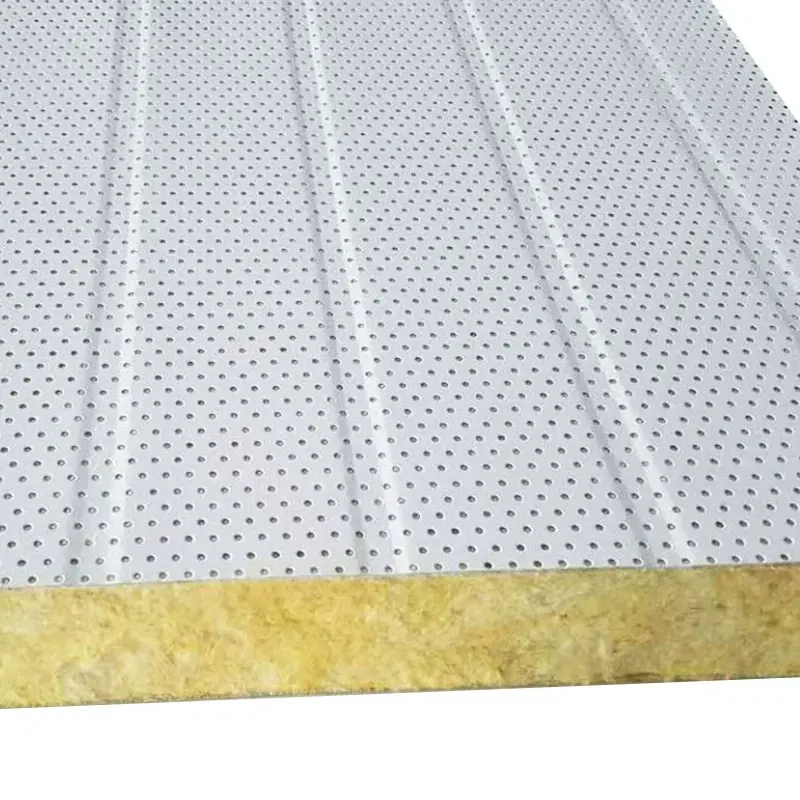
| Inner Face (Perforated) | Color-coated steel, t = 0.5–0.6 mm; hole dia. 3 mm, center spacing 5 mm, 60° arrangement, open-hole rate 32.7%; covered with acoustic non-woven fabric |
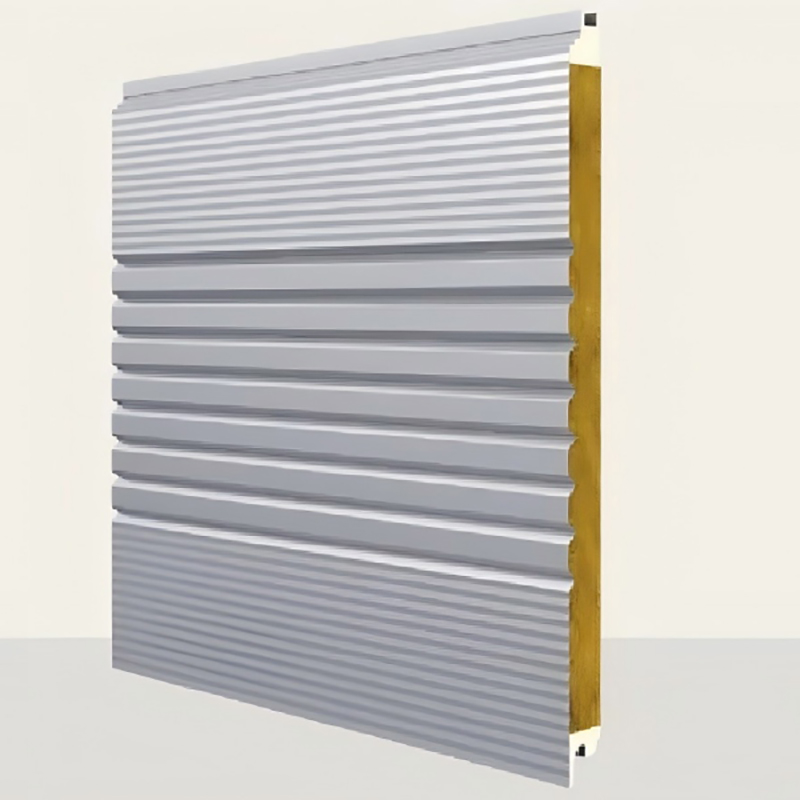
| Outer Face | High-grade color-coated steel, t = 0.6–0.7 mm, Lishui corrugated profile |
| Core Material | High-quality hydrophobic rock wool, density 100–120 kg/m³ |
| Fire Rating | Class A (non-combustible rock wool core) |
| Sound Insulation (50 mm) | Weighted Rw = 34 dB; high-frequency industrial noise (3150–5000 Hz): 40–50 dB |
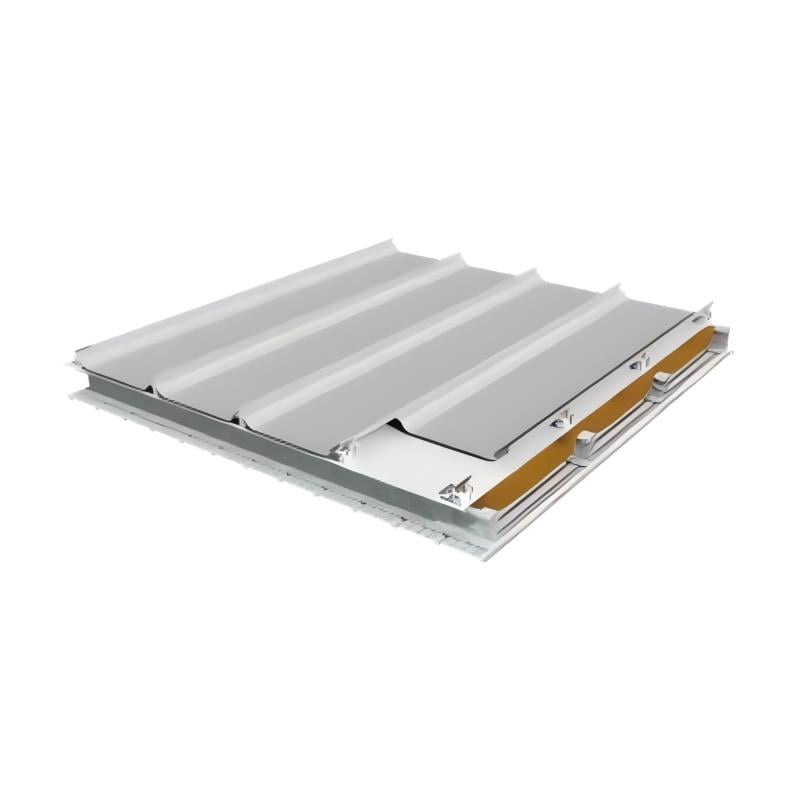
| Installation Method | Hidden-nail fixing |
| Panel Length | Custom cut to order |
| Color Options | Customized per RAL / client requirement |
| MOQ | 500 m² |
Key Product Features
| Feature | Details |
|---|---|
| Patented Perforated Inner Face | The inner steel skin uses a scientifically optimized punching pattern (3 mm holes, 60° arrangement, 32.7% open area) to maximize sound absorption without compromising structural strength. Bending load capacity is equivalent to standard non-perforated panels. |
| Rock Wool Core — The Right Material Choice | Rock wool at 100–120 kg/m³ density outperforms PU foam and glass wool for broadband acoustic absorption. It also delivers Class A fire protection and excellent thermal insulation (λ ≈ 0.040 W/m·K). |
| Acoustic Non-Woven Facing | A water-repellent acoustic non-woven fabric is bonded to the perforated inner face to protect the rock wool core from dust and moisture while maintaining sound absorption performance over the long term. |
| Broadband Noise Reduction | Effective across 100–5,000 Hz, covering aerodynamic noise (fans, compressors), mechanical noise (motors, mills), and electromagnetic noise (transformers, generators). Workshop noise levels reduced by approximately 1/3 under typical industrial conditions. |
| Continuous Production Line | Produced on a continuous lamination line for consistent core density, uniform adhesion in non-perforated zones, and reliable dimensional tolerances across large project quantities. |
Why Noise Control Matters: Industrial Reference
Uncontrolled industrial noise causes measurable harm to employee health and operational productivity. The table below summarizes standard acoustic environment categories under GB 3096-2008, and indicates where typical factory floor noise falls before and after panel installation.
| Noise Level (dB) | Human Perception / Health Impact |
|---|---|
| 0–40 dB | Quiet to moderate; suitable for offices, rest areas, classrooms |
| 40–60 dB | Normal conversation level; acceptable for most work environments |
| 60–70 dB | Loud; communication difficult, concentration impaired |
| 70–90 dB | Typical factory floor range; prolonged exposure damages nerve cells and causes hearing loss |
| 90–120 dB | Extremely loud; immediate risk of permanent hearing damage |
A typical factory measuring 62–70 dB can be reduced to the 47–55 dB range with Glostar sound absorbing sandwich panels — shifting the acoustic environment from Class 3 industrial to near Class 1 residential standard, protecting worker health and reducing noise-related errors.
Typical Application Scenarios
| Industry / Facility | Noise Source & Panel Role |
|---|---|
| Manufacturing Plants | Mechanical noise from production lines, presses, and CNC equipment; panels reduce workshop noise and comply with occupational health regulations |
| Power Generation & Substations | Electromagnetic and aerodynamic noise from generators, transformers, and cooling fans; panels provide both acoustic and thermal control |
| Compressor & Pump Stations | High-frequency aerodynamic noise from blowers and air compressors; panels particularly effective at 3150–5000 Hz where this noise is concentrated |
| Data Centers & Server Rooms | Continuous fan and HVAC noise; panels reduce transmission to adjacent areas while maintaining fire safety requirements |
| Food & Beverage Processing | Equipment noise on processing lines; panels meet food-grade facility requirements for cleanability and fire compliance |
Frequently Asked Questions
Q: What is the difference between sound absorption and sound insulation?
Sound absorption measures how much acoustic energy the panel absorbs rather than reflecting back into the room — reducing reverberation and lowering perceived noise levels inside the space. Sound insulation (Rw) measures how much sound is blocked from passing through the panel to the other side. Glostar's sound absorbing rockwool panels provide both: NRC = 0.75 for internal noise reduction and Rw = 34 dB to limit sound transmission to adjacent areas.
Q: Does the perforated inner face reduce structural strength?
No. The perforation parameters — hole diameter, spacing, and arrangement angle — are engineered to maintain bending load capacity equivalent to standard non-perforated sandwich panels. Third-party mechanical testing confirms the panel meets standard façade structural requirements.
Q: Why rock wool instead of PU foam or glass wool for acoustic panels?
Rock wool is a porous fiber material with superior broadband sound absorption, particularly in the mid-to-high frequency range where most industrial machinery noise is concentrated. PU foam provides good thermal insulation but limited acoustic performance. Glass wool offers some absorption but lower density and inferior fire resistance compared to rock wool. At 100–120 kg/m³, rock wool delivers the best combination of acoustics, fire safety (Class A), and moisture resistance for industrial applications.
Q: Is the acoustic non-woven fabric replaceable or does it affect maintenance?
The non-woven fabric facing is laminated to the perforated steel during production and is designed for the service life of the panel. It uses a high-durability, water-repellent material that resists dust accumulation and does not degrade acoustic performance over time. Standard cleaning procedures for industrial panels are fully compatible.
Ready to Reduce Industrial Noise?
Send us your project requirements — facility type, floor area, current noise levels, and thickness preference — and we will provide acoustic calculations, panel recommendations, and a competitive FOB quotation within 24 hours.
Email: [email protected]