 EN
EN


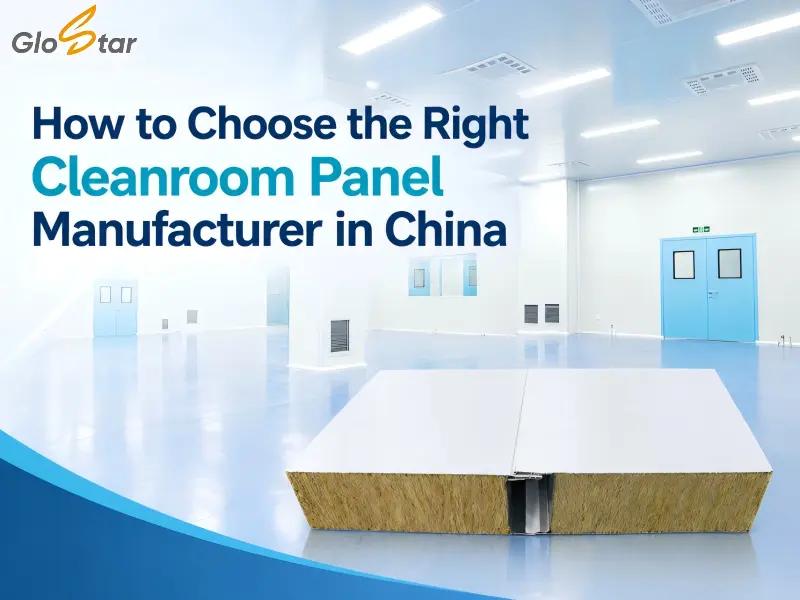
The choice of a good clean room panel manufacturer is also an important part and has impact on performance, regulatory compliance and longevity of controlled environment.
China is a significant participant in the production of clean room panel in the world, and we can find so many choices among the clean room panel manufacturer. We will summarize here some of the more key consideration.
What Should You Look for in a Cleanroom Panel Manufacturer?
Manufacturing Capability: The manufacturing capacity of a firm demonstrates its power in serving large projects in addition to its ability to perform under specific timeframes. The ability of a cleanroom panel manufacturer China to meet industry standards for different project sizes is a mark of its prowess. When assessing a Chinese manufacturer for cleanroom panels, you must look for capacity scales; at least 100,000 square feet with high production volumes. More than one facility means supply chain sustainability and reliability when meeting the international market demands.
Production lines: Quality is influenced by sophisticated manufacturing equipment of any manufacturing firm. Automation is a higher order control which provides enhanced quality, accuracy and output speed. They must be equipped with automated smart manufacturing systems with intelligent cold‑storage and storage, the digital intelligent materials distribution system, and automatic production systems based on AI algorithm. An automated cold‑gluing assembly process can strictly control the panel dimensions with a deviation of less than 0.1mm, which are essential for a perfect seamless cleanroom wall. Multiple automatically‑controlled production lines allow huge volume orders with stable high standards.
Panel dimensions: Cleanroom walls need to cater to the unique layout of the facility; hence, flexible sizing options will be desirable. The widths of these panels will change with type of product and will normally range from 50 mm to 200 mm for a steel clad structure—lengths is always bespoke. Precisely calibrated dimensions allow custom‑made units which fit without need of further on‑site cutting, therefore saving significant cost and minimizing dust in the controlled environment. Consider specifying if a manufacturer can pre‑design and pre‑assemble panels, doors, windows and integrate utility cut‑outs at the factory.
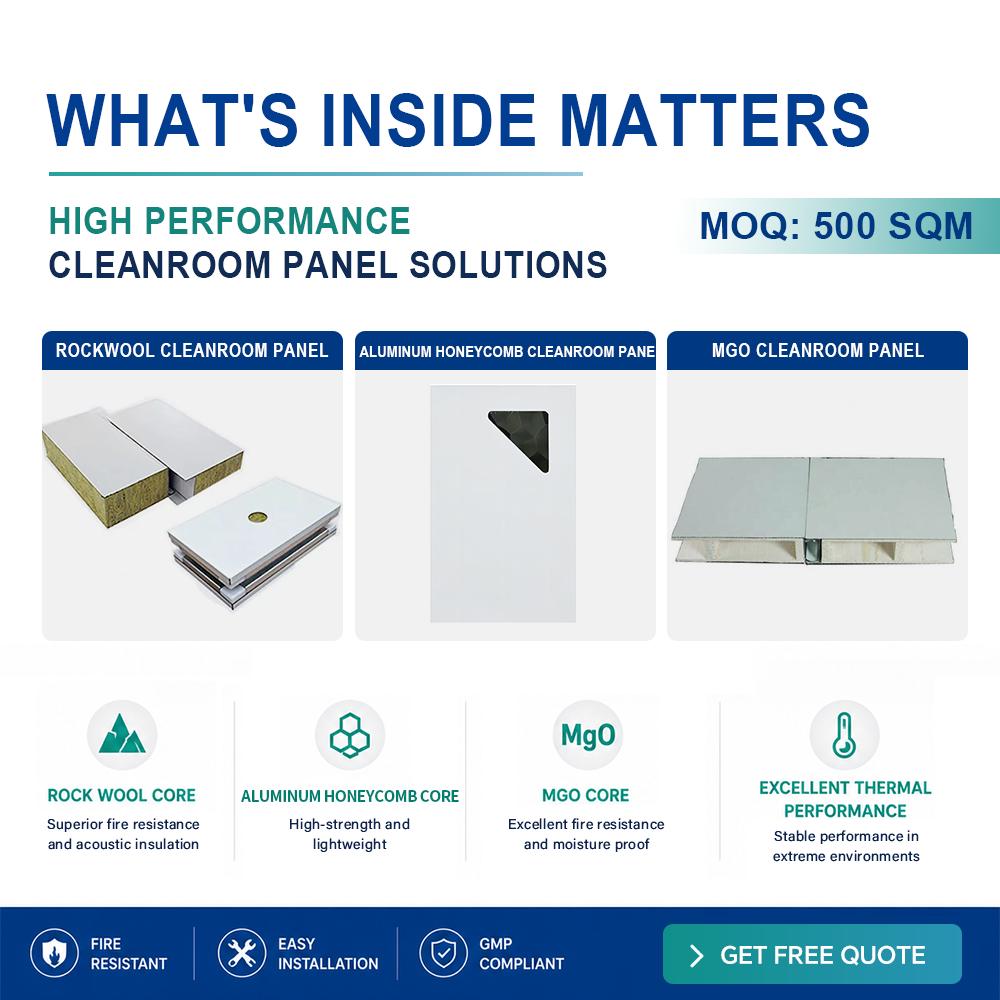
Core materials: The right panel core is crucial for such applications as it is the key component behind the panel's thermal, fire resistance, and acoustical qualities, as well as the panel's structural capability. One of the better candidates among Class A fire resistance rock wools when it comes to applications in semiconductor and pharmaceutical manufacturing due to its unparalleled acoustical performance, is Class A fire resistant rock wool with hydrophobic layer, which gives it additional moisture resistant benefits thus preventing microbe generation.
Aluminium honeycomb has structural strength and dimensional stability; PIT and PUR boards provide higher thermal performance and so on. Look up its apparent density values to confirm its suitability for specified performance criteria.
Surface materials: The surface finish, in particular its resistance to wear and chemical treatments, affects cleanroom facility resistance. The common types of cleanroom wall finishes, include galvanized steel coated with powder, stainless steel (304/316L), HPL. Stainless steel 316L or high wear resistance coating will generally be specified for Pharma room cleanrooms that is to be disinfected by Vaporised Hydrogen Peroxide (VHP).
The panel surface must be non‑porous, smoothly finished for easy and safe cleaning to satisfy sterile condition of cleanrooms. Confirm surface finishing meets the need of disinfectants you adopt.
Customized production: Every cleanroom installation has its own requirement. A manufacturer offering end‑to‑end customization services for a project enhances its value; pre‑design and production integration may include on‑demand custom colors, widths, and special surfaces with built‑in wire conduits, OEM and ODM are strong advantages and may save time and increase quality standards. Designing shop drawings must be perfected—therefore, ensure supplier does provide individual CAD supporting before start of production; typically 2‑3 weeks is time for perfecting shop drawings. Custom parameters may have minimum order requirements of approximately 500 m². Confirm if this quantity needs of yours should fall in the same category.
Cleanroom Panel Quality Control
To make sure of its high standards and strict requirements of the controlled environment—a reliable cleanroom panel manufacturer follows stringent quality control procedures in production, where rigorous testing is incorporated with systematic control procedures from start to finish:
Raw material inspection: Incoming materials must conform to established specs, mill certificate to be provided for core materials with parameters such as density and fire resistance to satisfy specific standards and coated steel sheet must be checked for its coverage and consistency in thickness.
Core density: If actual density falls below declared specifications, strength, acoustical insulation properties and its fire resistance level of fire rated product which is Class A. So sample testing must ensure it satisfies specs.
Panel thickness: Dimension checks ensure full and tight connection of panels. Precise thickness tolerance is monitored at every part and step in the production process with automatic thickness checking device.
Surface flatness: Smooths cleanroom walls contribute to visual neatness, cleanability and the structural form of rooms. Raking light to view the entire surface, to quickly detect any waving surface on the wall which may not appear readily and may influence the integrity of entire cleanroom.
Dimensional tolerance: Precision connection ensures airtightness and structural stability of the entire room. Automation driven cutting system should result dimensions accuracy up to ±0.5mm. Manufacturer must have proven measurement process to verify these tolerances.
Bonding quality: Surface core bond dictates resistance to damage and wear. Delamination shall not be tolerated. In hand test, rock wool fibers should tear away before skin detaches from core. For quality of bond, fibers are expected to be more prone to tearing away from rock wool than skin detaches from rock wool before skin finally adheres to the to‑be‑tested rock wool by manually application of pressure. Independent third party's test reports for bond strength test, such as SGS, may be necessary to be checked to verify.
Available Cleanroom Panel Types
Machine‑made panels are fully automated, mass‑production lines ensure high standardization and cost‑effectiveness of the product for bulk requirements. Machine‑made panels have narrow acceptable variation margins in terms of physical dimensions and appearance and they come with a certain selection of lengths. Hand‑made panels consist of manually constructed steel frames clad with boards in accordance with client designs and specifications, these are particularly favored for installation of overhead ceiling panels and are more flexible due to high degree of customization and are characterized with robustness and highest level of fire insulation. Rock wool clean room panels are a fire resistance of Class A fire insulation rating, acoustical performance—are suitable for any type of industries requiring these two essential features, especially pharmaceutics and high‑end electronics industries. They can be made with either machine or man‑power processes. Magnesium oxide rock wool panel also available on market—combining rigid MgO board and fire insulating mineral rock wool core to upgrade structural strength; It possesses both durability of MgO board and the thermal/acoustical/fire resistance of rock wool which also allows more efficient structural assembly with excellent cleanroom installation aesthetics. Stainless steel panels‑featuring superior corrosion resistance, hese panels meet the requirements of the most stringent applications.
Certifications and Testing
This also explains that certificates that have been internationally issued provide proof of standards set by the producer and this quality is checked by the ISO 9001 standard on the quality management system and on the EN 13501‑1 standard regarding the Class A1 rating for rock woolcore—this same certification of proof quality on product is verified via EN 14195, or an equivalent certification for CE marking. Test Reports for Bonding Strength from reputable international agencies, namely SGS, Intertek or BV should be available for inspection and analysis by qualified personnel. Do not accept a claim from supplier at face value but get the copies and check with the issuing bodies.
Customization and Project Support
A partner in cleanroom construction should support its clients from the conception of the project till the implementation stages. Providing pre‑design drafting services using CAT or similar design software allows for better optimization of building component, minimization of waste, and efficient inclusion of the components. It normally takes about 2‑3 weeks for a project to perfect the shop drawings before their final approval to enter into production stages for manufacture order. Standard color choices are abundant and if specialized requirement for surfaces color, non‑standard size etc. Arises, minimal order would be estimated at around 500 m² per specification so as to meet the economic production for certain aspect of custom choice and it could vary between manufacturers.
How to Compare Cleanroom Panel Suppliers
Physical samples are mandatory for comparison purpose prior to contract decision. All surfaces, edge seams, corners and surfaces are to be inspected, they must be finished correctly with no visible foam core, particularly the corners. Surfaces should be flat, and edges well crimped and flush. Check a piece of a material by hand by pulling on edge to understand material of a construction and its adhesion‑a high class result here is when the rock wool shreds, not skin peeled of. Examine sample from a sample provider, compare its characteristics with the cleanroom panel manufacturer China specifications to find if its real performance meet the standard values and you have to ask its relevant experience on similar projects in your locale and other relevant documentation and also, investigate the production lead time and total shipping lead time. Lead time from order placing till panel factory manufacture completion will be approximately 3‑6 weeks—additionally delivery and custom duty may take 10‑14 weeks before the panel finally arrives at the facility site for installation. Confirm Payment terms—these usually come with 30‑50% deposit with the rest prior to shipment.
GLOSTAR Capabilities
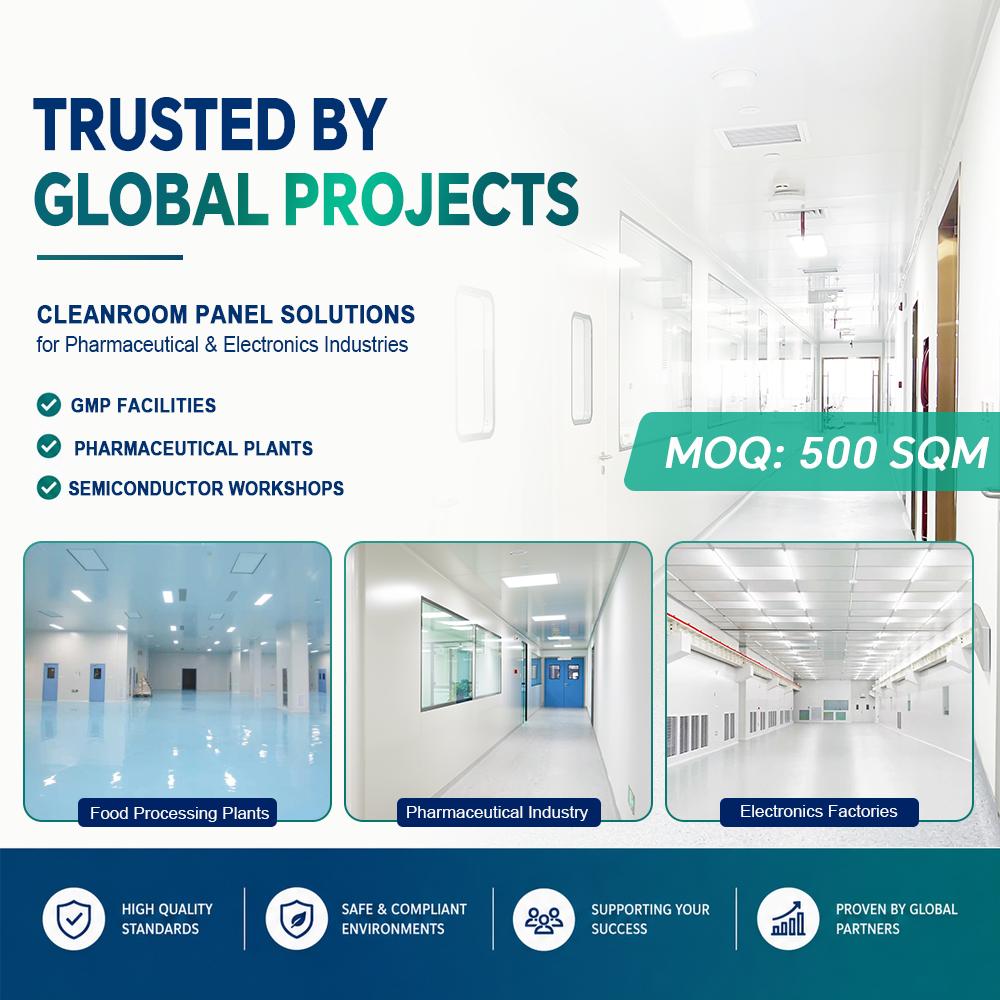
We, GLOSTAR, prove what you require in a cleanroom panel manufacturer China—based across a manufacturing area over 100,000sqm with above 20 automated producing line and the accreditation of SGS ISO 9001, ISO 14001 as well as CE, GLOSTAR possess the technical expertise as well as quality certainty needed for pharmaceutical, semiconductor and also food processing industry. Their automation technology as well as engineering customized support offer confidence for your entire cleanroom project globally.